The Bulldozer and the Veteran: Why Amaechi Could Be Atiku’s Trump Card in 2027
By MOHAMMED BELLO DOKA
As governor of Rivers State from 2007 to 2015 and Minister of Transportation from 2015 to 2023, Amaechi occupied strategic positions in government. His supporters could use his record to challenge attempts by political opponents to portray the opposition as compromised. The second advantage is his intimate knowledge of the APC’s political machinery.
There is a proven electoral blueprint in Nigerian presidential politics that the opposition appears to have overlooked. In 2007, the Peoples Democratic Party (PDP) constructed a presidential ticket pairing a Northern Muslim, the late Umaru Musa Yar’Adua, with a Southern Christian from the South-South, Goodluck Jonathan. The ticket won the presidential election. Following Yar’Adua’s death in office, Jonathan completed the tenure and subsequently won a full term in 2011.
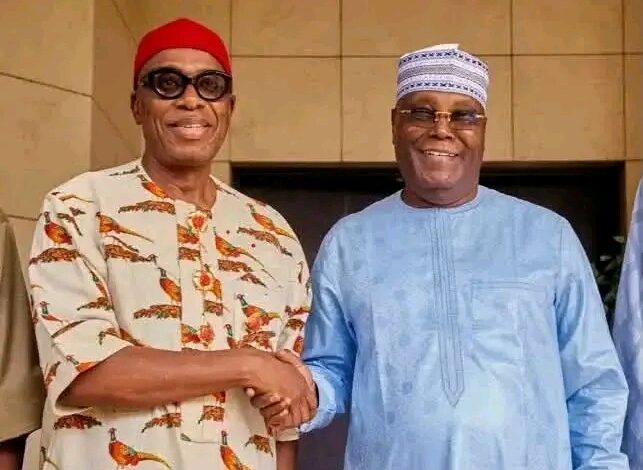
The North-South-South alliance is therefore not merely a political theory; it has a history of electoral success. Former Vice-President Atiku Abubakar and former Rivers State Governor Rotimi Amaechi could potentially recreate that winning formula in 2027.
The historical precedent is instructive. The PDP’s zoning arrangement between 2007 and 2011 reserved the vice-presidential position for the South-South. Political strategists recognised then what remains relevant today: the South-South is a strategic bridge region. It shares neither the APC’s traditional advantage in the South-West nor the political appeal Peter Obi enjoys in parts of the South-East.
The South-South could therefore become an important battleground in the presidential contest. The Yar’Adua-Jonathan ticket demonstrated that a Northern presidential candidate paired with a South-South running mate could command broad national support. Atiku and Amaechi could offer a similar regional balance, potentially with considerable electoral strength.
Amaechi’s legal record and political advantage
One major argument in favour of Amaechi is his record in relation to corruption allegations. Despite facing scrutiny over his years in public office, including investigations connected to arms procurement and post-tenure financial audits, the article argues that he has not been formally indicted, arraigned or convicted by the EFCC.
As governor of Rivers State from 2007 to 2015 and Minister of Transportation from 2015 to 2023, Amaechi occupied strategic positions in government. His supporters could use his record to challenge attempts by political opponents to portray the opposition as compromised.
The second advantage is his intimate knowledge of the APC’s political machinery.
Amaechi served as Director-General of the APC presidential campaign that brought the late President Muhammadu Buhari to power in 2015. He understands the party’s organisational structure, political networks and campaign strategies, having operated from within its leadership.
He also understands the internal relationships and weaknesses that could become relevant in a competitive election.
When Amaechi accused President Bola Tinubu of creating hunger to manipulate voters, he spoke as a former senior figure within the ruling party who had firsthand experience of its political operations. Such experience could prove valuable to an opposition campaign.
Infrastructure record and the Wike challenge
Amaechi’s record as Minister of Transportation also provides another argument for his consideration.
During his tenure, major railway projects, including the Lagos-Ibadan rail line, Itakpe-Warri rail line and Abuja light rail, advanced towards completion or became operational. The Lagos-Kano railway project also formed part of the administration’s wider railway development programme.
These infrastructure projects offer visible talking points that could strengthen his appeal beyond Rivers State and the South-South.
Another important consideration is the political challenge posed by Nyesom Wike, the Minister of the Federal Capital Territory.
Wike has repeatedly challenged Atiku’s political prospects in Rivers State, including declaring that the former Vice-President would not secure more than 10 per cent of the state’s votes in 2027.
The political rivalry between Wike and Amaechi remains one of the most consequential political contests in the South-South.
Amaechi governed Rivers State for eight years and built an extensive political network across the state and the wider region. His experience in grassroots mobilisation could provide the opposition with a formidable counterweight to Wike’s political influence.
Although Wike currently enjoys access to federal political patronage, Amaechi retains considerable political experience and relationships that could become valuable during an election campaign.
In a direct political contest for Rivers State and the wider South-South, Amaechi could emerge as one of the opposition’s strongest assets.
But will Amaechi accept a vice-presidential ticket?
One obvious obstacle to this proposal is Amaechi’s previous public position that he would not accept a vice-presidential nomination.
He has maintained that he did not purchase a presidential nomination form to become somebody else’s running mate.
However, political calculations can change as circumstances evolve.
Amaechi has, at different times, expressed reservations about Atiku’s political prospects while also acknowledging that the former Vice-President could govern Nigeria effectively if given the opportunity.
With Atiku now emerging as the ADC presidential candidate, the political equation has changed.
Amaechi may still prefer to pursue his own presidential ambition, but the question is whether he would reconsider his position if a broader opposition arrangement offered a realistic opportunity to defeat the ruling APC.
The decision would ultimately depend on political negotiations, personal ambition and the prospects of the proposed alliance.
Why the South-South matters
Alternative running-mate calculations also deserve consideration.
Selecting a candidate from the South-East could create complications because Peter Obi already enjoys considerable political support in the region. A competing opposition ticket with another prominent South-Eastern figure might complicate efforts to consolidate that political base.
A South-West running mate could also face considerable challenges because the APC enjoys a traditional political advantage in President Tinubu’s home region.
The South-South, therefore, offers a potentially important alternative for an opposition alliance seeking to broaden its appeal.
Amaechi brings a combination of regional political experience, national visibility, infrastructure credentials and familiarity with the ruling party’s operations.
The Yar’Adua-Jonathan template worked because it offered a measure of geographical, religious and political balance. Atiku, from Adamawa State in the North-East, and Amaechi, from Rivers State in the South-South, could recreate some of that balance.
One is a veteran northern politician with extensive national political experience. The other is a battle-tested southern political operator with experience in state and federal administration.
Together, they could present a ticket capable of campaigning across different regions of the country.
Atiku’s strategic decision
The opposition has a difficult electoral battle ahead. The APC is already mobilising support across the South-South, with some of its chieftains expressing confidence in Tinubu’s prospects in the region.
But political declarations are not necessarily electoral victories. The South-South remains a region where effective alliances, credible candidates and grassroots mobilisation could influence the outcome.
Amaechi’s political experience and established networks could help the opposition compete more effectively.
There is, however, no guarantee that he would accept the vice-presidential position or that his selection would automatically deliver Rivers State or the wider South-South to Atiku. Electoral success would depend on the strength of the alliance, public acceptance, party organisation and the issues that dominate the campaign.
Nevertheless, Atiku should carefully consider what Amaechi could bring to the table.
The 2007 electoral blueprint offers a historical lesson worth revisiting. A balanced ticket, backed by strategic regional alliances and credible political leadership, can make a significant difference.
If Atiku is serious about building a formidable opposition coalition for 2027, Rotimi Amaechi may well be one of the most consequential choices available to him.
Mohammed Bello Doka can be reached via bellodoka82@gmail.com.