Buhari governed as a Nigerian, Tinubu is governing as a Yoruba man, Babuga replies Shehu Sani
By OUR REPORTER

Babuga further credited Buhari with completing the Second Niger Bridge, describing it as an important project for the South-East that had remained unfulfilled under successive administrations for decades. He also cited the construction of 14 federal universities and the completion of international airport terminal projects in Lagos, Abuja, Kano, Port Harcourt and Enugu as evidence of development beyond the North.
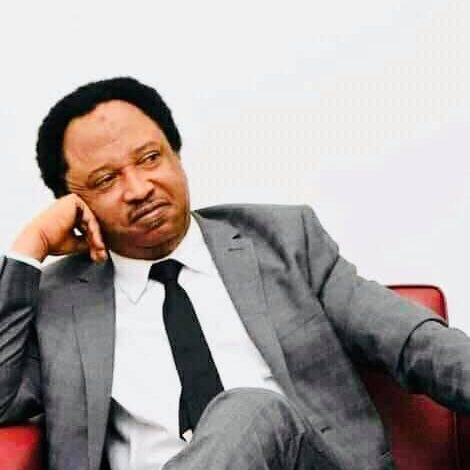
Political commentator Umar Sanda Babuga has responded to former Kaduna Central Senator Shehu Sani’s criticism of Northern leaders who allegedly remained silent over insecurity during the administration of former President Muhammadu Buhari but are now complaining about the situation under President Bola Ahmed Tinubu.
ALSO READ: Northerners kept quiet under Buhari but are now complaining under Tinubu — Shehu Sani
In a 22-point response titled, “Why Northerners Kept Quiet Under Buhari — Reply to Shehu Sani,” Babuga defended Buhari’s eight-year administration, arguing that its policies, infrastructure projects, security investments and appointments demonstrated a broader national outlook.
He contrasted what he described as Buhari’s inclusive approach to governance with Tinubu’s administration, which he accused of concentrating political appointments and economic power in the South-West.
Babuga’s arguments cover infrastructure, fuel subsidy, education, security, agriculture, economic management, social intervention programmes and the treatment of political opposition.
Infrastructure and National Development
On infrastructure, Babuga cited Buhari’s road projects, including the Abuja-Kaduna-Kano Expressway, the Ilorin-Bode Saadu-Jebba highway and the Lagos-Ibadan Expressway.
He also highlighted the Abuja-Kaduna railway and the Lagos-Abeokuta-Ibadan standard-gauge railway, arguing that the projects demonstrated the former president’s commitment to infrastructure development across different parts of the country.
Babuga further credited Buhari with completing the Second Niger Bridge, describing it as an important project for the South-East that had remained unfulfilled under successive administrations for decades.
He also cited the construction of 14 federal universities and the completion of international airport terminal projects in Lagos, Abuja, Kano, Port Harcourt and Enugu as evidence of development beyond the North.
Fuel Subsidy and Economic Policies
Babuga argued that Nigerians experienced less economic pressure under Buhari because his administration retained the petrol subsidy throughout most of its tenure, while Tinubu’s removal of the subsidy in May 2023 contributed to rising living costs.
He maintained that the resulting increase in petrol prices had placed considerable pressure on households and businesses.
The commentator also cited the National Social Investment Programme, including N-Power, Conditional Cash Transfers, TraderMoni, MarketMoni and FarmerMoni, as interventions introduced under Buhari to support vulnerable Nigerians and small businesses.
He contrasted these initiatives with the financial pressures associated with rising education costs and loan-based support schemes under the current administration.
Security and Military Equipment
On security, Babuga said Buhari invested more than $1 billion in military equipment to strengthen the Armed Forces’ capacity to combat terrorism and other security threats.
He listed aircraft acquired or ordered during the former president’s tenure, including A-29 Super Tucano aircraft, JF-17 fighter jets, Mi-35M attack helicopters, Agusta 109 helicopters, Bell 412 helicopters and other military aircraft.
He also cited the acquisition of tanks, armoured vehicles, artillery equipment, patrol boats, surveillance drones and other military platforms.
Babuga argued that these investments improved the military’s operational capacity and contributed to the reduction of Boko Haram’s territorial control.
He recalled that Boko Haram had controlled several local government areas in the North-East before Buhari assumed office in 2015, adding that the military subsequently reclaimed many of the territories.
However, the extent to which particular equipment acquisitions translated into improvements in overall security remains a matter for assessment against independently verified military and security records.
Agriculture and Food Production
Babuga also defended Buhari’s agricultural policies, particularly the promotion of domestic rice production and restrictions on certain food imports.
According to him, the policies encouraged the establishment of rice mills, supported local farmers and increased domestic production.
He argued that Nigeria’s reported rise in rice production during Buhari’s administration demonstrated the potential benefits of encouraging local agricultural production rather than relying heavily on imported food.
He contrasted this approach with Tinubu’s temporary duty-free importation measures for selected food commodities, which he considered inconsistent with the goal of strengthening domestic agricultural production.
Appointments and Regional Representation
On political appointments, Babuga accused Tinubu of concentrating too many important positions in the South-West.
He cited Ogun State as an example, claiming that it had four ministerial appointees and highlighting the South-West’s representation in key economic institutions.
In contrast, he argued that Buhari’s appointments reflected a broader spread across the country’s six geopolitical zones.
Babuga also pointed to Buhari’s appointment of former Lagos State governor Babatunde Fashola as Minister of Works and former Rivers State governor Rotimi Amaechi as Minister of Transportation as examples of appointing prominent Southern politicians to major positions.
He further observed that Buhari’s economic management team included prominent Southern figures, including former Vice-President Yemi Osinbajo and former Finance Minister Kemi Adeosun.
Babuga maintained that these appointments demonstrated that Buhari’s administration was not exclusively concerned with the interests of his home region.
Other Achievements Cited
The commentator listed several additional policies and developments he attributed to Buhari’s administration, including the signing of the Petroleum Industry Act, commencement of the Ajaokuta-Kaduna-Kano gas pipeline, increases in the national minimum wage and financial support to state governments facing difficulties paying salaries.
He also cited Nigeria’s exit from recession in 2017 and 2021, the signing of the Not-Too-Young-To-Run legislation and measures intended to strengthen local government administration.
On civil liberties, Babuga argued that Nigerians had greater freedom to criticise the president under Buhari, claiming that the former administration was less likely to arrest critics for expressing their views on social media.
These claims, particularly those concerning the independence of institutions, freedom of expression and the distribution of federal appointments, would require further examination against documented records and the experiences of affected individuals.
A Challenge to Shehu Sani’s Position
Babuga’s response ultimately challenges the suggestion that Northern leaders’ reactions to insecurity under Buhari and Tinubu can be explained simply by the regional identity of the president in office.
His argument is that the assessment should extend beyond insecurity to include economic policies, infrastructure, agricultural production, military investment, social intervention programmes and the distribution of political appointments.
He contends that Buhari’s record in these areas helps explain why some Northerners were less vocal in their criticism of his administration than they are under Tinubu.
Concluding his 22-point response, Babuga declared: “In summary, Buhari governed as a Nigerian, Tinubu is governing as a Yoruba man.”
The statement represents Babuga’s political assessment of the two administrations. Whether the records support that conclusion across all areas of governance remains a subject for evidence-based public debate.