Saudi Arabia faces fresh Houthi attacks after deadly Riyadh airport strikes
MAIN POINTS:
*Conflict escalates over Yemen’s Red Sea coast
*Iran offers to mediate between Riyadh and Houthis
*Saudi-led forces retaliate against Houthi targets
*International oil executives cancel Saudi trips
*Tehran urges Gulf states to reconsider regional security arrangements


By KEMI KASUMU and Agencies
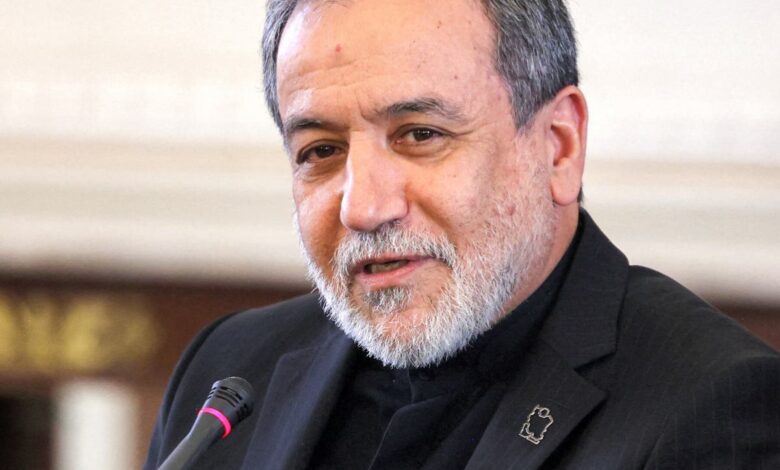
Amid the escalating hostilities, Iran’s Foreign Minister, Abbas Araghchi, offered to facilitate dialogue between Saudi Arabia and the Houthis, warning that a military approach without a political solution could worsen the situation.
Saudi Arabia faced fresh missile and drone threats on Monday as the Saudi-led military coalition in Yemen sought to repel attacks attributed to the Iran-backed Houthi movement, according to Saudi state media.
The reported attacks came amid an escalating confrontation between Saudi Arabia and the Houthis, following deadly strikes on airports in the kingdom, including a reported attack on an airport in the capital, Riyadh, on Saturday that killed at least 13 people.
There was no immediate confirmation of whether the latest incoming missiles and drones had been successfully intercepted.
Saudi authorities announced on Monday October 12, 2026 that operations at the affected airport in Riyadh would remain suspended following another reported deadly attack on the facility on Sunday.
The attacks have heightened concerns over the security of Saudi Arabia’s aviation infrastructure, critical facilities and major economic centres, as the kingdom faces renewed pressure from the conflict in neighbouring Yemen.
The reported airport strikes have also raised questions about the potential consequences for international travel, business activities and Saudi Arabia’s ambitions to establish itself as a leading global destination for tourism and investment.
Conflict escalates over Yemen’s Red Sea coast
The confrontation between Saudi Arabia and the Houthis intensified last month after Houthi forces reportedly seized parts of Yemen’s Red Sea coast, an area of strategic importance to international maritime trade and Saudi oil exports.
The development prompted Saudi warplanes to launch attacks against Houthi positions in support of Yemen’s internationally recognised government, whose forces have been fighting to recover the captured territory.
Although the Saudi-backed Yemen government claimed to have reclaimed the key territories held by Houtis, those claims are now past as Houtis have relaunched a reinforced offensive to dislodge the Yemeni troops as well as the Saudi forces in the country.
The Houthis have also targeted Saudi oil facilities, while the reported attack on Riyadh occurred on the eve of the World Petroleum Congress Energy Congress, an international gathering of oil industry officials and executives.
Speaking to delegates at the event on Monday, Saudi Energy Minister Prince Abdulaziz bin Salman described the recent developments as serious and called for a firm response.
“The events of recent weeks are serious,” he said. “Our response must be equally serious.”
The attacks have added to security concerns surrounding the kingdom’s oil industry, particularly as Saudi Arabia seeks to attract international investment and strengthen its position in global energy markets.
Iran offers to mediate between Riyadh and Houthis
Amid the escalating hostilities, Iran’s Foreign Minister, Abbas Araghchi, offered to facilitate dialogue between Saudi Arabia and the Houthis, warning that a military approach without a political solution could worsen the situation.
Araghchi reportedly spoke by telephone with his Saudi counterpart, Prince Faisal bin Farhan, on Sunday night.
According to a statement published on the Iranian foreign minister’s official Telegram channel, Araghchi warned that continued reliance on military action would further complicate the regional crisis.
“Insisting on a military approach and ignoring a political solution will further complicate the current situation,” the statement said.
The Iranian minister also said Tehran was prepared to assist efforts to initiate dialogue between the parties.
Saudi authorities confirmed that the two foreign ministers had spoken but did not refer to Iran’s reported offer to mediate.
The diplomatic initiative comes amid wider tensions across the Middle East, where overlapping conflicts involving Iran, Israel, the United States and regional armed groups have increased the risk of further escalation.
Iran maintains relations with the Houthis as part of its broader network of regional allies, which Tehran describes as the “Axis of Resistance”. However, analysts have long noted that the Yemeni movement maintains its own political and military objectives.
Saudi-led forces retaliate against Houthi targets
The reported attacks on Riyadh airport triggered further exchanges of strikes between the opposing sides.
Local media affiliated with the Houthis reported on Sunday that Saudi-led forces had targeted the airport in Sanaa, Yemen’s capital, which remains under Houthi control.
The Houthi-run health ministry also reported that a child was killed in a strike on a residential building in Sanaa.
The reports could not be independently verified, while the Saudi authorities had not publicly commented on some of the alleged strikes at the time of the report.
The latest exchanges underscore the continuing risks to civilians as the conflict expands beyond military positions to include airports, residential areas and other strategic infrastructure.
The Houthis have fought Yemen’s internationally recognised government since 2014. Saudi Arabia intervened militarily in 2015, leading a coalition that sought to restore the government and push back the Houthi movement.
The intervention and subsequent fighting contributed to one of the world’s most severe humanitarian crises.
A fragile truce reached in 2022 helped reduce large-scale fighting, but the arrangement has come under increasing strain amid renewed regional tensions and the latest reported military operations.
International oil executives cancel Saudi trips
The renewed hostilities have also raised concerns within the international energy industry.
Several prominent oil industry executives, including the chief executives of ExxonMobil and BP, reportedly cancelled plans to travel to Saudi Arabia for the gathering in Riyadh, according to two industry officials cited in the original report.
The cancellations highlight the potential commercial consequences of the deteriorating security situation, particularly for a kingdom seeking to expand its international business, tourism and investment profile.
Saudi Arabia’s economic transformation agenda relies partly on attracting foreign companies, investors and visitors. Continued attacks on airports and oil facilities could complicate those efforts if security concerns persist.
The latest escalation also comes as the wider Persian Gulf region faces economic uncertainty linked to the conflict between the United States and Iran.
Wider US-Iran tensions deepen regional uncertainty
The confrontation between Saudi Arabia and the Houthis is unfolding against a broader regional crisis involving Washington and Tehran.
American and Iranian officials have reportedly been preparing for the possibility that their conflict could resume, with the Pentagon drawing up plans for potential new strikes.
Iran’s national security adviser, Mohsen Rezaei, warned on Sunday that renewed fighting could lead Iranian forces to target digital infrastructure in Gulf countries, including data centres, communications cables and artificial intelligence facilities.
Such threats have raised additional concerns about the vulnerability of the region’s technology infrastructure and the potential economic consequences of attacks beyond conventional military targets.
Although the Houthis have received military and financial support from Iran over the years, regional specialists have described the movement as relatively autonomous among Tehran’s allied armed groups.
Farea Al-Muslimi, a Yemen and Persian Gulf specialist at Chatham House, argued that Iran has previously demonstrated an ability to influence Houthi decisions, particularly concerning cross-border attacks on Saudi Arabia.
He cited the 2023 rapprochement between Saudi Arabia and Iran, brokered by China, during which Tehran reportedly undertook to help curb Houthi attacks against the kingdom.
According to Al-Muslimi, the Houthis largely retain independence over domestic Yemeni matters but coordinate with Tehran on some international strategic issues.
His assessment has renewed debate over the extent of Iran’s influence over the group and whether diplomatic engagement with Tehran could help reduce attacks on Saudi Arabia.
Tehran urges Gulf states to reconsider regional security arrangements
Iranian officials have also used the widening crisis to urge Gulf Arab governments to strengthen diplomatic relations with Tehran and reconsider their longstanding security partnerships with the United States.
Iran and allied armed groups have repeatedly targeted American military installations in the region during the wider conflict, while Washington maintains security partnerships with several Gulf states.
Iranian Foreign Ministry spokesman Esmail Baghaei said on Monday that Tehran supported stronger cooperation among regional countries.
“We have always supported strengthening interaction and cooperation among the countries of the region,” Baghaei said.
He called for improved regional relations to establish what he described as “a secure region free from the destructive interference of external actors.”
The statement reflects Iran’s longstanding position that regional countries should reduce dependence on outside powers. However, Gulf governments continue to face competing security concerns over Iran’s military activities, its regional alliances and the protection of critical infrastructure.
For Saudi Arabia, the immediate challenge remains containing the reported missile and drone threats while protecting civilians, restoring disrupted airport operations and preventing further attacks on its oil and economic facilities.
Whether Iran’s offer to facilitate dialogue leads to meaningful diplomatic engagement will depend on the willingness of the parties to pursue negotiations alongside the ongoing military confrontation.
For now, the reported attacks have reinforced concerns that the conflict could deepen instability across the Gulf, with consequences for regional security, international aviation, energy markets and the wider global economy.