‘Culture is the entrance door for sustainable trade, investment between Nigeria, Brazil’ — Brazilian Consul General
The Consul General of Brazil in Lagos, Ronaldo Vieira, speaks on the historical and cultural connections between Nigeria and Brazil, the need to deepen bilateral trade and investment, and the Brazilian movie, Males, which tells the story of the historic revolt of enslaved Hausa and Fulani people in Brazil during the 19th century. In this interview with BASHIR ADEFAKA, he also explains why culture, in his view, should become the gateway to stronger economic relations between the two countries. Excerpts:
Brazilians, in general, have a wrong idea that the entire Nigeria is of Orishas worshippers and they think that everybody in Nigeria is Yoruba. They also think that every Yoruba worships Orishas. Can you see what I want us to read? There is misplaced information. It is much more of an imagination than reality.
Can we start by talking about a Brazil-based movie production titled “Males”? What is the movie about? Why does the Brazilian interest and how does your consulate come to be associated with it?
I am working here being the Consul General of Brazil on five pillars: trade, education, culture, public diplomacy and Visas. Consular matters.
And I want to give attention to all of them equally but, obviously, the consular matters take most of my time. Like, 60 percent of my time. So, 40 percent of my time, I dedicate myself to other pillars. But it is not bad because I have been working very hard to make sure that all pillars are covered.
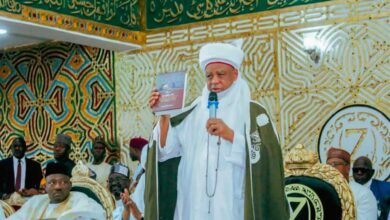
And the last time I visited the Sarkin Fulani of Lagos, His Royal Highness Alhaji Mohammed Abubakar Bambado II, we spoke a little bit about the historical connections between Brazil and Nigeria and how to transform the historical cultural ties into results. Because there has been, for years, lot of conversations about the reality of the black residents and the Nigerian Africans, but check around, what result have we yielded from these culture and historical ties? Not much. If you check, not much.
So, I realized sometime ago that doing business by only stating that we have cultural proximity is not sustainable. For the sustainability of business, you need Brazilians to get interested in Nigerian cultures. For the business to work in Brazil, you need Nigerians to be interested in Brazilian cultures.
And I have realized that the illusion that people have about our ties is about the Orishas for the Yorubas. And Brazilians, in general, have a wrong idea that the entire Nigeria is for Orishas worshippers and they think that everybody in Nigeria is Yoruba. They also think that every Yoruba worships Orishas. Can you see what I want us to read? There is misplaced information. It is much more of an imagination than reality.
Tell me, what is the reality of Nigeria do you know?
The reality of Nigeria is that there are more than 275 ethnic groups not only Yoruba, and even within the Yoruba community, not everyone follows the shrine. It is a very small percentage.
So, I have discovered – through my researches – that we have more Orisha worshippers in Brazil than you have in Nigeria. In Brazil, it must be like two to three million people. You don’t reach that number in Nigeria. This lady here is from Adamawa in Northern Nigeria. There are many Nigerians going to Brazil, no sustainability because there is lot of misinformation, there is lot of imagination. If you go now and ask Brazilians, ‘What’s the difference between Nigeria and Africa?’ They don’t know the difference. If you ask them, ‘What’s the language they speak in Africa?’ they say Yoruba. In the whole of Africa. (Laughs)
(Cuts in) Because it is people they see they interact with and who are expected to tell the truth of reality of their country….
Yes.
So, therefore, there is an urgent, and I mean urgent, necessity of people like me and people like you to produce better information and circulate it among other people. That was why I came to the Sarkin Fulani of Lagos to propose to him the possibilities of promoting a Brazilian movie that is not related to the Yoruba people. Because, even in Brazil, people didn’t know that the Fulanis and the Hausas got together and didn’t accept to be enslaved.
They were captured here and taken to Brazil in the 19th century and they didn’t accept to be enslaved. Then they got together, plotted together and they made such a big revolt that is called “the revolt of the Males”.
The MALES?
Yes, because the Hausa and Fulani people in Brazil are called Males.
Why?
I don’t know why. I believe, according to what I have learnt, that it comes from the Yoruba word “Imale” back home here in Nigeria. Is that a Yoruba word?
The Yorubas in Nigeria actually call people that migrated from Mali ‘Imales’. Like you would say ‘Malians’, does it mean the Yoruba in Brazil went and also called them ‘Imales’ over there?
Okay, the Yoruba nicknamed them ‘Males’ but we call Males in the plural.
So it was a nickname like the Yorubas in Brazil are called ‘Nago’ and I don’t know why they are called Nago, they are not called Yorubas.
In that case, it’s Yoruba word in Brazil to identify the Hausas and Fulanis there because, here in Nigeria, if Yoruba wants to pronounce it, they will say ‘Imale’, that is what they call Muslims because they say Muslims, who are largely Hausas and Fulanis, are people that migrated from Mali. Like people would say Malians, that’s why the Yoruba nicknamed them as ‘Imale’. So, the Yoruba’s in Brazil also call Hausas and Fulanis ‘Imale’ (Males)?
So, it was a nickname? Like the Yorubas in Brazil are called ‘Nago’ and this word came from long, long time ago.
So, let’s try to understand. Hausas and Fulanis live in Hausaland, not Nigeria. You know Hausaland is much wider, it’s a very larger land. It’s clear that the borders of Nigeria were created by the old colonizers. So, it was the Western idea to create the borders of Nigeria and they didn’t respect the ethnic groups.
So, when we say Yorubaland we don’t necessarily mean Nigeria.
When we say Hausaland you don’t necessarily mean Nigeria and the Males are reflecting these people. And the film argument is about how these people fought for their freedom and the situation was so difficult for the colonial government that the only solution found was to send them back to Nigeria.
As I told the Sarkin Fulani of Lagos the stories, he said that it would really be nice to promote this because, if we promote this information through the movie, we will also cultivate the Fulanis and the Hausas about their representation in the Brazilian culture, how they changed the Brazilian culture.
You mean the Hausas and Fulanis changed the Brazilian culture?
Yes.
How?
Because, after the revolt of the Males, the situation was peaceful and the enslaved people started doing their own revolt in different parts of the country.
And how are you going to ensure that this Males movie successfully premiers in Nigeria?
We have already talked to the movie director. He’s a well established Black Brazilian actor and film director and he’s really willing to come and, for him, it will be a pleasure and honour to present his movie to the traditional monarchs of Nigeria in one VIP session and Sarkin Fulani of Lagos has said that they are willing to organize this session.
But, at the same time, I didn’t stop there. I talked to the producer of the movie and connected him with the distributors of Nigeria for us to put this movie here in the commercial centre, bringing it to the cinema for wanting the people also to see this.
In that case, he will also benefit. It will be a win-win for both parties. Does he see it that way?
Exactly. But we are, at the same time, celebrating with this man, who did a huge research to get this historical fact and it was formed into a movie argument, who is really attached to this region of the world. He was not connected by anybody. So, by doing this VIP session, I will connect this very well established Black Brazilian movie director.
And, guess what. Before, we didn’t have many Black Brazilians being connected with Nollywood. So, this is another work we are doing. You Nigerians need to look at the black community of Brazil, more than 100 million black people. It’s not possible that you should liaise with them. I think you can help them. I think you can trade with them.
And don’t you think that, if you link yourself up with this community, the trade will become more sustainable? Because the interest is not only money. The interest is culture. That is why I believe that culture is the entrance door for sustainable trade and investment.
So, like I said, I must appreciate the fact that we’ve been looking for a way out of the problem that Nigeria has. We see the need to unite. Most of the Sultan of Sokoto’s speeches – whether abroad or here in Nigeria – is “let us unite”, “we can live together”, “our diversity is not for conflict”. All of these put together make Nigeria great….
(Cuts in) I think everybody needs to do his own part and it is normal that the unity is not yet there because, I think, and this is really my personal opinion through my studies, that Nigeria has become independent, very recent. Brazil became independent in 1822. For us to find our unity took us 100 years. So, it was only at the beginning of the 20th century that Brazil started to become a nation; before was sectorial.
So it takes time also here because you need to find a solution. Brazil found unity through the nation, so it was easy to become a Brazilian nation. I don’t think it applies to Nigeria, because you have a multinational country that needs to seek unity. So, if you force too much that Nigeria should be a nation, you might not find a solution. You will create even more problems. So in my opinion, you must first recognise that this is a multinational country.
So, the second thing is to find the solution and unity to the cultural diversity. And then the government will represent all the nations. But the work is still on the way and it is normal. Nigeria has become independent for the past 66 years but is still a young independence and even younger democracy. But you still need negotiating.
Find your own solution for your own challenges. Don’t be negative about it. “Oh look at this. Look how they are thriving.” Don’t compare yourself with Brazil. We have a different history. We have different challenges as well and Brazil is finding its own way organically – We’re not settled. There are things that are settled but we are still accommodating ourselves, we are still working on our identity.
Which is normal with human nature?
Exactly. So, I’m saying that just for you not to feel sad about your condition because you come from a different context and your context is actually richer than ours. Maybe you don’t realize how much of the old civilizations you preserved in this country. And you might find answers by not looking at English philosophy but looking at your ancestors; How they governed their kingdoms thousands of years ago. The future is ancestry. Look back and look further.
Thank you very much. You have talked even more like a Nigerian. You know, in a Yoruba parlance it is said that “When a child falls he looks to the front but when an elderly person falls he looks back to see what made him fall” so as to avoid it against the repeat of such falling. I believe that, Brazil as a country that has gone far having gained its independence since 1822 and is over two centuries old, Nigeria needs to learn one thing or the other from it. So that is what….?
(Cuts in) On the topic that everybody needs to contribute to overcoming the challenges, I want to tell you something. We created here at the Brazilian Consulate since September 1 a project that, in principle, has nothing to do with unity but what is at the back of my mind is to create possibility of unity among the Nigerians who work in the Consulate.
On the 1st of September, we launched our first project, a garden, and it is related to a book that’s very common and familiar in my country on urban agriculture. And the challenge is how can we install medicinal and food plants within the garden without transforming the garden to a farm and then we can profit from it without spending money?
So the challenge is, how can we use the entire garden of the Consulate to improve our quality of life? So, look around. Before, we didn’t have any plant inside the Consulate and yet we had so many pots of plants…. And you know that if you work in a closed environment like this, you need plants because the plants filter the air and they produce oxygen. So, with this urban project, what we’re doing now is that every week we gather together, exchange ideas and then we get to know each other, although it’s about plants. Imagine if we had the mindset that everybody needs to leave a legacy on the discussion of unity of a multinational country.
What are the most prominent areas of trade and investment between Brazil and Nigeria that you believe have not yet been fully explored and which you think should be explored?
Your question is very specific. You’re not asking “what are the areas that have been explored?” You’re asking about what, in my opinion, should be explored in the near future. And I can tell you that we have deployed, already, a programme to start sourcing and breed those people. And if you ask Nigerians in Brazil, they’re two powerhouses for technology, they don’t know it. Brazilians think that Nigerians don’t have much clue about the technological power of Brazil. So, this is what I see we need to do.
Then Nigeria has developed something that can contribute to the expansion of business.
Because of your ‘wahalas’, the young generations learnt how to use apps and how to use distance education and they have been mastering it into technology. A large percentage of your society is actually under 30. So, those people are looking for job. Brazil needs those people and those people are developing technology. We need to make them meet and we need to breed them. This is one area.
The second area that we need to explore well is the business side of creativity. Every person Have met comes to say “Let’s promote this artist, let’s promote that artist” but they never discussed “Let’s sell painting, let’s sell services, let’s bring Nigerian artists to playing in Brazilian movies, let’s bring Brazilian artists to playing in Nigerian movies. Let’s do machandizing of Brazilian cosmetics in Nigerian movies, let’s do machandizing of Nigerian movies in Brazil. And people before were not even aware that Nigeria couldn’t export anything.
Only recently I met this Nigerian, can I tell the story quickly? She was in an educational orogramme that is supported by the Brazilian government. It is a scholarship programme by the Brazilian government. They get students from all over the world Nigerians included, passed the exams, passed their language exams, met the criteria and then you can go and study in their university in Brazil.
So, this lady from Ondo State went to Brazil and she passed the exams, she got the scholarship and the studied to become a Nurse. While she was in Nigeria she was also very familiar with social media. So, she developed, in her own way, some experience of social media in Brazil and certainly she became the biggest Nigerian social media influencer in Brazil with 300,000 followers. And people are asking her about her clothes, about her turbans, about her make-ups and everything. And she gets all these things and sells them all over Brazil. Today she is a big distributor of shea butter, turbans, Nigerian fabrics in Brazil. She is not even working as a nurse. She is not coming back. She finished her studies and she established there as a business woman and as an influencer.
Now can I ask you a question? Do you think there’s a market in Brazil for Nigerian products?
Of course, yes.
So, we need to explore that. I cannot do it by myself. I need Nigerians to work on it but the Consulate is open for us to discuss, for consultation and then work on the plan. So, this is another thing that is missing in the trade promotion between Nigeria and Brazil. We need to plan because, what I identified like I said in this interview is the sustainability. We need to see how we can make this more sustainable.
Thank you very much. On this note, we’ll like to stop this interview by just asking one last question which any newspaper must have. It’s about Brazil and Nigeria. They have enormous populations. In their respective regions they are the largest of their regional populations. Enormous population, natural resources, youthful populations and strong cultural identities, yet, the economic relation between them arguably remains below its potential. I think you have addressed it but I need to put it into question. What, in your view, needs to happen to Nigeria and Brazil to move from being historic friends to becoming strategically economic partners?
I think, I have answered this question but I will repeat it again, that our relationship in the past 66 years is more related to government diplomacy and government portfolio. So, now, what is needed is better connection of the private sector and better connection of the civil societies. So that’s why, since I arrived here, we reactivated lots of activities for the private sector and I created a pillar of public diplomacy. So, now we have someone in charge of talking to every Nigerian to talk about any kind of connection with Brazil. So we need to get the societies better structured. When you look at other societies, for example, they don’t need the government anymore. What is needed is better connection of the private sector They are sustainable. Why? Because the Brazilian civil society is already connected, the universities are already connected, the NGOs, the banks are already connected, the private sector is already connected.
But how about Nigeria? When you look at our histories, everything has been led and done by the government. What we are doing now is mapping and listening to the Nigerians who come to us and then we try to link them up with the counterparts of their interest back in Brazil. So I will not say to you that my job here is to foster the trade on its own. No. This is a job for the private sector: the banks, the financial institutions, the business people. My job here is to create a platform of connections. I gave you one example which is not related necessarily to the private sector but it might be, one day.
So there’s a group of people who are related to museology and are very much interested in opening a Yoruba museum in Salvador.
Salvador is a city in Bahia, Brazil with 80 percent Yorubas. So, it makes sense to have a Yoruba museum there, which goes beyond the Orishas but really the Yoruba museum there for us to understand the cultural diversity within the Yorubaland. So, I am helping, I am connecting, they come and I do brainstorm with them. I connect them with museologists in Brazil and the project is moving on. So my job is that one. My job is not to promote a particular company. My job is to attend to the whole society and obviously to execute the instructions of the government of my country. This is my first job.
The second one is just to create the eco system for the business to thrive.
That’s what I mean by enabling the environment for the business to thrive.
It’s difficult for me to say that I will do this or that. It depends on who’s knocking my door, who’s interested in what. Today I had a young entrepreneur who wants to develop an app that links more farmers to more consumers so consumers don’t need to go to big markets like Balogun and they can still get fresh vegetable. So, the farmers would pick their vegetables around 6 o’clock in the morning, they hire a truck, which brings the vegetables to the house of the consumers. So in three hours, from the harvesting to their house, you get fresh vegetables and this is done via an app. So this is an idea.
This young man, I think his age is between 22 and 23, came to us today and I am doing some brainstorming with him and I saw some similar projects we have in Brazil and connect him with those people. Then you ask me, this will not bring big money to Nigeria. You don’t know because what I’m looking for is not big money now. It’s sustainability; who this young entrepreneur will be in the next 20 year.
By connecting him with Brazilian stakeholders, I might have a big businessman in 10 years time. So, I’m not looking here now, I’m not looking at immediate gain now. My job is to be open and help everybody.
So, there are oil companies coming here now and it’s a big business. We have people looking for mineral companies in Brazil. We’re doing this job as well but it depends on the demands of the larger society. What I say is, my job isn’t to select, is to create the eco system and then the stakeholders develop it depending on what they want to do.