Germany launches fuel subsidy to cushion impact of Middle East energy shock
*The reduction insufficient, problem still exists – Motorists
However, some motorists said the reduction was insufficient to significantly ease the financial burden. “It’s just a drop in the ocean,” Andrea Hoecker, a 33-year-old public relations worker, told AFP at a petrol station in Frankfurt. “It helps in the short term, but in the long run I don’t think you can solve the problem with it,” she added.
German motorists began paying less to fill their cars on Thursday October 1, 2026 as a new fuel subsidy aimed at cushioning the impact of the energy shock caused by the same conflict in the Middle East created by United States of America and Israel, which it allegedly backs, came into effect.

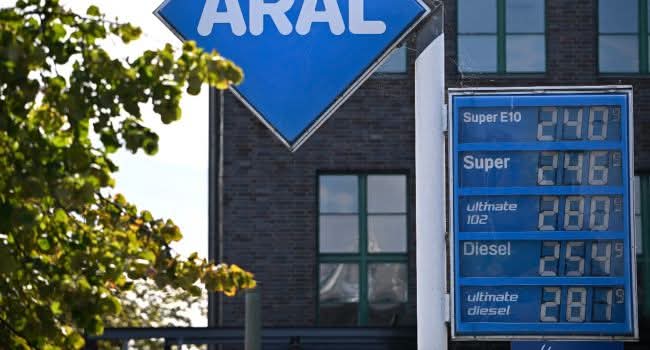
Petrol prices fell by about 14 cents per litre on average to €2.06, while diesel prices dropped by 15 cents to €2.20 per litre, according to Germany’s automobile association, ADAC.
Germany, like several other countries, has experienced a sharp increase in fuel prices amid disruptions to energy supplies from the Middle East.
However, some motorists said the reduction was insufficient to significantly ease the financial burden.
“It’s just a drop in the ocean,” Andrea Hoecker, a 33-year-old public relations worker, told AFP at a petrol station in Frankfurt.
“It helps in the short term, but in the long run I don’t think you can solve the problem with it,” she added.
Another motorist, Lorena Konle, a teacher, said fuel prices remained “unsatisfactory.”
“I have to be completely honest: with the prices we have, it doesn’t really make a difference,” she said.
The subsidy is officially set at 17 cents per litre, although factors including prevailing crude oil prices and exchange rates can influence the actual reduction motorists receive at filling stations.
Several motoring organisations have also raised concerns that the full value of the subsidy may not be passed on to consumers.
During an earlier fuel subsidy programme in May and June, energy companies retained about €200 million of the €1.6 billion paid by the government, according to Germany’s Monopolies Commission, the country’s competition watchdog.
“This new fuel discount must now finally reach consumers in full,” a spokeswoman for the Auto Club Europa said.
She warned that part of the subsidy must not once again “get stuck with the oil industry.”
Some economists have criticised the measure for not being sufficiently targeted at households most affected by rising costs, including lower-income workers and pensioners.
“The fuel discount leads to redistribution in favour of frequent drivers with large cars,” Clemens Fuest, head of the Ifo Institute, told the Augsburger Allgemeine.
Other European Union countries have also introduced measures to cushion consumers from higher fuel costs, including fuel-tax reductions and direct payments to citizens.