LETTER: Comparing Road Construction Under Buhari and Tinubu and Current Inconveniences Suffered

Dear Editor,
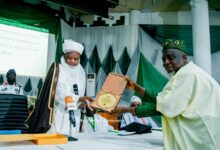
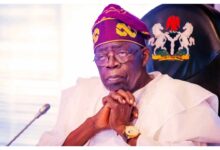
I write because I have seen The DEFENDER Newspaper as a medium for aggrieved Nigerians to express themselves to the hearing of those who are constitutionally charged to pick and address those grievances. Also I am encouraged to write by a comparative article by an Igbo fellow Nigerian citizen, published recently in your esteemed newspaper, in which he expressed his displeasure over what he perceived as efforts by President Bola Ahmed Tinubu and members of his administration to diminish the achievements and legacy of former President Muhammadu Buhari.
The Nigerian people are the owners of these projects. Government merely administers them on their behalf. This is why the comparison between road construction under Buhari and Tinubu should not become merely a political argument. It should be an opportunity to examine which approaches minimise inconvenience to citizens while delivering durable infrastructure.
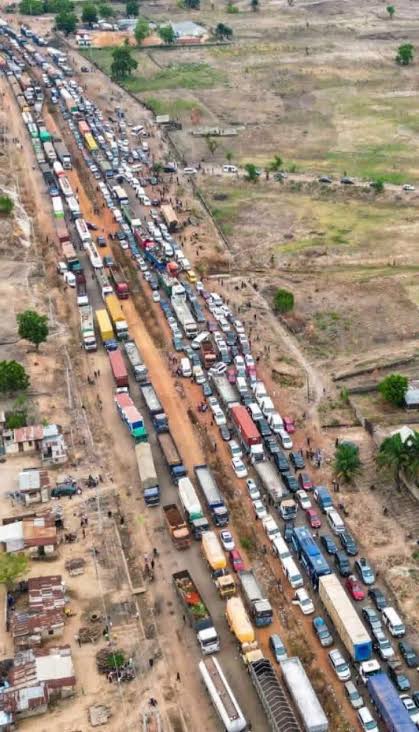
My own decision to write this letter has been prompted by my horrible experiences travelling along some of the country’s major highways, particularly the Kara end of the Lagos-Ibadan Expressway, the Akure-Owo-Abuja Road, the Lokoja-Abuja Road and, more recently, the Abuja-Lokoja axis.
I therefore appeal to you, Mr Editor, to use the good position of The DEFENDER Newspaper to draw the attention of those in authority to the harrowing experiences Nigerians are currently going through on these roads.
It is certainly a terrible experience for an ordinary Nigerian who, due to the high cost of air travel, has to depend on road transportation, only to spend a minimum of five hours between Lokoja and Abuja alone and, in some cases, as much as 24 hours travelling from Lagos to Abuja (a nine, ten hours journey ordinarily) and vice versa because of road construction, diversions and traffic congestion.
Mr President and those working on your behalf to monitor the numerous road reconstruction projects across the country, Nigerians should not have to suffer or be pushed to the limits of physical and mental exhaustion before they can enjoy the benefits of good governance.
I remember the reconstruction of the Lokoja-Abuja Road during the administration of former President Muhammadu Buhari. The road was reconstructed in phases, including through Sukuk-funded projects, and, from my personal experience, traffic was reasonably well managed while the work was ongoing. Motorists were able to move without being subjected to the kind of prolonged gridlock and uncertainty that travellers now encounter on some portions of the route.
The question therefore is not whether roads should be reconstructed. Nigerians certainly want better roads. The question is whether road construction must necessarily translate into unbearable suffering for the people who use those roads.
On the Lokoja-Abuja axis, one cannot ignore the difficulties currently being experienced around some portions of the road, including the area around the Murtala Muhammed Long Bridge and the Confluence area.
There is also a concern among road users that some portions of roads previously completed under the Sukuk-funded projects are now being removed or subjected to further reconstruction, including proposals to replace some sections with concrete pavement. If there are genuine engineering reasons for doing so, Nigerians deserve to be properly informed.
Government has a responsibility not only to construct infrastructure but also to explain major decisions concerning public infrastructure, particularly where such decisions cause significant inconvenience to citizens.
There are other examples across the country.
Take the Goro portion of the Sango-Ota-Idiroko Road in Ogun State. This is an important international and ECOWAS route, yet motorists and residents have continued to experience serious difficulties along portions of the corridor.
The situation is compounded by the prolonged construction of flyovers, including those around Iju Ore and Winners. These projects have been under construction for a considerable period, leaving motorists to endure congestion and other inconveniences.
What is even more disturbing is the perception that some infrastructure projects are gradually becoming instruments of political campaigning rather than simply projects designed to serve the public.
Around the same corridor, political billboards bearing the names of political actors, including “Yayi” and President Tinubu, have become prominent. To an ordinary road user, such displays may create the impression that the completion of the projects is being presented as something for which political support should be exchanged.
But an international road should not be politicised.
The Sango-Ota-Idiroko corridor serves not only Nigerians but also regional trade and movement between Nigeria and the Republic of Benin. If the neighbouring country has improved and completed portions of its own side of the route, Nigerians have every right to ask why corresponding portions on the Nigerian side should remain in difficult condition for so long.
Infrastructure should be treated as a national responsibility, not as a campaign trophy.
There is also something troubling about the way some members of the public respond to these circumstances. At times, people who are directly affected by poor roads, traffic congestion, rising transportation costs and prolonged construction still organise celebrations, roll out drums and sing praises of political leaders.
There is nothing wrong with appreciating government achievements. However, citizens must also be able to ask questions and demand accountability. Democracy should not turn citizens into spectators who applaud everything government does, even when their daily experiences tell them that something needs to change.
This is not about Buhari versus Tinubu. It is about the Nigerian traveller.
A Nigerian travelling from one part of the country to another does not care whether a road project was initiated by Buhari, Tinubu, Jonathan, Yar’Adua or Obasanjo. What the traveller wants is a safe, durable and accessible road.
The same concern applies to the Abuja-Kaduna Road. While substantial interventions have been made on the route, there are still portions that require attention. Where concrete construction has been undertaken, motorists should not continue to encounter conditions that make them wonder whether completed portions have actually been delivered to the required standard.
Then there is the deplorable condition of the Mokwa-Makera-Kontagora axis. The situation has become particularly worrying for heavy-duty vehicles because many of them have no practical alternative routes. When such roads become nearly impassable, the consequences extend beyond the motorists themselves. They affect the movement of food, fuel, agricultural produce, manufactured goods and other essential commodities.
The East-West Road and other major highways across the country equally deserve sustained attention.
There is also the wider environmental problem. In many places, Nigerians have to contend with dust generated by road construction and traffic, while indiscriminate dumping of refuse has made several urban and rural environments unpleasant and unhealthy.
Mr President, Nigerians do not oppose road construction. On the contrary, we welcome every genuine effort to provide good infrastructure. But good governance should not require citizens to endure unnecessary hardship before they can enjoy its benefits.
There must be better coordination between contractors, government agencies, traffic managers and communities. Where roads are being reconstructed, traffic should be properly managed. Where diversions are necessary, alternative routes should be made reasonably usable. Contractors should be held to realistic completion timelines, while government agencies should regularly update the public on the progress of major projects.
Most importantly, there should be continuity in governance.
A new administration should not automatically regard every project inherited from its predecessor as something that must be altered or reconstructed. Where a project is sound, it should be completed. Where modification is technically necessary, the reasons should be made clear to Nigerians.
The Nigerian people are the owners of these projects. Government merely administers them on their behalf.
This is why the comparison between road construction under Buhari and Tinubu should not become merely a political argument. It should be an opportunity to examine which approaches minimise inconvenience to citizens while delivering durable infrastructure.
The ultimate test should be simple: Can Nigerians travel safely, comfortably and within a reasonable period while government is constructing or rehabilitating their roads?
If the answer is no, then something needs to change.
Mr President, Nigerians should not have to experience harrowing journeys before enjoying good roads. Development should improve the quality of life, not make ordinary citizens feel punished for using the country’s highways.
As the saying goes, a stitch in time saves nine.
I therefore appeal to the Federal Government and the relevant authorities to urgently review traffic management, construction timelines, contractor performance and the condition of major highways across the country.
Thank you, Mr Editor, for providing me this opportunity to speak to those in authority about the collective suffering of Nigerians.
Omololu Arijabo
Karu, Abuja
25 September 2026