POST-SUPREME COURT JUDGEMENT: What we are going to do over Rivers APC, Gombe PDP, Nasarawa SDP, other csndidacies – INEC

By KEMI KASUMU and OUR REPORTER
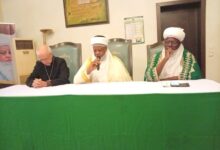

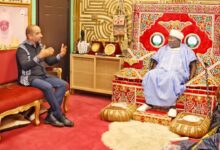
Ifogah said: “The Commission has to meet after receiving the Certified True Copy (CTC) of the judgment. If you are asking for my opinion on the judgment, I don’t think I have anything to say, but I think the Commission will meet and review it, then come up with a decision.”
The Independent National Electoral Commission (INEC) has revealed what it will do following the recent verdict of the Supreme Court of Nigeria affecting the candidacies of the All Progressives Congress (APC) in Rivers State, Peoples Democratic Party (PDP) in Gombe State and Social Democratic Party (SDP) in Nasarawa State among itgers.
It said it would first obtain and then review the Certified True Copy (CTC) to ascertain the position of the apex court on disputed provisions of the Electoral Act 2026 before determining how to implement the ruling.
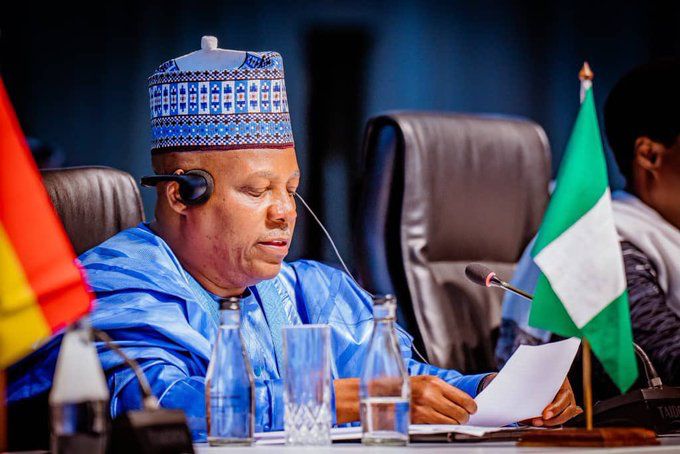
INEC’s Deputy Director, Voter Education and Publicity, Wilfred Ifogah, disclosed this Sunday while responding to a media inquiry on the implications of the judgment.
His comment came as some candidates whose political fortunes have been linked to the Supreme Court ruling insisted that their candidacies remain valid.
Among them are former Inspector-General of Police and Social Democratic Party (SDP) governorship candidate in Nasarawa State, Mohammed Abubakar Adamu; former Minister of Communications and Digital Economy and Peoples Democratic Party (PDP) governorship candidate in Gombe State, Professor Isa Ali Pantami; and the All Progressives Congress (APC) governorship candidate in Rivers State, Hon. Kingsley Chinda.
Ifogah, however, said INEC would first obtain the CTC of the judgment, review its contents and thereafter determine its next steps.
He said: “The Commission has to meet after receiving the Certified True Copy (CTC) of the judgment. If you are asking for my opinion on the judgment, I don’t think I have anything to say, but I think the Commission will meet and review it, then come up with a decision.”
The Supreme Court had on Thursday upheld INEC’s appeal against the July 16 judgment of the Court of Appeal, which had voided provisions of the Electoral Act 2026 relating to political party membership registers and the nomination of candidates.
A seven-member panel of the apex court, led by Justice Adamu Jauro, set aside the Court of Appeal judgment and restored the decision of the Federal High Court in Abuja, which had dismissed a suit filed by the Zenith Labour Party (ZLP).
The dispute followed a suit by the ZLP challenging Sections 77(5), 77(6), 77(7) and 84(2) of the Electoral Act 2026.
The party had argued that the provisions were inconsistent with the 1999 Constitution and amounted to interference in the internal affairs of political parties.
The Federal High Court, presided over by Justice Mohammed Umar, dismissed the suit on May 5, 2026, prompting the ZLP to appeal.
The Abuja Division of the Court of Appeal subsequently allowed the appeal in part in its July 16 judgment and voided the disputed provisions.
Dissatisfied with the decision, INEC appealed to the Supreme Court, seeking restoration of the provisions.
The apex court reserved judgment after hearing arguments from the parties on September 16 and delivered its judgment on September 24.
The provisions restored by the Supreme Court include Sections 77(5), 77(6) and 77(7), which deal with requirements concerning political parties’ membership registers, as well as Section 84(2), which provides for direct primaries or consensus as methods of nominating candidates.
Adamu: Supreme Court Verdict Does Not Affect My Candidacy
Meanwhile, former Inspector-General of Police and SDP governorship candidate in Nasarawa State, Mohammed Abubakar Adamu, has dismissed claims that the Supreme Court judgment disqualified him from the forthcoming election.
Adamu said what he described as a misinterpretation of the judgment and premature celebration by some elements of the APC in the state were based on a misunderstanding of the ruling.
He spoke through High Chief Otaru Douglas, Director of Digital Media and Strategic Communications of his campaign organisation.
Adamu had contested the APC governorship primary in Nasarawa State and, after losing, defected to the SDP, where he secured the party’s ticket.
Douglas said the Supreme Court judgment in the case numbered SC/CR/495/2026 merely restored the constitutionality of Sections 77(5), (6), (7) and 84(2) of the Electoral Act 2026 after the Court of Appeal had declared them unconstitutional.
“The judgment is a general affirmation of INEC’s regulatory powers over party membership registers. It is not a judgment against the Social Democratic Party, nor against Rtd. IGP Mohammed Abubakar Adamu,” he said.
He maintained that no court had invalidated the SDP membership register, nullified the direct primary or consensus process through which Adamu emerged, or ordered INEC to delist him.
“The Certified True Copy of the judgment has not even been released, yet they are already manufacturing victory,” Douglas added.
According to him, the SDP complied substantially with the Electoral Act 2022, as amended in 2026, by compiling and submitting its membership register to INEC within the contemplation of the law.
He also said the party’s nomination process complied with Section 84(2), through a direct primary monitored by INEC.
“Therefore, the candidacy of Rtd. IGP Mohammed Abubakar Adamu, CFR, is valid, lawful, and remains on the ballot,” he said.
Pantami Supporters Insist on Candidacy
Similarly, supporters of former Minister of Communications and Digital Economy, Professor Isa Ali Ibrahim Pantami, under the aegis of the Pantamiyya Movement, have insisted that the latest Supreme Court judgment does not affect his bid to contest the 2027 Gombe State governorship election on the PDP platform.
The movement’s spokesperson, Ibrahim M. Alfathir, said the group accepted the Federal High Court judgment and maintained that it did not disqualify Pantami from participating in another PDP governorship primary.
The movement urged its members and supporters to remain calm and law-abiding pending the fresh primary, saying Pantami would participate in the exercise as directed by the court.
Pantami’s political journey to the PDP followed his earlier attempt to secure the APC governorship ticket.
He initially pursued the APC ticket but withdrew from the party’s primary in May, citing alleged irregularities. He subsequently resigned from the APC and joined the PDP.
He later emerged from the PDP’s May 26 governorship primary, a process that was subsequently challenged in court.
The Federal High Court, while nullifying that primary, did not bar Pantami from participating in a fresh contest.
Reports of the judgment also indicate that the court did not grant a request to invalidate his PDP membership on the basis of his previous APC affiliation.
The PDP has fixed Tuesday, September 29, 2026, for the fresh Gombe governorship primary and cleared Pantami, Khamisu Ahmed Mailantarki and Usman Aliyu Garry to participate.
The party also maintained that the Supreme Court’s latest decision did not affect Pantami’s eligibility for the rescheduled primary.
Attempts to obtain further comments from Pantami’s spokespersons were unsuccessful as of the time of filing the report.
However, Pantami’s lawyer, Barrister Attahir, had told LEADERSHIP that his client was ready to participate in a fresh PDP primary following the court rulings.
He also rejected claims that Pantami had been excluded or disqualified from contesting.
Chinda: No Consequential Order Against My Candidacy
Also reacting to the development, APC governorship candidate in Rivers State, Hon. Kingsley Chinda, said the Supreme Court did not make any consequential order affecting his candidacy.
He spoke through his close ally and APC chieftain, Chief Oby Ndukwe.
Speaking with LEADERSHIP in Port Harcourt, Ndukwe said there was no suit challenging Chinda’s eligibility to contest the forthcoming governorship election in Rivers State.
He also argued that the Supreme Court had previously held that issues concerning party primaries were internal affairs of political parties.
“Let’s start by saying that there is no suit challenging O.K. Chinda’s election or eligibility for the election. That is number one,” Ndukwe said.
According to him, the ZLP case was against INEC and concerned the commission’s regulatory powers under the Electoral Act and the Constitution.
“The issue is the nomination of candidates for election and membership of political parties. First of all, you have to understand that every party has its own constitution, and the law is straight according to the Supreme Court that whatever has to do with primaries is an internal affair of political parties, not even for the courts to decide,” he said.
Ndukwe added that political parties could grant waivers to individuals seeking to contest elections, provided their actions complied with applicable constitutional and legal provisions.
He said the Supreme Court’s ruling also clarified the requirement for political parties to submit their membership registers to INEC.
“Being a member of a political party is an exclusive preserve of that political party, depending on how they choose to conduct their primaries within the provisions of the Constitution,” he said.
He further argued that an outsider could not determine a political party’s candidate, adding that only individuals who contested the primary against Chinda could challenge his candidacy.
“It is only those who contested the primaries with O.K. Chinda that can go to court and challenge his candidacy.
“Until that happens and the courts decide on it, there is no threat to his candidacy.
“For those who are celebrating or those who are apprehensive, the Supreme Court did not make any consequential orders concerning anybody who might have been affected by the judgment.”