Before You Criticise Shari’ah in Northern Nigeria, Look at Your Own Society
By SHARIFDEEN ABBAS
(Friday August 21, 2026)
The real issue should not be whether a law comes from the North or the South, or whether it is supported by Muslims or Christians. The real question should be whether it is lawful, fair, constitutional and beneficial to the people.
Nigerians especially of the Southern extractions who are most vocal in the public space often use both traditional and social media to express their views. In recent times, some voices, particularly from the South-West, have been strongly criticising the renewed implementation of Shari’ah in parts of Northern Nigeria.
Some Southerners often appear more concerned about problems in the North than about challenges within their own communities. They are quick to portray Northern Nigeria – like they do even to Saudi Arabia – as societies where Muslims allow social vices such as alcohol abuse, prostitution, hooliganism and other forms of misconduct.
However, when governments in the North take steps to address some of these problems through laws and policies based on Shari’ah, the same critics oppose them. The question is: why should people in other parts of the country decide how a state should regulate the lives of its own people, provided such laws are within the Nigerian Constitution?
I mean the Governor of Anambra State Professor Charles Chukwuma Soludo once banned the use of mini-skirts by students and women’s appearance in braless dresses. Rather than these Southern critics speak about it,they used it as indices of good governance by the governor. But a ban on promiscuity in “Muslim” marriages (not Christian marriages) in the North, these same Southerners do not only criticise, they also go extra miles to spread falsehoods and misinformation against them. What if members of those Northern societies become uncontrollably provoked by these mischiefs that fellow citizens in other parts of their country are perpetrating against them?
Southerners who sit comfortably on social and mainstream media to do the provocative things against the North and, in the case of mainstream media, practitioners who take sides with the mischief makers by only getting more and more people to speak against without allowing the affected states and people of the North to present the truth of what they do but are being misrepresented should beware knowing that journalism profession is more beautifully practicable in an environment of unity, peace and security. If they become the tools for masterminding violence in society, what do they stand to gain? But they definitely have a lot to lose either directly or remotely.
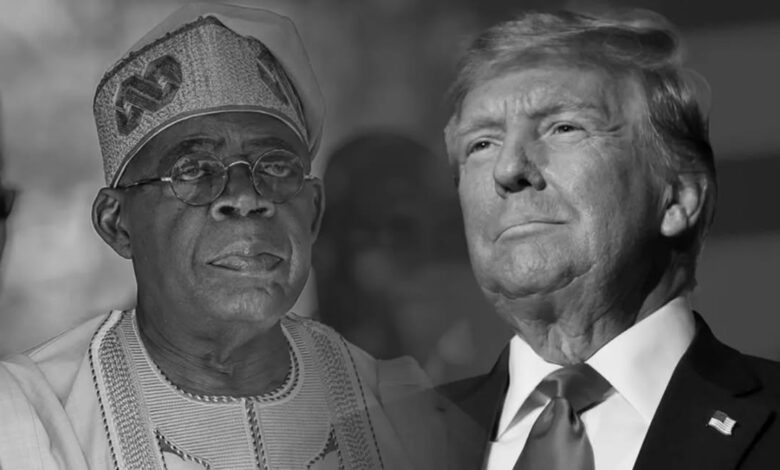
Some critics also dismiss Shari’ah in the North as “political” reason they incited United States Donald Trump who has now turned his country a laughing stock in the eyes of the serious world to promulgate a law there in Washington D.C. that will ban and expunge Shari’ah Law from the Nigeria’s National Constitution. They even justified that incitement, which Trump truly fell for but failed, by making him realize that their inexistent Christian genocide claim of Muslims killing Christians was based on the instructions of Shari’ah and that the best way to achieving the removal of that Shari’ah and killed Islam in Nigeria was to first declare the seat of Islamic leadership in Nigeria, the Sokoto Caliphate, as a terrorist state and then collapse it. What kind of Nigerians would do this to his country? Definitely not any patriotic but traitor. In a society where the national Constitution is truly defended and is well protected, such traitors should not be entitled to mixing with normal people.
But, if you say Shari’ah Law in Northern Nigeria is being done to play politics, what law is then completely separated from governance and politics anywhere in the world, is it in South West Nigeria or South East or the South South? Governments make laws and regulations to guide society, maintain order and protect the interests of their citizens.
Where people in some Northern states believe that greater application of Shari’ah can help address social problems, they have the right to express that preference within the framework of the Constitution. It is therefore difficult to understand why people in other parts of the country should insist that such decisions must not be taken.
The same principle applies to the South-West. If people in the region oppose the introduction of Shari’ah in their states, that is their position. But Muslim communities in the South-West also have constitutional rights to practise their religion, provided they remain within the law.
Critics should therefore avoid portraying every attempt to apply Shari’ah as an attack on Christians or non-Muslims. In a plural society such as Nigeria, religious and cultural differences should be handled through dialogue, constitutional safeguards and mutual respect.
It is also important to understand that the existence of Shari’ah does not mean that every Muslim will automatically obey it. Just as criminal offences still occur in states governed by Nigeria’s general laws, people can also violate religious laws. The political will of the state leaders to now bring people to book for any crime or offence committed remains a thing that critics should look at, not ranting on constitutional rights being activated by state law.
The fact that some people drink alcohol, commit adultery, steal or commit other crimes does not mean that the laws against those offences are useless. A law exists precisely because there are people who may violate it.
Muslims who advocate Shari’ah generally believe that it provides religious and moral guidance based on Islamic teachings. Whether one agrees with that position or not, it should be understood rather than misrepresented.
There have also been attempts to use recent policies by Burkina Faso’s President, Ibrahim Traoré, concerning students studying Islamic-related courses abroad as an argument against Islam or Shari’ah in Nigeria. Such an interpretation, however, requires a proper understanding of the policy and its context.
Traoré is a Muslim who, like Muslims elsewhere, believes in the Qur’an, the oneness of Allah, the prophethood of Muhammad, peace be upon him, daily prayers, fasting in Ramadan, zakat and pilgrimage for those who are able to perform it. His decision on education policy should therefore not automatically be presented as evidence against Islam itself.
A country may decide that students should diversify their areas of study so that they can contribute to national development in different fields. That does not necessarily amount to opposition to Islam or Islamic education.
The same caution should apply when discussing Shari’ah in Nigeria. Claims that a particular state has introduced Shari’ah provisions that automatically force Christians to obey Islamic religious practices should be supported by clear evidence. Sensational claims only deepen mistrust between communities.
It is also unfair to label institutions established to enforce state laws as terrorist organisations without evidence. Legitimate criticism of any government agency is possible without resorting to inflammatory or dangerous labels. Hizbah, like Amotekun of South-West, is a state law enforcement agency in Northern Nigeria that must be treated with respect and anyone found to undermine it should be made to prove himself before a court of jurisdiction.
The same standard should be applied across the country. If a state government introduces a law or policy that affects a particular group of Nigerians, that policy should be examined on its merits, regardless of whether the state is in the North, South-West, South-East or South-South.
For example, where concerns are raised about laws affecting the ability of Fulani people or other Nigerians to acquire land or conduct legitimate businesses in a particular state, such policies should receive the same level of scrutiny as laws introduced by Northern states.
It is therefore inconsistent to criticise Northern states for making laws to address social problems while ignoring similar questions about laws and policies in Southern states.
Nigeria belongs to all Nigerians. No region has a monopoly over the country’s laws, resources, culture or political space. Northerners, Southerners, Christians and Muslims are all stakeholders in the Nigerian project.
Instead of constantly attacking one another over religious and regional differences, Nigerians should demand good governance, fairness and respect for constitutional rights from every government.
If a Northern state chooses to apply aspects of Shari’ah within the limits permitted by the Constitution, the discussion should be based on facts, not stereotypes. If a Southern state makes policies that affect particular groups of Nigerians, those policies should also be examined objectively.
Before anyone condemns Shari’ah in Northern Nigeria, therefore, it is worth looking at the laws and policies in their own part of the country and asking whether the same standards are being applied.
The real issue should not be whether a law comes from the North or the South, or whether it is supported by Muslims or Christians. The real question should be whether it is lawful, fair, constitutional and beneficial to the people.