Writer clarifies, defends Burkina Faso’s Sharia Law Study-Abroad Policy, knocks media generated controversy it sparks in Nigeria
By KEMI KASUMU
Abas, in his commentary, argued that Nigerian media personalities should distinguish between Burkina Faso’s domestic policy choices and Nigeria’s own educational system, insisting that President Traoré’s position should be understood within the context of Burkina Faso’s social, economic and security challenges.
The reported decision by Burkina Faso’s President, Ibrahim Traoré, concerning citizens who wish to study Sharia law abroad has generated reactions in parts of the Nigerian media, with some commentators questioning the relevance of religious and Arabic studies at a time when the world is increasingly focused on artificial intelligence, science and technology.
CLICK HERE TO WATCH VIDEO OF ANOTHER TRAORE’S REPLY TO US ON TERRORISM FIGHT
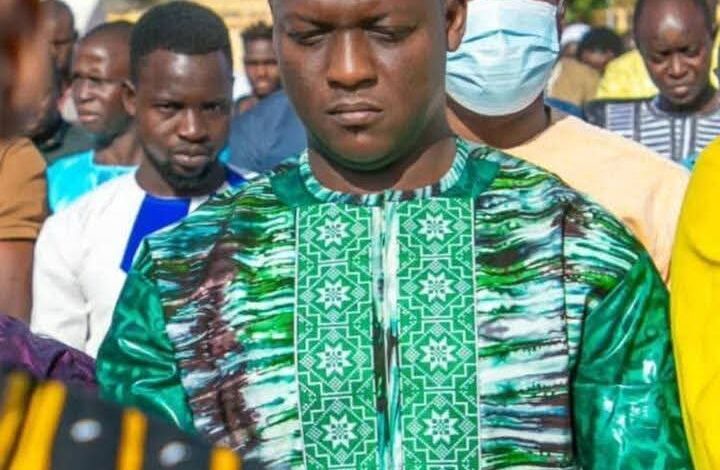
However, writer Shamsudeen Abas has criticised what he describes as the selective interest of some Nigerian broadcasters in the Burkina Faso policy, arguing that the issue has been taken out of context and unnecessarily linked to debates about Arabic language education in Nigeria.
He made the clarifications and defence of the policy in an article published earlier on Tuesday July 21, 2026 in The DEFENDER.
Abas, in his commentary, argued that Nigerian media personalities should distinguish between Burkina Faso’s domestic policy choices and Nigeria’s own educational system, insisting that President Traoré’s position should be understood within the context of Burkina Faso’s social, economic and security challenges.
According to him, it is inappropriate for Nigerian commentators to use the Burkina Faso policy as a basis for attacking the teaching of Arabic or Islamic studies in Nigeria.
He said, “When did you as a Nigerian broadcaster start commenting on the rich words of Burkina Faso’s Traoré? Oh! Now because he talked about something that resembled what you hate with passion, you now make it a central point of your television morning discussions.”
Abas recalled previous statements attributed to Traoré concerning the construction of mosques in Burkina Faso. He claimed that the Burkinabe leader had previously expressed a preference for resources to be invested in schools and other development projects rather than an excessive proliferation of mosques.
The writer argued that such a position should not necessarily be interpreted as hostility towards Islam or Muslims, but rather as a preference for directing limited public resources towards sectors that contribute directly to national development.
He also maintained that Traoré’s position on Sharia law education abroad should be viewed in the same context.
According to Abas, Burkina Faso is undergoing what he described as a period of national reconstruction and is seeking to develop human capacity in areas that can contribute directly to its economy.
He argued that studying religious law is not inherently incompatible with modern development, but maintained that countries facing severe economic and security challenges may choose to prioritise educational programmes with immediate economic and professional benefits.
The writer further argued that Islamic teachings encourage Muslims to combine religious obligations with productive economic activity, insisting that religious education should not be presented as an alternative to vocational, scientific or professional training.
Drawing a comparison with Nigeria, Abas asked why Nigerians who aspire to become lawyers are encouraged to study law, while some people question the relevance of studying Sharia law.
He argued that Nigeria’s legal system incorporates elements of English common law and customary law, while Sharia law also operates within the legal framework of some parts of the country, particularly in relation to personal and family matters and, in some northern states, within the jurisdiction of Sharia courts.
Abas therefore contended that the debate should be approached from the perspective of the needs and circumstances of each country rather than through religious or ideological prejudice.
He further criticised Nigerian commentators who, in his view, have used the Burkina Faso debate to question the place of Arabic in Nigeria’s educational system.
According to him, Arabic should not be dismissed as irrelevant because it serves both as a major international language and as a language of religious worship for millions of Muslims in Nigeria and around the world.
He argued that if Nigeria can recognise the importance of English, French and other foreign languages for educational, diplomatic and economic purposes, there should also be room for Arabic language studies.
“Arabic is not just a channel of communication for a large number of Nigerians but also the language of worship for a significant Muslim population,” he said, arguing that the language has cultural, historical and religious significance.
The writer also challenged what he described as a double standard in the treatment of different languages and fields of study in Nigeria. He maintained that the country’s educational system should accommodate linguistic diversity and allow students to pursue disciplines based on their interests and the needs of society.
He said the discussion should not be reduced to a contest between Christianity and Islam, or between English and Arabic, but should instead focus on how education can contribute to national development.
Abas also linked the debate to the broader security challenges facing Burkina Faso, Mali and Niger. He argued that the Sahel countries are confronting serious terrorism and insecurity and that their governments are therefore seeking new approaches to education, security and national reconstruction.
However, his assertion that religious education is being used as a recruitment ground for terrorism is a contentious claim that has not been established as a general fact. Nevertheless, he maintained that governments have a responsibility to ensure that all educational programmes, whether religious or secular, contribute positively to national development and do not undermine public safety.
The writer further criticised what he described as excessive Western influence on African political, economic and educational systems. He argued that African countries should have the freedom to design policies that reflect their own cultural realities and development priorities.
According to him, Nigeria should learn from countries that are attempting to reform their institutions and invest in infrastructure, education, healthcare, industry and security.
He particularly praised the reported development efforts of the Traoré administration, while urging Nigerian journalists, broadcasters and public commentators to exercise caution when discussing policies introduced by other African countries, especially when such policies are being examined outside their broader social and economic context.
He said the Nigerian media should focus more attention on domestic issues such as insecurity, unemployment, infrastructure deficits, education and economic development rather than creating what he described as unnecessary controversies around the religious and linguistic policies of other countries.
The writer concluded that Arabic, Islamic studies and Sharia law should be treated as distinct but interconnected areas of study within the broader context of Islamic education. He argued that debates about their relevance should be conducted objectively and without religious bigotry or ethnic bias.
“Traoré is a Muslim, and Burkina Faso is a predominantly Muslim country,” Abas stated, urging Nigerians to understand the country’s policies within its own national circumstances.
He further called on Nigerian broadcasters and public intellectuals to focus on policies that can help Nigeria address its own challenges, rather than turning the decisions of other African governments into platforms for religious or ideological controversy.
For Abas, the central question is not whether Arabic or Sharia law should be promoted at the expense of science and technology, but how African countries can create balanced education systems that preserve their cultural and religious identities while equipping citizens with the scientific, technical and professional skills required for economic development.
The controversy surrounding Burkina Faso’s reported policy, he argued, should therefore serve as an opportunity for a broader discussion about education, national priorities, religious freedom, cultural identity and the role of the media in shaping public discourse across Africa.