PRE-2027 COURT-BASED DEMOCRACY: Tinubu, his loyalists and the fear of “demons in the corridor of power”
By ABANIKANDA OLUMORO (UK)
Particularly contentious are claims surrounding the leadership of INEC and suggestions that political interests may be attempting to influence the commission’s operations ahead of the next electoral cycle.
As Nigeria gradually approaches the 2027 general elections, concerns are mounting in some political circles over what many observers describe as growing attempts to influence democratic institutions through judicial and political maneuvering. These concerns have sparked fresh debates about the role of the presidency, the independence of electoral institutions, and the future of Nigeria’s democracy.

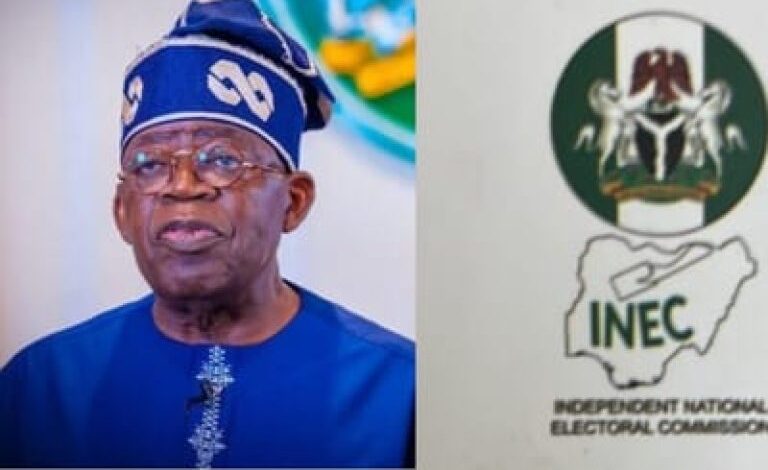
At the center of the debate is President Bola Ahmed Tinubu, whose administration is increasingly being called upon by critics and political commentators to take direct control of processes unfolding in his name and under his government. The argument being advanced is that the President must ensure that his administration is not remembered for actions that could undermine democratic principles or weaken public confidence in electoral institutions.
Among the issues generating controversy are reports of court cases involving opposition political parties and claims that some individuals within government circles are seeking to weaken the opposition through legal and administrative means. Particular attention has been drawn to allegations that attempts are being made to pressure the Independent National Electoral Commission (INEC) into taking actions against certain opposition parties.
For many concerned observers, the situation raises important questions about the independence of democratic institutions and the need for political actors to allow electoral competition to flourish without undue interference.
Lessons from History
The concerns being expressed have also revived references to a famous phrase popularized by veteran journalist and former presidential spokesman, Dr. Reuben Abati, who once warned about the influence of what he described as “demons in the corridors of power.”
The phrase has since become a metaphor in Nigerian political discourse for unelected individuals who allegedly wield enormous influence around elected leaders, sometimes shaping policies and decisions without public accountability.
Those invoking Abati’s warning argue that every administration faces the danger of being overshadowed by powerful aides, advisers, and political associates whose actions may ultimately define public perceptions of the government.
Supporters of this view insist that President Tinubu must guard against any situation where decisions affecting democratic institutions are taken by individuals acting in his name but without regard for the broader national interest.
Rumours, Perceptions and Political Reality
Recent political discussions have been fueled by rumours that certain influential figures around the President play decisive roles in appointments and strategic political decisions. These claims, while yet to be substantiated, have contributed to growing public debate about the relationship between political power and institutional independence.
Particularly contentious are claims surrounding the leadership of INEC and suggestions that political interests may be attempting to influence the commission’s operations ahead of the next electoral cycle.
Political analysts note that whether such allegations are true or not, public confidence in democratic institutions depends heavily on transparency, accountability and the visible independence of those institutions.
As a Yoruba proverb says, “Ti a ba nsukun a ma n riran” — while one is crying, one is still observing. The saying reflects the belief that citizens continue to scrutinize the actions of leaders and institutions, even amid political uncertainty.
Avoiding a Repeat of Past Democratic Crises
Some commentators have drawn parallels with previous moments in Nigeria’s democratic history, particularly the annulment of the June 12, 1993 presidential election, widely regarded as one of the country’s greatest political setbacks.
While the circumstances today are significantly different, those raising concerns argue that Nigeria must avoid any actions capable of creating doubts about the credibility of future elections or limiting the choices available to voters.
They contend that political parties should be allowed to compete freely and that disputes arising from internal party affairs should be resolved in accordance with existing laws without external interference.
For these critics, preserving the integrity of the electoral process is more important than securing short-term political advantages.
Tinubu’s Place in History
Ultimately, the central message emerging from these arguments is that President Tinubu must personally safeguard his political legacy.
Political associates, advisers and loyalists may come and go, but history will record the actions and decisions of the President himself. As another popular analogy suggests, birds perched on a tree will fly away when the tree falls, leaving the tree to bear the consequences alone.
Those urging caution therefore believe that the President should ensure that all democratic institutions — including the judiciary and the electoral commission — are allowed to operate independently and without political pressure.
They argue that a transparent and credible electoral process in 2027 would strengthen Nigeria’s democracy and cement Tinubu’s place as a leader who protected democratic values rather than one whose tenure became associated with controversy over electoral competition.
As the nation moves closer to another crucial election cycle, the challenge before the President, according to these voices, is to rise above partisan interests and ensure that Nigeria’s democratic institutions remain strong, impartial and trusted by all.
In politics, as the saying goes, a stitch in time saves nine.
*Olumoro is a regular contributor to national discourse from the Diaspora.