OLUWO’S STATE VISIT TO ZAZZAU: Truly a handshake across the Niger
By BASHIR ADEFAKA
“In a similar manner, the Oluwo’s journey from the South-West into Northern Nigeria reinforces the belief that unity is a shared responsibility requiring reciprocal gestures from leaders across every region. Such exchanges carry significance beyond royal protocol. They remind Nigerians that the country’s diversity should be celebrated as a source of strength rather than viewed as a basis for division.”
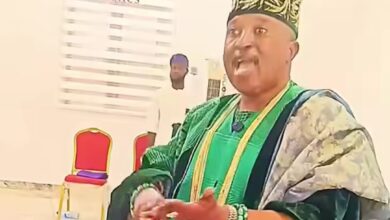
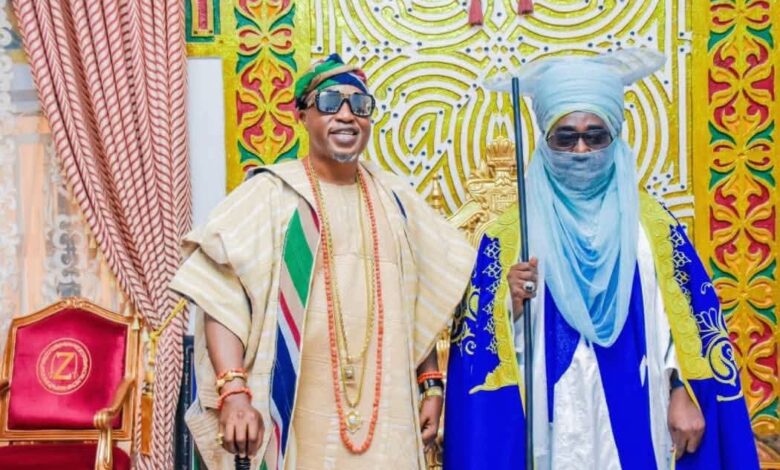
The recent state visit of the Oluwo of Iwo, His Imperial Majesty Oba Alhaji AbdulRasheed Adewale Akanbi, Telu I, to Northern Nigeria, spanning Kaduna State and extending to meeting the Shehu of Borno His Royal Highness Alhaji Abubakar Ibn Umar Garbai El-Kanemi, during the visit, was far more than a ceremonial tour. It was a powerful demonstration of national unity, cultural diplomacy and traditional leadership at a time when Nigeria continues to seek stronger bonds across its diverse ethnic, religious and regional identities.

From the moment the revered Yoruba monarch arrived in Zazzau, Kaduna State, and throughout his engagements with other traditional and government leaders including the Shehu of Borno and Governor of Kaduna State Senator Uba Sani, respectively, he was received with remarkable warmth, honour and enthusiasm by traditional rulers, government officials and ordinary citizens including members of the Yoruba communities in those places. The royal receptions reflected not merely respect for his person but recognition of the important role traditional institutions continue to play in promoting peace, understanding and national cohesion among Nigerians.
ALSO READ: Most Fulani, pasturalists are not Muslims, have no modrasat, mosque in their settlements – Oluwo
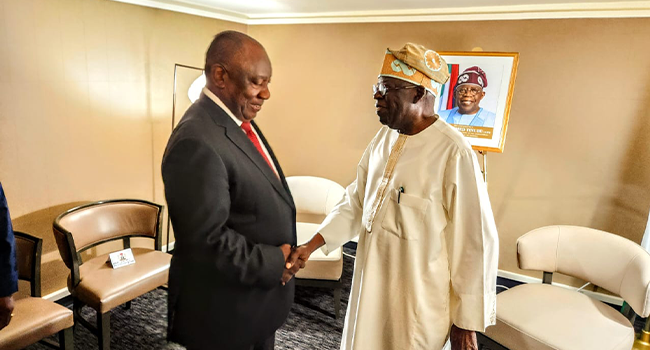
The visit, which coincided with the grand finale of “Renewed Hope 2nd West African Horse Racing Derby” held at the Murtala Muhammed Square, Kaduna, represented what can best be described as “a handshake across the Niger”—a symbolic crossing of geographical and cultural boundaries that have too often been exaggerated by political and social narratives. Rather than dwelling on the differences between North and South, the Oluwo chose to emphasise what unites Nigerians: shared humanity, mutual respect and a common aspiration for peace and development.
For years, the Sultan of Sokoto His Eminence Alhaji Muhammad Sa’ad Abubakar, CFR, mni, HFNIM, has consistently extended bridges of friendship, tolerance and national integration from the North towards the South through interfaith dialogue and engagements with traditional institutions across the country. In a similar manner, the Oluwo’s journey from the South-West into Northern Nigeria reinforces the belief that unity is a shared responsibility requiring reciprocal gestures from leaders across every region.
“The monarch has also repeatedly drawn a distinction between Yoruba culture and religious practice. He argues that Yoruba culture, like the cultures of Nigeria’s many ethnic nationalities, is not a religion but a rich heritage comprising language, customs, values, history and social norms shared by the people. According to him, preserving culture should never be mistaken for promoting religious beliefs or practices that conflict with an individual’s faith.”
Such exchanges carry significance beyond royal protocol. They remind Nigerians that the country’s diversity should be celebrated as a source of strength rather than viewed as a basis for division. Traditional rulers possess unique moral authority rooted in history, culture and community trust, making them indispensable partners in efforts to build harmony among the country’s many peoples.
The Oluwo of Iwo has, over the years, distinguished himself as a traditional ruler whose influence extends beyond Yorubaland. His outspoken advocacy for peace, religious tolerance and constitutional roles for traditional institutions has earned him recognition within and outside Nigeria. His engagements frequently transcend local concerns to address broader issues of national development, inter-ethnic understanding and responsible leadership.
Central to the Oluwo’s philosophy is his conviction that traditional rulership is a sacred trust. He has consistently maintained that a monarch occupies a divine position as Arole Olodumare—God’s representative within his community—and is therefore accountable first to the Almighty in the discharge of his responsibilities. In his view, the authority of a traditional ruler derives from God and should be exercised with justice, integrity, compassion and service to humanity.
The monarch has also repeatedly drawn a distinction between Yoruba culture and religious practice. He argues that Yoruba culture, like the cultures of Nigeria’s many ethnic nationalities, is not a religion but a rich heritage comprising language, customs, values, history and social norms shared by the people. According to him, preserving culture should never be mistaken for promoting religious beliefs or practices that conflict with an individual’s faith.
This perspective has shaped his approach to kingship, presenting traditional leadership as compatible with modern governance, religious freedom and national integration. It is an approach that resonates with many who believe that traditional institutions remain relevant in addressing contemporary challenges, particularly those relating to community cohesion and peaceful coexistence.
The reception accorded the Oluwo by the Emir of Zazzau His Royal Highness Alhaji Ahmed Nuhu Bamalli at the Zazzau Emirate Headquarters of Zaria in Kaduna and His Royal Highness Alhaji Abubakar Ibn Umar Garbai El-Kanemi, the Shehu of Borno at his Kaduna lodge, demonstrates that respect among Nigeria’s traditional institutions transcends ethnic and religious boundaries. It underscores the enduring influence of royal fathers as custodians of peace, mediators in conflict and ambassadors of cultural understanding.
Like with the Emir of Zazzau in the North-West, a major highlight of the Oluwo’s Northern tour was his audience with Abubakar Ibn Umar Garbai El-Kanemi, one of Nigeria’s most respected traditional rulers. The meeting symbolised the deepening relationship between the traditional institutions of the South-West and the North-East, reinforcing the shared commitment of both royal fathers to peace, national unity, cultural preservation and harmonious coexistence among Nigeria’s diverse peoples.
At a time when Nigeria continues to confront security challenges, economic pressures and occasional tensions along ethnic and religious lines, symbolic acts of solidarity such as the Oluwo’s Northern tour offer important lessons. They illustrate that unity is strengthened not merely through political declarations but through genuine human engagement, mutual respect and deliberate efforts to build bridges across historical divides.
Ultimately, the Oluwo of Iwo’s visit to Zazzau will be remembered not simply as a royal excursion but as a diplomatic journey of cultural reconciliation. It reaffirmed the timeless truth that Nigeria’s greatest strength lies in its diversity and that the country’s traditional rulers, working across regional boundaries, can remain powerful advocates for peace, harmony, love and sustainable national development.
Indeed, it was a handshake across the Niger—one whose significance reaches far beyond the banks of the great river to embrace the collective aspirations of a united Nigeria.
*Adefaka, a Prince of Isolo and Akure kingdoms in Akure South Local Government Area of Ondo State, South-West Nigeria, is a media proprietor and publisher of The DEFENDER Newspaper. Can be reached via his official email address: thedefenderngr@gmail.com