PERMUTATIONS FOR 2027 ELECTION SUCCESS: How the winner could emerge
By KEMI KASUMU
As political camps consolidate ahead of the next electoral cycle, observers say the battle for the presidency is increasingly shaping up as a contest that may depend less on incumbency and more on coalition-building, regional alliances and voter perception across the country’s geopolitical zones.
Fresh political permutations surrounding Nigeria’s 2027 presidential election are beginning to reshape conversations across party lines, with emerging alignments suggesting that the race may become one of the most competitive in the country’s democratic history.
An investigative assessment conducted by The DEFENDER Newspaper indicates that expectations that President Bola Ahmed Tinubu and the ruling All Progressives Congress (APC) would coast unchallenged into the next election cycle are rapidly fading as opposition parties intensify consultations and strategic realignments ahead of 2027.
Opposition coalition faces internal realignments
According to the report, political stakeholders who gathered at the Ibadan National Opposition Summit had initially agreed on the possibility of presenting a single consensus presidential candidate capable of confronting the APC in the 2027 election.
However, recent developments are said to have complicated that arrangement.
Former Kano State Governor Rabiu Musa Kwankwaso and former Anambra State Governor Peter Obi were reportedly among those involved in the summit discussions before allegedly distancing themselves from the coalition arrangement.
The report claims that both politicians are now linked with the Nigerian Democratic Congress (NDC), a platform some opposition figures reportedly believe could indirectly benefit President Tinubu’s re-election calculations by fragmenting opposition votes in the South.
Analysts cited in the investigation argue that the NDC’s decision to zone its presidential ticket to the South has further deepened suspicions among sections of the opposition, who fear the move may split support bases traditionally aligned with Obi and other Southern opposition candidates.
Multiple presidential aspirants emerging
Rather than maintaining a united front, major political blocs are now said to be preparing for independent presidential contests.
Within the Peoples Democratic Party (PDP), Oyo State Governor Seyi Makinde has reportedly emerged as a potential contender.
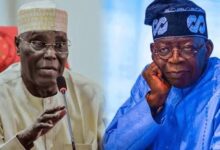
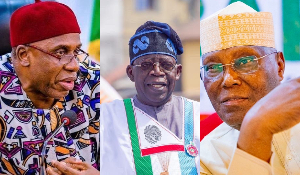
Meanwhile, former Vice President Atiku Abubakar, former Rivers State Governor Rotimi Amaechi and businessman Hayatu-Deen are all said to be positioning themselves for the presidential ticket of the African Democratic Congress (ADC).
The report suggests that Atiku remains one of the leading contenders for the ADC ticket, particularly if former Kaduna State Governor Nasir Ahmad El-Rufai ultimately decides not to join the race.
Political observers cited in the report also believe that if Atiku secures the ADC ticket, the party may seek a Southern running mate in Amaechi to balance the ticket geographically and politically.
Obi, Kwankwaso and the NDC calculations
Investigators further alleged that Obi and Kwankwaso had earlier explored the possibility of pursuing their ambitions through the People’s Redemption Party (PRP), but those plans reportedly failed to materialise.
The report claims that Obi could soon emerge as the NDC presidential candidate, with Kwankwaso potentially serving as his running mate, especially because the party has reportedly zoned its presidential ticket to the South.
However, political calculations surrounding the NDC could become significantly more complicated should former President Goodluck Jonathan decide to contest under the platform.
Northern political sentiment seen as decisive
One of the major conclusions of the investigation is the assertion that Northern voting behaviour may ultimately determine the outcome of the 2027 presidential election.
The report claims that dissatisfaction with President Tinubu’s administration is growing across sections of Northern Nigeria over issues including insecurity, economic hardship, unemployment and perceptions of political exclusion.
It further alleges that some Northern political actors feel disappointed with the outcomes of the Muslim-Muslim presidential ticket that brought Tinubu to power in 2023, particularly amid persistent security challenges affecting several Northern communities.
The investigation also references criticisms surrounding alleged imbalance in federal appointments, accusations of ethnic favouritism and frustrations over the administration’s economic reforms, including tax-related policies viewed by critics as burdensome.
Debate over zoning and power rotation
Another major factor highlighted in the report is the longstanding debate over rotational presidency and regional representation.
Some Northern stakeholders interviewed argued that political grievances dating back to the administration of late President Umar Musa Yar’Adua and the succession of Goodluck Jonathan continue to shape political perceptions in the region.
According to the report, these unresolved debates over power rotation and regional equity could significantly influence voter sentiment heading into 2027.
Opposition believes multi-candidate race could favour Atiku
The investigation concludes that a four-way presidential contest involving Tinubu, Atiku, Makinde and either Obi or Jonathan could dramatically reshape the electoral map.
Its projections suggest that opposition strategists believe a fragmented Southern vote combined with consolidated Northern support could place Atiku in a strong position to emerge victorious.
The report specifically predicts that the ADC and Atiku could perform strongly across much of Northern Nigeria, while Southern votes may be split among Tinubu, Obi and Makinde.
Concerns over electoral integrity
The investigation also raises concerns about the integrity of the electoral process, alleging fears among opposition figures regarding the neutrality of state institutions ahead of the election.
However, no official evidence was presented in the report to substantiate claims of institutional manipulation or election interference.
Political analysts continue to maintain that Nigeria’s 2027 election remains highly fluid, with party defections, coalition talks and zoning negotiations expected to intensify over the coming months. What may have changed is where the Electoral Law now sets a time within which a person can defect from one party to another. The time elapsed on May 12, 2026.
As political camps consolidate ahead of the next electoral cycle, observers say the battle for the presidency is increasingly shaping up as a contest that may depend less on incumbency and more on coalition-building, regional alliances and voter perception across the country’s geopolitical zones.