Tinubu’s oil decisions, regional politics, and the renewed North–South debate
By NASRUDEEN ABBAS
As Nigeria navigates economic hardship, hunger, and security challenges, the unfolding debate over Kolmani, Ogun oil drilling, and the legacy of past administrations may well define not only Tinubu’s presidency but the future trajectory of national cohesion itself.
Insinuations by elements within the Yoruba Nation movement and political allies of President Bola Ahmed Tinubu from the South-West that his administration represents a “liberation” of the region from what they describe as decades of Northern domination of Nigeria’s politics and economy have gained renewed attention in recent weeks.
These claims have drawn fresh scrutiny following President Tinubu’s approval of Ogun State as an oil-producing state of the federation, at a time when voices from Northern Nigeria are expressing concern over what they perceive as neglect nearly three years into his administration.
Supporters of the President argue that his decisions reflect long-overdue restructuring of political and economic power, while critics see them as evidence of regional bias and the systematic sidelining of projects initiated under his predecessor, the late former President, Major-General Muhammadu Buhari (retd), GCFR.
Allegations of policy discontinuity
Critics of the Tinubu administration allege that the President has consistently sought to deactivate, discontinue, or distance himself from major initiatives and achievements of the Buhari government. They argue that this posture is driven by a desire to avoid political association with Buhari’s legacy, even where such projects serve national interests.
Prominent among the cited examples is the Lagos–Okenne–Abuja road corridor initiated under Buhari. The project, which connects Apapa–Mile 2–Iyana Oworo through Ibadan, with links to Ile-Ife, Ilesha, Akure, and the Ibadan–Ilorin axis completed up to Ogbomosho, is seen by critics as strategically vital for national logistics and economic integration.
Instead of accelerating or completing this route, the Tinubu administration prioritised the Lagos-Calabar Coastal Road project, which has generated controversy over alleged constitutional lapses, including questions about legislative approval, transparency in contract awards, and reported payments exceeding one trillion naira without clear public accountability regarding the ownership of the construction firm involved.
Kolmani oil field and Northern concerns
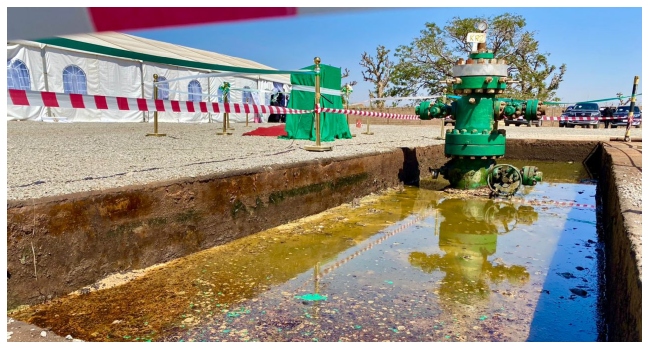
Another flashpoint in the regional debate is the Kolmani Oil and Gas Field, located between Gombe and Bauchi States. The project, officially launched in November 2022 under President Buhari, marked the first commercial oil discovery in Northern Nigeria after over six decades of exploration nationwide.
The Kolmani field is estimated to contain over one billion barrels of crude oil and 500 billion cubic feet of gas. The integrated development plan includes a 120,000 barrels-per-day refinery, a gas processing facility, a 300-megawatt power plant, and a fertiliser factory.
While operations at Kolmani have experienced delays and pauses, the Nigerian National Petroleum Company Limited (NNPC Ltd) has clarified that the project has not been abandoned. As of mid-2025, plans were announced to resume activities with larger and more efficient drilling rigs, transitioning from exploration to sustained production.
Despite these assurances, Northern stakeholders express concern that the Tinubu administration has shown greater enthusiasm for oil projects in the South-West—particularly Ogun State—than for completing and expanding the Kolmani initiative.
Ogun oil approval and rising tensions
On January 23, 2026, President Tinubu approved the commencement of commercial oil drilling at Tongeji Island in Ipokia Local Government Area of Ogun State. Ogun State Governor, Dapo Abiodun, also announced the President’s approval for the immediate take-off of the long-delayed Olokola Deep Seaport project, now renamed the Blue Marine Economic Zone.
While supporters describe these moves as inclusive development and economic empowerment for coastal communities, critics in the North argue that they reinforce perceptions of regional favoritism, particularly given the slow pace of visible progress at Kolmani.
Tribalism, political strategy, and public perception
Statements attributed to supporters of the Tinubu administration have further intensified regional unease. In an opinion shared with reporters in Ojo, Lagos State on January 31, 2026, a respondent simply identified as Akeem from Southern Kwara praised Tinubu’s political strategy, claiming it was designed to permanently weaken Northern political dominance.
According to Akeem, Tinubu’s handling of political actors in Lagos, his alleged role in the release of Yoruba nationalist figure Sunday Igboho, and his broader maneuvers were evidence of a calculated effort to restructure power in Nigeria away from the North.
Such comments, alongside policy decisions and legislative proposals—including controversial tax reforms, debates over indigene-ship versus residency rights, and perceived alignment with international Christian advocacy campaigns—have unsettled many Northern leaders and communities. Concerns have also been raised over foreign-linked initiatives allegedly favouring Christian populations in a predominantly Muslim country.
A nation at a crossroads
The controversy surrounding oil exploration approvals, project prioritisation, and perceived ethnic alignment underscores deeper tensions in Nigeria’s fragile federal structure. While President Tinubu has defended his policies as national in scope and economically driven, critics argue that symbolism, sequencing, and communication matter deeply in a country shaped by regional sensitivities.
As Nigeria navigates economic hardship, hunger, and security challenges, the unfolding debate over Kolmani, Ogun oil drilling, and the legacy of past administrations may well define not only Tinubu’s presidency but the future trajectory of national cohesion itself.