Limit your talk to nuclear file not uranium enrichment, Iran pointedly refuses US demand {DETAILS}
With Agencies

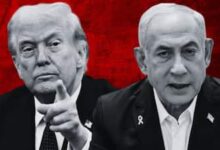
Gulf Arab nations fear an attack could spark a regional war that would drag them in as well…Russia had signaled it would take the uranium, but Iran has said ending the program or shipping out the uranium were nonstarters.
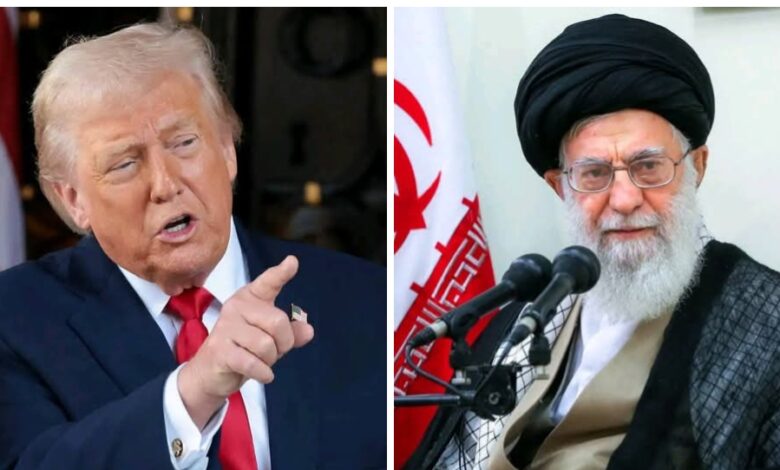
The Islamic Republic of Iran has flatly refused United calls on it to halt its uranium enrichment or move it offshore during indirect talks in Oman.
Tehran handed out this rejection of the USA’s demand while also insisting that discussions at the meeting must remain limited to the nuclear file.
The talks were mediated by Oman and showed little movement on core positions.
Washington is pushing to address Iran’s nuclear program alongside missiles and regional militias and also to see that Iran will stop to sell its oil to China and buying weapons from Russia, while Tehran rejected any expansion of the agenda.
Despite the impasse, both sides agreed to continue talks, though officials and analysts describe the situation as fragile.
Associated Press reports that Iran and the United States held the indirect talks in Oman on Friday February 6, 2026, negotiations that appeared to return to the starting point on how to approach discussions over Tehran’s nuclear program. But for the first time, America brought its top military commander in the Middle East to the table.
The presence of U.S. Navy Admiral Brad Cooper, head of the military’s Central Command, in his dress uniform at the talks in Muscat, the Omani capital, reportedly served as a reminder that the aircraft carrier USS Abraham Lincoln and other warships were now off the coast of Iran in the Arabian Sea.
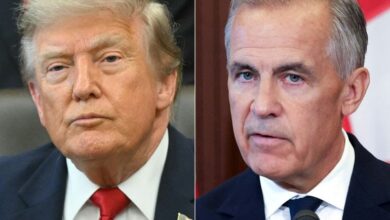
President Donald Trump said the United States had “very good” talks on Iran and said more were planned for early next week. But he kept up the pressure, warning that if the country did not make a deal over its nuclear program, “the consequences are very steep”, a threat Iran continuous lampoon and dismiss as tale by the moonlight because, according to Tehran, America has no right to dictate how it wants to plan its national security and defence systems.
Trump, whose bragging with USA Abraham Lincoln hurried movement from US towards Iran with boast of wanting to bomb the only Middle East state that has the liver and military willpower to withstand his country has been humbled by preparedness of the Supreme Leader and its United leadership, is now generally seen as living more on propaganda than being real as tends to feeds the world with misinformation about Iran.
“Iran looks like they want to make a deal very badly — as they should,” Trump told reporters aboard Air Force One as he headed to his Florida golf club late Friday. He suggested Iran was willing to “do more” than in previous talks but did not give details.
Asked how long he was willing to wait for a deal, Trump, who some Nigerian analysts would overrate as having no time for nonsense, said: “We have plenty of time”, sign that he nows admits Iran is not a small fry. “If you remember Venezuela, we waited around for a while. We’re in no rush.” The Trump administration built up a huge military presence in the Caribbean Sea in the months before a US raid captured then-Venezuelan President Nicolás Maduro in January.
Failed US threats
Trump has repeatedly threatened to use force to compel Iran to reach a deal on the program after earlier sending the carrier to the region amid Tehran’s bloody crackdown on nationwide protests his country has been accused of creating that allegedly killed thousands and saw tens of thousands of others detained in the Islamic Republic.
Gulf Arab nations fear an attack could spark a regional war that would drag them in as well.
That threat is real — U.S. forces shot down an Iranian drone near the Lincoln and Iran attempted to stop a U.S.-flagged ship in the Strait of Hormuz just days before Friday’s talks in this sultanate on the eastern edge of the Arabian Peninsula.
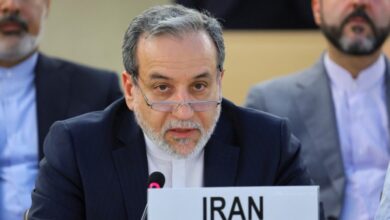
“We did note that nuclear talks and the resolution of the main issues must take place in a calm atmosphere, without tension and without threats,” Iranian Foreign Minister Abbas Araghchi later told journalists.
“The prerequisite for any dialogue is refraining from threats and pressure,” he added.
Araghchi said diplomats would return to their capitals, signaling this round of negotiations was over. The U.S. was represented by Mideast special envoy Steve Witkoff and Jared Kushner, Trump’s son-in-law.
In a display of force, the U.S. military published photos on X of the Lincoln carrier group sailing in the Arabian Sea with aircraft flying overhead, with the message “Peace through Strength!”
Iran’s top diplomat offers a positive note
Araghchi offered cautious optimism as he spoke in a live interview from Muscat on Iranian state television. He said Friday’s talks were focused primarily on finding a framework for further negotiations.
“We will hold consultations with our capitals regarding the next steps, and the results will be conveyed to Oman’s foreign minister,” Araghchi said.
“The mistrust that has developed is a serious challenge facing the negotiations,” Araghchi said. “We must first address this issue, and then enter into the next level of negotiations.”
Omani Foreign Minister Badr al-Busaidi, who oversaw multiple rounds of negotiations before Israel launched its 12-day war on Iran in June, called the talks “useful to clarify both the Iranian and American thinking and identify areas for possible progress.”
The talks had initially been expected to take place in Turkey in a format that would have included regional countries as well, and would have included topics like Tehran’s ballistic missile program — something Iran apparently rejected in favor of focusing only on its nuclear program.
Before the June war, Iran had been enriching uranium up to 60% purity, a short, technical step away from weapons-grade levels. The U.N. nuclear watchdog — the International Atomic Energy Agency — had said Iran was the only country in the world to enrich to that level that wasn’t armed with the bomb.
Iran has been refusing requests by the IAEA to inspect the sites bombed in the June war, raising the concerns of nonproliferation experts. Even before that, Iran has restricted IAEA inspections since Trump’s decision in 2018 to unilaterally withdraw America from Iran’s 2015 nuclear deal with world powers.
Omani palace hosts talks
Friday’s talks saw in-person meetings at a palace near Muscat’s international airport, used by Oman in earlier talks Iran-U.S. talks in 2025. Associated Press journalists saw Iranian officials first at the palace and later returning to their hotel before the Americans came separately.
It remains unclear just what terms Iran is willing to negotiate at the talks. Tehran has maintained that these talks will only be on its nuclear program. However, the Al Jazeera satellite news network reported that diplomats from Egypt, Turkey and Qatar offered Iran a proposal in which Tehran would halt enrichment for three years, send its highly enriched uranium out of the country and pledge “not initiate the use of ballistic missiles.”
Russia had signaled it would take the uranium, but Iran has said ending the program or shipping out the uranium were nonstarters.
U.S. Secretary of State Marco Rubio said Wednesday that the talks needed to include all those issues.
Shortly after Friday’s talks, the U.S. Treasury and the U.S. State Department announced a new round of sanctions on Iran targeting its energy sector, imposing penalties, including freezes on assets in U.S. jurisdictions, on 14 oil tankers in a so-called “shadow fleet” that the U.S. says are used to try to evade sanctions, as well as on 15 trading firms and two business executives.
Trump also signed an executive order that says an import tax of potentially 25% “may” be imposed on goods from countries that buy oil from Iran. The order does not specifically impose tariffs so much as give the president the legal basis for levying them starting Saturday.
It says the potential tariffs can be removed if Iran or the foreign buyers of its oil align themselves with U.S. interests on national security, foreign policy and economic issues.
In the past month, the U.S. also has sanctioned Iran’s interior minister,the secretary of the Supreme Council for National Security, and several other leaders involved in Iran’s deadly crackdown against last month’s protests.