New York Times reveals how Onitsha trader influenced Trump’s missile strikes in Nigeria
By OUR REPORTER
Prince Adefaka had earlier made the claim on ANALYSIS, a joint interview programme on Islam Channels UK anchored by Arfan Ali, which also featured the National Missioner of the Ansar-Ud-Deen Society of Nigeria, Sheikh AbdulRahman Ahmad.
Days after Prince Bashir Adefaka, CEO and Editor-in-Chief of The DEFENDER Newspaper Nigeria, alleged on an international television programme that claims of a “Christian genocide” in Nigeria originated from the proscribed Indigenous People of Biafra (IPOB), a report by The New York Times has emerged lending weight to that assertion.
In its report, published on January 18, 2026, The New York Times disclosed that the United States relied heavily on information supplied by Emeka Umeagbalasi, a screwdriver trader based in Onitsha, Anambra State, in forming the narrative that led to President Donald Trump’s Christmas-period airstrikes in north-western Nigeria. The newspaper, however, did not establish or clarify Umeagbalasi’s ideological affiliations, including whether he is linked to IPOB.
ALSO READ: Trump makes u-turn over Nigeria’s Christian genocide, admits Muslims also being killed
Prince Adefaka had earlier made the claim on ANALYSIS, a joint interview programme on Islam Channels UK anchored by Arfan Ali, which also featured the National Missioner of the Ansar-Ud-Deen Society of Nigeria, Sheikh AbdulRahman Ahmad.
According to Adefaka, the information that convinced President Trump that Christians were being systematically targeted in Nigeria was traceable to IPOB, an ethnic separatist group declared a terrorist organisation by a competent Nigerian court.
Responding during the programme to questions on the source of what he described as America’s “misinformation” about religious violence in Nigeria, Adefaka said IPOB had long promoted a narrative of Christian genocide through platforms such as Radio Biafra and social media, while claiming links with U.S. lawmakers.
“When an organisation that has been declared terrorist wants to achieve its goals, it will seek to set people against themselves, and religion is a very potent tool for that,” Adefaka said, arguing that the narrative exploited Nigeria’s sensitive religious and political environment.
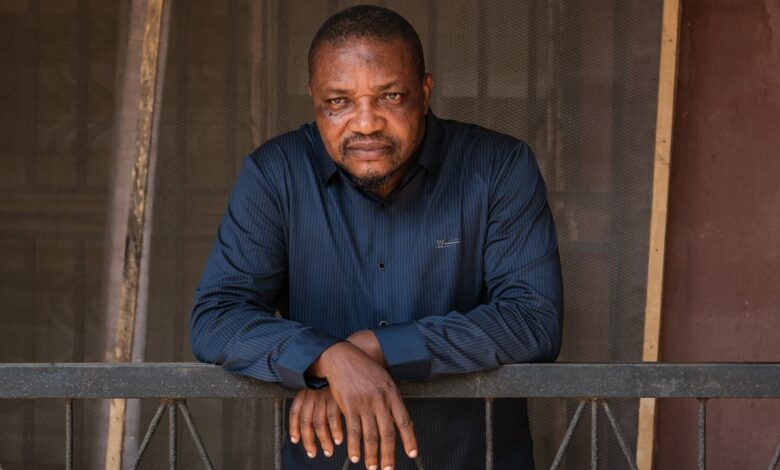
The New York Times report revealed that Umeagbalasi is the founder of the International Society for Civil Liberties and Rule of Law (Intersociety), a non-governmental organisation he runs with his wife from their home.
The paper described him as “an unlikely source” whose research has nonetheless been repeatedly cited by U.S. Republican lawmakers to support claims that Christians are being singled out for slaughter in Nigeria.
According to the report, lawmakers including Riley Moore, Senator Ted Cruz and Congressman Chris Smith of New Jersey cited Umeagbalasi’s work after being tasked by Trump to investigate allegations of Christian genocide in Nigeria.
In October, Trump redesignated Nigeria as a “country of particular concern,” declaring that “Christianity is facing an existential threat in Nigeria” and accusing radical Islamists of a “mass slaughter” of Christians. A month later, he warned that the United States could invade Nigeria “guns-a-blazing” if the alleged genocide was not halted.
On December 26, U.S. forces carried out airstrikes on ISIS targets in Sokoto State, an action Washington said was taken at the request of Nigerian authorities.
Umeagbalasi told The New York Times that he had documented 125,000 Christian deaths in Nigeria since 2009, drawing largely from Google searches, Nigerian media reports, secondary sources and advocacy groups such as Open Doors. He admitted that he rarely verifies his data, seldom visits affected areas, and often assumes victims’ religion based on the location of attacks.
“If a mass abduction or killing happens in an area where he thinks many Christians live, he assumes the victims are Christians,” the report noted.
In a separate interview with The Sun, Umeagbalasi defended his methodology, describing it as based on “location and space of an incident or crime scene,” which he called “one of the oldest natural methods in the world.”
He also claimed credentials in security studies and peace and conflict resolution from the National Open University of Nigeria and portrayed himself as a “powerful” and “knowledgeable” investigator.
Despite these admissions, his figures were used by U.S. lawmakers and ultimately formed part of the basis for Trump’s decision to authorise the Christmas-period missile strikes in Nigeria, the New York Times concluded.