INSECURITY: Why people give more information to terrorists than to Federal Govt, Reveals Brig-Gen Alabi-Isama
*Refuses to agree the first coup was tribal but accuses Ironsi, Ojukwu of knowing about the rebellion killing Tafawa Balewa, Ahmadu Bello, Gen Mainasara, other Northern leaders
By KEMI KASUMU
“Yes, leadership is about loyalty. You want your people to be loyal to you, but the essence of that loyalty is humanity. A leader told you “let’s go to so so so place”. He went in a vehicle and you were to trek. If you have the same mind, you will both trek to the place. So, the essence of leadership is to have the same mind with the people. I know you have watched videos of people at parties with bundles of money in bags. The Maitatsine people saw that and realised they had not eaten, having neither breakfast, lunch, nor dinner. Was that the right thing to do? So let’s do the right thing.”
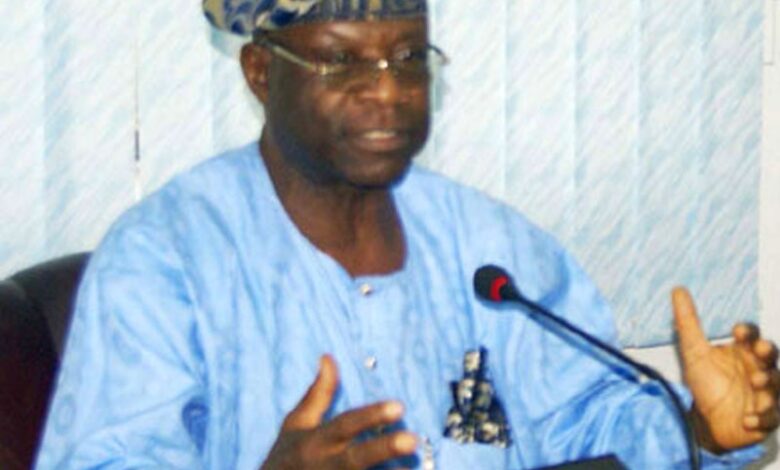
Former Commanding Officer of the 3 Marine Commando during the Nigerian Civil War also known as the Biafra War, Retired Brigadier-General Godwin Alabi-Isama, has revealed possibility of an idea leading to why Nigeria, which achieved victory under three years of fierce war against rebellion of Biafrans who took arms against their own country (1967-1970).
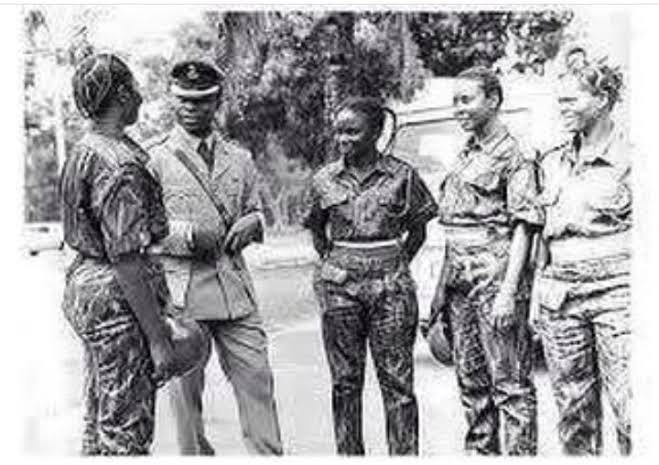
Although the prosecutor-general of that war and military Head of State General Yakubu Gowon has repeatedly said we have since ended the war on the ground of ‘No Victor No Vanguiished'”, horrific memories of the avoidable war – “had Governor of Eastern Region Colonel Emeka Odumegwu Ojukwu at the time not choose to lead a rebellion against Nigeria (says Herbert Unegbu Onitsha) – have refused leave those that witnessed the war, General Alabi-Isama inclusive.
Speaking in a media interview in Ilorin, Kwara State, according to Vanguard, the Chief of Staff to Brigadier Benjamin Adekunle during the war is not happy that 56 years after the Civil War, Nigeria remains in the sorry case of a nation that “won a civil war but didn’t know how to win peace”.
Alabi-Isama, an officer credited with leading forces against Biafra and successfully liberating various locations including Odukpani, Ikot-Okpora, Iwuru, Akunakuna, Itigidi, Ediba, Ugep, Obubra, Afikpo, Oban, and Ekang during the war, also “closed” the international border with Biafra at Nssakpa, as detailed in his book, The Tragedy of Victory.
In the interview said to have been conducte in his residence in Ilorin, Kwara State capital, he spoke on the January 15, 1966 coup in Nigeria, which happened 60 years ago which many students of history describe as “first Nigeria’s military coup unnecessary” led by Igbo Officers including the Five Majors that killed mainly Nigerian leaders of Northern extractions including the Prime Minister Sir Abubakar Tafawa Balewa, very cherished and adorable Premier of Northern Region (grandson of Sheikh Usman Dan Fodio and son of Sultan Muhammadu Bello of Sokoto Caliphate) Sir Ahmadu Bello with serious threat to his Special Adviser on Judiciary Matters Sheikh Abubakar Gummi, and officers from same Region including Major General Mainasara. Although he did not list the Northern leaders killed in the first coup, he mentioned Ademulegun Adetola as a victim.
“The coup to me was not a tribal one because even those people that foiled the coup were Igbos. Ojukwu (then a lieutenant colonel in the Army) and Ironsi (head of the army) foiled the coup but they cannot deny the fact that they didn’t know about it.”
The Retired General also spoke about the revenge coup otherwise known as the counter coup by Northern Officers led by Lt. Colonel Yakubu Gowon of July same year and he touched on the fallouts of the coup situation, one of which is the Civil War, the consequences for the country, the insecurity currently facing the nation and democracy.
Asked yo comment on what was it like and how it struck him, General Godwin Alabi-Isama started by telling how his idea of coups was what he read about them in books as nobody taught him and others anything about coup throughout their military training.
He then said, “I was a very young officer then. I was a Captain and for people to just kill our senior officers that we respected so much, I was wondering. Respecting those officers at that time was because they had so much to offer. They were teaching us, they were mentoring us, they were teaching us the rudiments how to run the military and be loyal to the country. Nzeogwu was a very good friend of mine. He was a senior officer and he liked me very much but I believe that every coup planner is an idiot,” he paused and then continued.
Explaining what he meant by coup planner being an idiot, he said, “There is a difference between a fool and an idiot. You entered somebody’s house, I didn’t carry any weapon against you and you shot me and my family. Ademuwagun Ademola, for instance, was killed beside his pregnant wife on bed and the children became fatherless overnight.
“So, anyone that is organising a coup, killing people like Dimka (mastermind of the 1976 coup), they’re just idiots as far as I’m concerned, shooting and killing people that are armless. So, they (organisers of the January 15, 1966 coup) played their part, they had reasons for whatever they did, but I don’t just agree with them.”
On whether he agrees that the coup was a tribal one, the General said, “The coup to me was not a tribal one because even those people that foiled the coup were Igbos. Ojukwu (then a lieutenant colonel in the Army) and Ironsi (head of the army) foiled the coup but they cannot deny the fact that they didn’t know about it.
“That part of it; from reading books to now that I’m older, the coup was not an Igbo coup though there was no doubt in my mind that Igbo people knew about the coup. People like Azikiwe (ceremonial president of Nigeria), Ironsi and Ojukwu, they knew about the coup but somehow they were the ones who foiled the coup because I read a book written by Col. Njeokwu recently which claimed that Ironsi said “these boys, but they told me they were not going to kill anybody?” So, for me, it wasn’t an Igbo coup but, definitely, the Igbos knew about it.”
After the first coup in January 1966 came successive coups. Were there justifications for them? General Alabi-Isama was asked and he replied, “First of all, I will say that there’s no justification for any coup but these are Nigerians and they could not be indifferent to what happened around them but because they have ammunitions, so they used that as leverage over the people. But which of the coups had been successful? None. Even the army shot itself in the foot and had to run away. They didn’t have glorious exit. The second coup (July 1966) was an Hausa coup and when I use the word Hausa, that’s from Offa to Sokoto and Katsina, Maiduguri, it was a revenge coup.
“There were lots of killings. Now what caused the coup (January 1966) at that time was because of our political system, feudal system, which saw people sharing money and till today we are still sharing money. At the time we went to (civil) war, we said we didn’t want unitary system, we wanted federalism; the war ended and we ended up with the unitary system. So why did people die? That’s why I call all of them idiots.”
He was taken up on the idea of blaming the military for whatever failure its reigns recorded when there were also civilians who worked with the military during the period and he said, “Whether we like it or not, the military could not run the government alone. They had to run it with civilians and some civilians even encouraged them to organise coups, and we talk about foreign governments’ involvement and all that. But what should we do? The civilians with them in government also tried to put things right. They too wanted to rule the country, they too wanted to be governor. In fact, yesterday I was discussing with some people here, some civilians wanted to be President. I wanted to play Ludo with my mother, I didn’t want to be anybody’s governor.
“In 1976 when Ogbemudia was governor in the Mid-West and was sick, and I was deputy there because I was Brigade Commander, so I became the acting governor, I received the first batch of the NYSC. There were too many people visiting from morning till night, so I didn’t have time to play Ludo with my mother and my mother wasn’t happy with it, and I wasn’t happy with it either. So, it depends on what you’re talking about. A lot of people are interested in governance, yes, and so they joined the military because the military alone couldn’t do it, they had to work with the civilians.
“But the fact is that the best military is still not as good as the worst civilian government. The military are not trained to do that and that is why in 1976 when I was at the Army Headquarters as the Principal Staff Officer, I started what was called ‘Building a qualitative Army’. Many weren’t intelligent to do what they were doing. There were some governors, after a meeting they will go to their various states. The one in Ibadan will say something different from the one in Kano and the one in Kano will say something different from the one in Bayelsa and all that.
“So, we then said after a meeting, they must select somebody that will now go and talk to the press, so that some of them will not be saying something and others will be denying it. So, there will be no argument and doubt about what the government wanted to do. Governance is different from military tactics and strategies.”
How federalism transformed Nigeria
He said, “Nigeria would have been much better than what it is now because we had federalism. The West started television and said ‘First in Africa’, East started something else and said ‘Second to none’ and the North also had their own. Then Awolowo came up with free education, the East and the North couldn’t do it.
“Awolowo built stadium for the youths, empowered them, he was like de facto President. What happened was that there was competition and it was competition that brought growth. I give you an example. If you ran 100 meters’ race with me and I came first, and you want to beat me next time, you will train more and I will train more so that you don’t beat me.
“So, the more we both train, the better for the situation which means both of us will break records, that’s exactly what it was. Federalism was what we need and what we had always needed because of the ethnic and linguistic groupings in the country. We need federalism where there would be competition, at that time the country was galloping.
“And now we broke into 36 states which used to be four regions, and look at the number of ministers and commissioners, that’s a lot of money which we needed for development. The development now is not as fast as it was then because there was competition.
“While Zik in the East would construct thousands of roads, North would also build thousands of roads and West would not want to be left behind. So, there was competition and it’s only competition that would bring the growth we are all looking for. So, Nigeria would have been a developed country by now. Can you imagine that the whole of Nigeria is using DSTV today owned by South Africa and South Africa had no television by the time we ended the civil war in 1970?” He asked.
Banditry, terrorism and memory of the Maitatsine past
“Let me give you an incident about Maitatsine. Maitatsine was a Camerounian man, his real name was MARUA. He came from Cameroun to teach Nigerians what was called Wahabism. He said Nigeria Muslims were practicing adulterated Islam. So, why kill people, why not just establish a school, rather than killing people in Kano for like four years, and in Sokoto and they were advancing towards Maiduguri when I was transferred to Army Headquarters in 1976 after Murtala’s coup? So I asked if I could go there and secure the place. Finally with the wave of the hand, I was told to go. In one week I finished Maitatsine and handed Kano over to the police.
However tackled insecurity
“Yes, leadership is about loyalty. You want your people to be loyal to you, but the essence of that loyalty is humanity. A leader told you “let’s go to so so so place”. He went in a vehicle and you were to trek. If you have the same mind, you will both trek to the place. So, the essence of leadership is to have the same mind with the people. I know you have watched videos of people at parties with bundles of money in bags. The Maitatsine people saw that and realised they had not eaten, having neither breakfast, lunch, nor dinner. Was that the right thing to do? So let’s do the right thing.
“I went there, saw these people and asked them: “What’s your pain? Why are you killing Muslims? It is in the Qur’an that Muslims should not kill Muslims”. I appealed to them. Currently, our sheikhs and imams should be appealing to the people, asking what their pain is. In UAE, they arrested some Nigerians, they sent them back to Nigeria, we didn’t do anything about it. Malami was Attorney General and Minister of Justice at that time. They didn’t do anything about it till today. So, we must go back to the roots.
“What is it that is your pain? What is it that is making you kill your fellow Muslims? They say they also killed some Christians, okay, “what’s making you to kill your fellow northerners?” Once we know that, we’ll be able to solve the problems. People are interested, people are making money from it; if not, we won’t be in this problem.”
As a retired general, what would you recommend as solution to the challenge of insecurity? He was asked and he said:
“I cannot recommend anything on radio, television or newspaper because those are future intentions. But the main thing that I recommend is that whoever that is making our people die and children kidnapped, let them just stop it, whatever their pain. For instance, the militants in Rivers and Bayelsa they told you what their pains were, they had no school, they could not farm, they could not fish because of the pollution from oil, so they gave reasons.
“And everyone saw their reasons and we had to do something about that. But what is the reason of Boko Haram? Like I told you when you see people spending so much money at parties, and these people have no money and they are also looking for money and the way to get it is to kidnap your daughter, and you will pay ransom.
“So, are you going to return them to farm? What would he farm to make a million a day? So the best business in Nigeria today when you open the newspapers is politics or banditry or kidnapping, they make a lot of money from them.
“So, what we are saying is that we should go back to the roots. What is it that is wrong? One is unemployment. Two is the way we spend money lavishly and people ride expensive cars in the midst of all of unemployment. Let’s solve the problem of poverty and you will find that we have solved the problems of banditry and kidnapping.”
Assessment of President Tinubu’s government
“I’m not a politician, but from what I have seen, I wish I could draw you a map of Nigeria. The essence of government is to give enabling environment for employment, development and economic stability. He’s making a road from Lagos to Calabar. If you look at that alone, the number of people that would be employed at the end would not be small.
“Lagos has two ports, Koko will have one port, Sapele will have one port, Port Harcourt will have two ports, Calabar will have one port, that’s about eight ports. That’s parts of development. Ships would be coming in, they don’t have to come through Lagos alone, that’s decongestion.
“So, that’s enabling situation for people to grow and for jobs to be created. From there, if you have railway from Lagos to Sokoto, if you’re an investor and you want to invest in Nigeria and you have places like Lagos, or Ibadan and so on, because of the population, you’ll now say if you can travel by train and road are to Sokoto, you can go there to invest.
“To buy land in Lagos, you are talking about acres of lands for your project, you’ll be talking of hundreds of millions, but if you open the heartland from Lagos to Sokoto, from Calabar to Maiduguri, the one that will cost you hundreds of millions in Lagos would probably cost you one million in Sokoto or even less and whatever you produce, put it in train and they’ll get to Lagos.
“You open the heartland of the country, that’s what the government is doing, that aspect of it I like and that’s part of the economy. And of course the political situation, I’m not a politician but people crossing from one party to the other, I don’t understand that. But I would have loved a situation that if you cross from one party to another, you must go back to your constituency and re-contest.
“It is because we don’t have ideology, if we have ideology and one party stands with the unitary system another one with the federalism, if you were voted in on unitary system and you want to cross to federalism, you have to re-contest for that particular post. It is because we don’t have ideology, that’s why people just leave one political party for another; we should have ideology,” he said.
On his assessment of how Nigerians elect their leaders, General Alabi-Isama said, “Like I told you that I never liked politics, but the thing is that the man there, be it Ibo, Yoruba or Hausa will favour his own people. So, let’s get back to federalism; that is what I’m preaching in my new book. When we have federalism, instead of giving oil bloc to individuals, you give it to the states, it’s better for the governor to have it use it for the people and leave it for another governor after eight years than to give it to individuals.
“Why give to Alabi-Isama to marry more wives when the states can use it to pay workers salaries and better the lot of the people? There is no state in Nigeria that does not have one minerals or the other. Let us have true fiscal policy.
“There are oil blocs in the Atlantic, let us share those ones to the states and the Federal Government, and reduce the power of the Federal Government. I was told somebody died recently, his house was gold, his teacup was gold and all that. Now who is going to maintain it? It is like Mobutu Seseseko who built palace of gold and all that, who’s maintaining it now? Nobody. We need to get psychiatric evaluation of some of our leaders but I like what the present government is doing: Building those roads for a purpose, not building railway to Maradi.
“What an insult! What does that benefit Nigerians? For instance building roads and railway from Lagos to Calabar, building roads and railway from Lagos to Sokoto, they’ll make their money, from the income they’ll pay back the loan. So, I like what the present government is doing based in economic situation and analysis.”
On the Nigerian military today he said, “There’s nothing with the military today except that government has monetized the military. For instance, in my time, the Minister of Defence was buying military equipments based on national plan. Today, I was told that it is the military buying their equipments and weapons. It wasn’t so in my time. We also didn’t have military men going on television to talk to the people. The Minister of Defence did that. When did you last hear of the army commander in the UK? Take the military out of politics.”
Extracts from Source: Vanguard Interview