Tinubu Preparing Senator Yari to Become President in 2031? The Dangerous Politics of Ethnicity and Succession – {PEOPLE SPEAK}
By OUR REPORTERS
“Things are hard but we are sacrificing and enduring it because the hardship we are suffering from is being imposed on us by the North who know that Tinubu is the only one who can destroy their political power control and turn the table against them in favour of the Yoruba race supported by the Igbo,” he said. The argument is politically significant, but it is also dangerous.
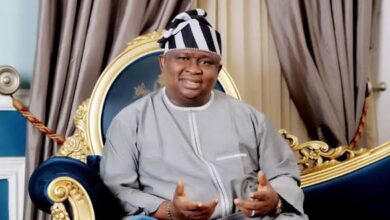
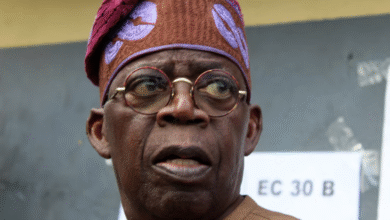
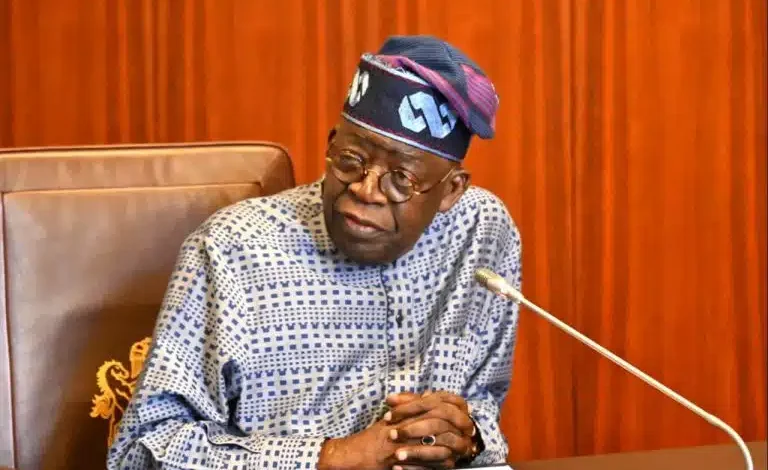
The appointment of former Zamfara State Governor, Senator Abdul’Aziz Yari, as Director-General of the All Progressives Congress (APC) Presidential Campaign Council for the 2027 elections has triggered a fresh wave of political speculation in some quarters, with questions being raised about President Bola Ahmed Tinubu’s long-term political calculations.
One of the claims now circulating in political conversations and across social media is that President Tinubu may be positioning Yari for a more significant national political role after the 2027 elections, including a possible presidential ambition in 2031.
The claim, however, remains unverified.
The DEFENDER could not independently establish the authenticity of the purported statement attributed to a former governor from the North-Central region suggesting that Tinubu is preparing Yari to become president in 2031. In the absence of a direct statement, official document or independently verifiable evidence, the claim should therefore be treated as political speculation rather than established fact.
Yet, beyond the specific allegation, the controversy has exposed a more profound and troubling issue in Nigeria’s political discourse: the increasing tendency to interpret political appointments, alliances and succession plans through the prism of ethnicity and religion.
The ethnic interpretation
In parts of the North and across sections of the South, there are competing interpretations of President Tinubu’s political strategy.
Some commentators believe the President’s political calculations are aimed at restructuring the traditional balance of power in Nigeria and strengthening the political influence of the Yoruba. Others interpret his actions principally as an attempt to consolidate the APC ahead of the 2027 elections and create a broad political coalition capable of retaining power.
There are also voices alleging that Tinubu has a long-term plan to alter Nigeria’s established political power structure in favour of his ethnic group.
These allegations have not been established as government policy.
Nevertheless, the fact that such narratives are gaining traction should concern every Nigerian who believes that the country’s political future must be determined by competence, constitutional democracy and national interest rather than ethnic arithmetic.
The situation is further complicated by competing perceptions among different ethnic groups.
Some Igbo political voices, for instance, remain strongly attached to the presidential ambition of Peter Obi and are sceptical of assurances from other political blocs. At the same time, some Yoruba voices continue to see Tinubu’s presidency through the lens of long-standing aspirations for greater political influence.
These competing expectations reveal just how deeply Nigeria’s unresolved questions about power-sharing, representation and trust continue to influence political behaviour.
‘Tinubu will hand power control to Yoruba’ — bus operator
The depth of the sentiment became evident during an informal conversation with a commuter transport operator working along the CMS–Mile 2–Agbara–Badagry axis in Lagos State.
The man, who requested anonymity, expressed the belief that Tinubu’s presidency represents an opportunity to alter Nigeria’s political balance.
“Let me tell you, Egbon, I will soon go back to Kwara because Asiwaju is going to make Nigeria great and hand the power control over to Yoruba race. You may see a Northerner as president from 2031 but the power control will be from Bourdillon,” he said in Yoruba with pride, adding that, It is a long time we have been suffering. That is what he has come to achieve for us.”
He further alleged that Tinubu would eventually address what he described as the political marginalisation of Yoruba people in Ilorin.
Such views are, of course, the opinion of an individual and cannot be presented as evidence of an official presidential agenda.
But they demonstrate the extent to which political narratives are being interpreted through ethnic identities at the grassroots.
They may have also been justified by the calculation in Kwara State ahead 2027, which alleges a Bukola Saraki-led Peoples Democratic Party (PDP)-Tinubu’s APC alliance that may see the president doing what he did in Rivers State 2023 sacrificing his own party for PDP at governorship election all that Saraki work for his APC at presidential election.
It could be recalled how Tinubu sacrificed and traded Chibuike Rotimi Amaechi-led APC for PDP over presidential alliance with Nyesom Wike, who eventually collapsed both his own PDO and even the APC and all that Rivers was left with is what many described as Wike-led Renewed Hope of Tinubu.
‘Hardship is being endured for political reasons’
Another participant in an informal opinion sampling offered an even more revealing perspective.
According to him, the economic difficulties confronting Nigerians are being interpreted by some citizens as part of a larger political struggle.
“Things are hard but we are sacrificing and enduring it because the hardship we are suffering from is being imposed on us by the North who know that Tinubu is the only one who can destroy their political power control and turn the table against them in favour of the Yoruba race supported by the Igbo,” he said.
The argument is politically significant, but it is also dangerous.
Economic hardship does not belong to one ethnic group. Neither does inflation, unemployment, insecurity or the cost of living.
Millions of Nigerians across the North, South, East and West are confronting the same economic pressures, even though their individual experiences may differ.
To transform economic grievances into an ethnic confrontation risks obscuring the real policy questions Nigerians should be asking about the economy, governance, security, education, infrastructure and employment.
Nigeria cannot afford another politics of exclusion
The most disturbing aspect of the current discourse is not whether Yari has presidential ambitions for 2031.
As a Nigerian politician, he is constitutionally entitled to aspire to any elective office for which he qualifies.
The real question is whether Nigerians are prepared to allow the next presidential contest to become another battle of ethnic and religious identities.
Nigeria has paid an enormous price for such politics.
The country’s history demonstrates that when political disagreements are allowed to acquire ethnic and religious dimensions, ordinary political competition can rapidly become a threat to national cohesion.
This is why every political party, presidential aspirant and influential political actor must be careful about the narratives they encourage.
Leadership must rise above ethnic calculations
Computer scientist and youth development advocate, Omololu Adigun, believes the fundamental challenge confronting Nigeria remains leadership.
He questioned why political leaders and citizens should permit social media to become an instrument for spreading narratives capable of damaging national unity.
“I think the problem we have had on our hands here is leadership. Otherwise, are we the only country in the world where social media handles like Facebook, Twitter, YouTube and WhatsApp are functional?”, he asked.
Adigun argued that freedom of expression must be protected but should not become a justification for conduct that threatens public peace.
His position points to an important distinction: regulating unlawful or genuinely harmful conduct on digital platforms is different from suppressing legitimate political criticism.
Nigeria needs responsible regulation, digital literacy and accountable political leadership—not blanket restrictions on citizens’ legitimate right to express opinions.
Tinubu has a responsibility to Nigerians—not a section of Nigeria
President Tinubu and the APC have a particularly important responsibility in this unfolding political season.
Whatever his private political calculations may be, the President’s public responsibility is clear: he governs Nigeria, not a region, ethnic group or religious community.
His appointments, policies and political alliances will inevitably be scrutinised. That is the nature of democratic government.
But he can help reduce suspicion by consistently demonstrating that competence, loyalty to Nigeria and national interest—not ethnicity or religion—remain the basis for political inclusion.
If Senator Yari eventually decides to seek the presidency in 2031, he should be judged on his record, character, competence, political philosophy and ability to unite Nigerians.
The same standard should apply to every other aspirant—whether Yoruba, Hausa-Fulani, Igbo, Ijaw, Kanuri, Tiv, Nupe, Edo, Ibibio or from any of Nigeria’s hundreds of ethnic communities.
The 2027 election must not become a census of tribes
The 2027 election should not become a referendum on which ethnic group should control Nigeria.
It should be an opportunity for Nigerians to interrogate competing visions for the country.
Who can secure Nigeria?
Who can grow the economy?
Who can reduce unemployment?
Who can improve education and healthcare?
Who can strengthen institutions?
Who can protect constitutional democracy?
Who can unite Nigerians?
These are the questions that should determine Nigeria’s next political chapter.
Whether the rumour about a possible Yari presidency in 2031 eventually proves true or false, it has already provided an opportunity for Nigerians to examine the dangerous direction of political conversations.
Nigeria does not need a president who represents one tribe against another. It needs a president who understands that every Nigerian—regardless of ethnicity, religion, region or political affiliation—is equally entitled to dignity, security and opportunity.
President Tinubu and the APC should therefore resist every temptation to build their political strategy around the division of Nigeria along ethnic or religious lines.
Likewise, opposition parties and their supporters must resist the same temptation.
The North is not an enemy of the South.
The Yoruba are not an enemy of the Hausa-Fulani.
The Igbo are not an enemy of either.
The Middle Belt is not a political battlefield between other regions.
They are all components of one country.
Nigeria’s future cannot be secured by one ethnic group defeating another. It can only be secured when Nigerians collectively decide that the presidency belongs to the Nigerian people—not to any tribe, region or religion.