“Tinubu Must Go,” Say Northern Elders

MAIN POINTS:
*Reveals why Buhari was reluctant supporting Tinubu to succeed him
*Argument Northern support for Tinubu outdated – Bugaje
*’2027: A test of leadership and accountability’
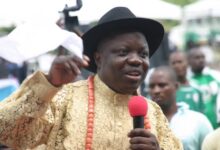

The emerging opposition sentiment is also reflected in the “Tinubu Must Go” movement, which has called on Nigerians to mobilise against the President’s re-election bid.
Calls for President Bola Ahmed Tinubu to leave office ahead of the 2027 presidential election have featured prominently in Nigeria’s political debate, with some northern figures expressing strong criticism of his administration.
At a summit organised by the Northern Elders Forum, former presidential adviser and Peoples Redemption Party (PRP) National Chairman, Dr Hakeem Baba-Ahmed, criticised the circumstances surrounding Tinubu’s emergence as president in 2023.
According to a report published by an online newspaper (not The DEFENDER) on October 18, 2026, Baba-Ahmed claimed that former President Muhammadu Buhari had been reluctant to support Tinubu’s presidential ambition because he considered him bad news for Nigeria.
The comments have added to the political debate over Tinubu’s leadership as opposition groups intensify their campaigns ahead of the 2027 general election.
The emerging opposition sentiment is also reflected in the “Tinubu Must Go” movement, which has called on Nigerians to mobilise against the President’s re-election bid.
Former Vice-President Atiku Abubakar, the African Democratic Congress (ADC) presidential candidate, endorsed the movement in September, describing it as a collective effort to rescue Nigeria.
However, northern opinion remains divided. On October 12, prominent northern political leaders under the Arewa For Asiwaju platform declared support for Tinubu’s re-election, arguing that his administration had made contributions to the region.
The competing positions underscore the political contest unfolding in the North ahead of 2027, with security, economic hardship, governance and the performance of the Tinubu administration likely to remain central issues.
Dr. Usman Bugaje, a northern political economist and chieftain of the Arewa Consultative Forum (ACF), has previously questioned calls for the North to support President Bola Ahmed Tinubu’s re-election in 2027, arguing that Nigeria needs leadership defined by character, competence and courage rather than regional considerations.
In a report published by Leadership newspaper, Bugaje described as outdated the argument that the North should support Tinubu to complete an eight-year presidential tenure for the South. He said the country needed a leader capable of doing what was right, irrespective of whether the person came from the North or South.
His position comes amid growing criticism of the Tinubu administration by northern political figures and other groups ahead of the 2027 general election.
At the third General Hassan Usman Katsina Memorial Conference held at Arewa House, Kaduna, on July 25, 2026, Bugaje delivered a keynote address in which he expressed concern over the worsening conditions in Northern Nigeria.
According to Channels Television, he identified declining agricultural production, displacement, rising poverty, deteriorating education and healthcare, and insecurity as major challenges confronting the region.
He also criticised sections of the northern elite for repeatedly lamenting the region’s difficulties without translating their concerns into practical solutions.
Bugaje’s remarks underscored his call for responsible leadership, accountability and a fundamental reassessment of the political choices confronting the region.
Bugaje’s position reflects a wider debate over whether Tinubu should receive another four-year mandate in 2027.
On October 7, 2026, The Guardian reported that more than 1,000 Islamic clerics, meeting in Kano under the Ko Da Naka initiative in collaboration with the AFAQ Educational Foundation, urged Tinubu to reconsider his re-election ambition.
The clerics cited insecurity, economic hardship and the departure of skilled professionals from Nigeria as reasons for their position. They called for changes to government policies and urged Nigerians to assess political candidates on their records and proposed solutions.
However, opposition to Tinubu’s re-election is not unanimous across the North. Some northern political groups continue to support his administration and campaign for a second term.
As political alignments develop ahead of the 2027 election, questions surrounding security, economic management, poverty alleviation, education and regional development are likely to remain central to public debate.
For Bugaje and other critics, the argument over Tinubu’s second term extends beyond whether presidential power should remain in the South or return to the North. It also concerns the quality of leadership Nigerians expect and the performance of the government seeking another mandate.