Sultan Sa’ad Abubakar at 70: A Bridge Builder, A Voice for Peace, A Leader for All
By ISHOLA BALOGUN
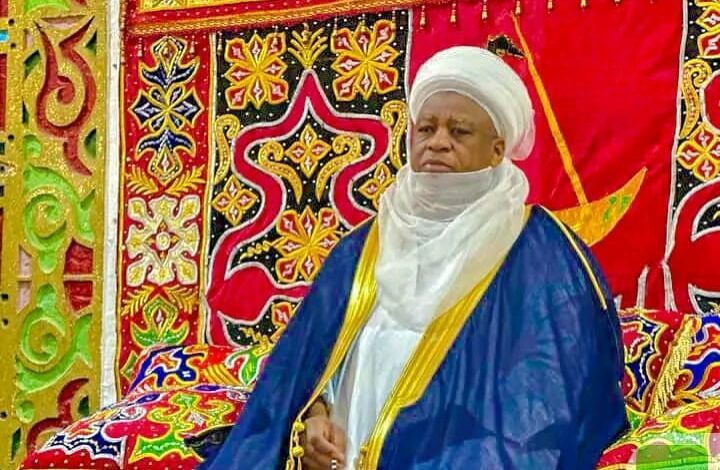
At 70, His Eminence, Alhaji Muhammad Sa’ad Abubakar, CFR, mni, deserves not merely congratulations, but the gratitude of a nation whose religious and traditional landscape he has helped steadily through some of its most difficult moments.
At 70, His Eminence, Alhaji Muhammad Sa’ad Abubakar, CFR, mni, the Sultan of Sokoto and President-General of the Nigeria Supreme Council for Islamic Affairs (NSCIA), stands as one of Nigeria’s most respected religious and traditional leaders—a man whose influence has transcended the boundaries of faith, ethnicity, geography and social status.
His 70th birthday is therefore more than a personal milestone. It is an occasion to celebrate a life of service, a reign marked by wisdom and restraint, and a leadership philosophy anchored on peace, unity, humility and the preservation of Nigeria’s corporate existence.
The Sultan is, by temperament and conviction, a calm man. In a country often challenged by heated rhetoric, religious suspicion, ethnic divisions and political tensions, he has consistently chosen the language of peace. He has refused to allow his exalted position to become a platform for division. Instead, he has used his enormous moral authority to build bridges where others see walls.
That perhaps explains why he is loved and respected far beyond the Muslim Ummah.
There is hardly a part of Nigeria where the influence of the Sultan is not felt among Muslims. From the North to the South, from the largest Islamic organisations to modest community groups, his presence has been a source of encouragement, direction and unity.
His reign has also demonstrated that religious leadership is not merely about occupying a throne or issuing statements. Under his leadership, the Muslim Ummah has witnessed sustained efforts at institutional coordination, youth engagement, religious guidance and national dialogue.
I had the privilege of meeting the Sultan many years ago during the Media Chat with the Sultan, a programme he consistently supported and sponsored. That encounter offered a glimpse into the man behind the institution: thoughtful, accessible, measured and genuinely interested in engaging the media and the wider society.
Perhaps one of the most remarkable things about him is his humility.
Despite the weight of his office, the Sultan remains remarkably accessible. He is willing to honour invitations from organisations and individuals who may not possess the social or institutional stature ordinarily associated with the office he occupies. He does not measure people by their titles, wealth or influence before extending his courtesy.
That is leadership.
That is also why his bridge-building has earned him recognition beyond Nigeria. His generosity, humility, statesmanship and commitment to peace have continued to attract global attention. His recent recognition among the world’s most prominent Muslims is a further testament to the influence his leadership has acquired beyond Nigeria’s shores and across the global Muslim community.
But perhaps the greatest measure of his leadership is the impact that cannot always be captured by awards.
A Voice for Religious Harmony
As the spiritual and traditional leader of millions of Nigerian Muslims, the Sultan has played a significant role in promoting unity within the Muslim Ummah.
The coordination of moon sighting, which guides Muslims in determining important religious observances, including Ramadan and the Eids, has remained an important instrument of religious cohesion. Under his leadership, the process has helped promote a greater sense of unity and common purpose in the observance of major Islamic festivals.
But his commitment to harmony does not stop within Islam.
The Sultan has consistently reached across the religious divide to engage Christian leaders. His collaborations with prominent Christian figures, including Cardinal John Onaiyekan, particularly in peace-building initiatives, have demonstrated his conviction that Nigeria’s religious diversity should be a source of strength rather than conflict.
He understands a simple but profound truth: Nigeria cannot be secured by Muslims alone, nor by Christians alone. It can only be secured by Nigerians working together.
An Uncompromising Voice Against Extremism
The Sultan has never been ambiguous about his opposition to extremism.
He has repeatedly condemned Boko Haram and other violent extremist ideologies, making it clear that terrorism, murder and the destruction of communities have no place in Islam.
His position has been particularly important at a time when violent groups have attempted to exploit religion to justify their criminality. By speaking with moral authority, he has consistently reminded Muslims and the wider society that extremism is not Islam and that violence against innocent people is an assault on both humanity and religion.
A Peacemaker in a Troubled Nation
Beyond the mosque and palace, the Sultan has repeatedly deployed his influence in the service of peace.
From farmer-herder tensions to ethnic disputes, communal conflicts and broader national disagreements, he has used his standing to encourage dialogue and restraint.
He understands that peace is not achieved merely by making speeches after conflicts erupt. It requires constant engagement, listening, mediation and the courage to speak truth to people on all sides.
His interventions have therefore reflected the responsibility of a traditional ruler who understands that leadership is ultimately about protecting lives, preserving communities and giving people hope.
A Patriot Before a Partisan
One of the most enduring features of the Sultan’s leadership is his commitment to Nigeria.
He has consistently urged Nigerians to look beyond ethnicity, religion, region and political affiliation. His interventions with successive administrations have largely been guided by the national interest rather than partisan calculations.
That non-partisan posture has given him something increasingly rare in public life: the ability to speak to power without becoming an appendage of power.
When his name was wrongly dragged to support a particular presidential candidate recently, he immediately cautioned Nigerians that he has no choice candidate and he does not support any political party.
He can counsel the government without prejudice. He can challenge political actors without bias. He can speak to traditional rulers with truth. He can address the Muslim Ummah, engage Christian leaders with national altruism required of a statesman.
That is the strength of moral authority.
A Leader Who Invests in the Future
The Sultan’s impact on Muslim youths deserves particular mention.
His leadership has recognised that the future of the Muslim Ummah and Nigeria belongs to young people. His engagement across generations, Islamic organisations and communities has helped create platforms through which young Muslims can find direction, identity, leadership opportunities and a sense of responsibility to their country.
His influence extends across adults, youths, scholars, traditional institutions and Islamic organisations because he has never confined leadership to one generation or one constituency.
At 70, therefore, the Sultan represents more than an institution. He represents a bridge between generations, between religions, between traditional authority and modern Nigeria, and between the many communities that make up this complicated but beautiful country.
His greatest legacy may ultimately be this: he has shown that one can be deeply committed to one’s faith without becoming hostile to another person’s faith; proudly traditional without being detached from modern realities; powerful without being arrogant; and influential without becoming divisive.
In an age when loudness is sometimes mistaken for leadership, the Sultan has demonstrated the power of quiet authority.
In a time when division is easily exploited, he has chosen unity.
Where others build walls, he builds bridges.
Where others inflame, he calms.
Where others seek followers, he seeks understanding.
And where others see Nigeria through the prism of ethnicity or religion, he continues to speak of one Nigeria.
At 70, His Eminence, Alhaji Muhammad Sa’ad Abubakar, CFR, mni, deserves not merely congratulations, but the gratitude of a nation whose religious and traditional landscape he has helped steadily through some of its most difficult moments.
May Almighty Allah continue to grant him wisdom, sound health, strength and many more years of purposeful service to the Muslim Ummah, the Nigerian nation and humanity.
Happy 70th Birthday, Your Eminence.
May your years ahead be even more consequential than those behind you, and may the bridges you have built continue to unite generations, faiths and communities for many years to come.
*Ishola Balogun, columnist of Facing Kaaba in Vanguard Newspaper, Publisher of The ReporterNg and a member of the Sultan Media Team, writes from Lagos. 08036688535