Senator Mustapha resigns membership as G-15 emerges within APC in Kwara
*O To Ge Progressives rekindles 2019 political movement
*As Mustapha’s movement to PDP imminent
By OUR REPORTER
The political equation subsequently changed, with reports indicating a shift in the governor’s support towards the Speaker.
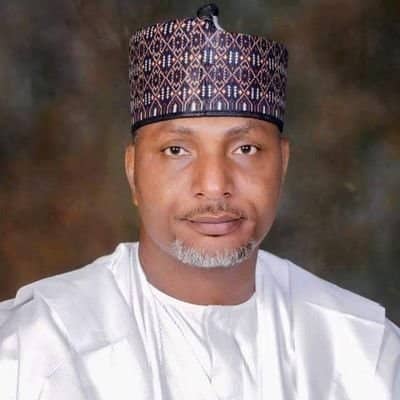
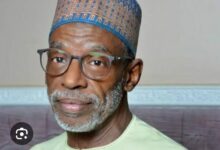
The political crisis rocking the All Progressives Congress (APC) in Kwara State has taken a major turn following the resignation of Senator Saliu Mustapha from the ruling party.
Mustapha, who represents Kwara Central Senatorial District in the National Assembly and is the Turaki of Ilorin Emirate, announced his resignation in a letter addressed to the chairman of his ward, Gambari 1, in Ilorin East Local Government Area.
The senator also published the resignation letter on his verified Facebook page late Thursday.
His decision comes amid months of intense disagreement within the Kwara APC over the party’s 2027 governorship succession process and the outcome of its governorship primary.
Mustapha was one of the prominent stakeholders at the centre of the dispute and had contested the party’s governorship ticket before Speaker Yakubu Danladi Salihu emerged as the APC candidate for the 2027 election.
Explaining his decision, Mustapha said his resignation followed weeks of consultations with political stakeholders, supporters, constituents in Kwara Central and other well-meaning residents of the state.
He stressed that he did not take the decision hastily, saying it was guided by his belief that political participation should remain anchored on the people, principles and purpose.
“Where the path of a political platform no longer sufficiently aligns with these convictions and the aspirations of the people one represents, the honourable thing to do is to chart a new course,” he said.
Despite leaving the APC, Mustapha expressed appreciation to the party’s leadership, particularly President Bola Ahmed Tinubu, for the relationships, experiences and opportunities he enjoyed during his years in the party.
He, however, made clear that leaving the APC would not affect his commitment to his constituents.
“My political platform may change, but my principles, purpose and commitment to the people remain unchanged,” he said.
Mustapha’s resignation comes against the backdrop of a prolonged dispute over the APC governorship primary held on May 22.
The exercise produced Danladi Salihu as the party’s candidate after he secured 94,990 votes.
Ambassador Abdulfatai Yahaya Seriki came second with 41,700 votes, while Bashir Omolaja Bolarinwa finished third with 22,118 votes.
However, the result failed to settle the political contest within the party.
Instead, it triggered a deepening disagreement among aspirants and influential stakeholders who questioned the process that produced the party’s candidate.
The controversy also became intertwined with the question of who would succeed Governor AbdulRahman AbdulRazaq after his tenure.
Before the primary, AbdulRazaq had reportedly backed Yahaya Seriki as his preferred successor following consultations with party stakeholders.
The political equation subsequently changed, with reports indicating a shift in the governor’s support towards the Speaker.
Danladi eventually emerged as the party’s candidate, creating fresh tensions among stakeholders who had expected a different outcome.
Following the primary, a group of aggrieved aspirants and stakeholders began coordinating their activities under what became known as the G-15 bloc.
Mustapha became one of its most prominent members alongside figures including Yahaya Seriki, Ibrahim Yahaya Oloriegbe, Dele Belgore and Bolarinwa.
In June, ten governorship aspirants reportedly petitioned President Tinubu, asking him to intervene in the growing crisis.
The group accused the state leadership of weakening the political coalition that helped the APC defeat the then ruling political establishment in the 2019 elections.
The aggrieved stakeholders warned that unresolved grievances could damage the party’s chances in the 2027 elections.
The disagreement later expanded beyond the governorship primary.
The three serving Kwara senators called for a review of the APC’s governorship, senatorial, House of Representatives and House of Assembly primaries.
They argued that the party was facing a critical internal challenge that required urgent intervention.
The APC leadership, however, maintained that the governorship primary was properly conducted under the supervision of the national leadership and that Danladi emerged legitimately.
The national leadership subsequently ratified his emergence and presented him with his Independent National Electoral Commission (INEC) nomination form.
As the dispute continued, the aggrieved stakeholders increasingly positioned themselves as a formidable political force.
The group drew on the legacy of the O To Ge movement, the political campaign that played a major role in the APC’s victory in Kwara State in 2019.
The movement had mobilised voters against the political establishment at the time, contributing significantly to the defeat of the Saraki political structure.
The current coalition has accused Governor AbdulRazaq of attempting to control the succession process and marginalising influential party stakeholders.
The governor and his supporters have rejected such allegations.
By August, the disagreement had evolved into a broader political battle, with the aggrieved bloc rejecting candidates produced through the disputed primary process while maintaining its support for President Tinubu.
The worsening APC crisis has also created an opportunity for opposition parties to strengthen their political structures ahead of 2027.
The Peoples Democratic Party (PDP) has reportedly opened discussions with some aggrieved APC stakeholders, while former Senate President Bukola Saraki has also been linked to efforts to engage members of the bloc.
Mustapha’s resignation has therefore intensified speculation that he could eventually join the PDP.
Although the senator did not disclose his next political destination in his resignation statement, reports of possible discussions with opposition figures have fuelled expectations of a major political realignment in Kwara.
There have also been reports that the PDP could offer Mustapha its Kwara Central senatorial ticket if he defects.
A PDP figure, Yinka Otukoko, associated with the party’s Kwara Central senatorial contest, was reportedly said to have indicated that the ticket could be made available to either Mustapha or former lawmaker Moshood Mustapha.
If Mustapha eventually joins the PDP and secures the party’s ticket, the move could produce a major contest for Kwara Central and significantly alter the political calculations ahead of the 2027 elections.
Mustapha’s resignation is particularly significant because of his position within Kwara politics and his role in the bloc of aggrieved APC stakeholders.
His exit could further weaken attempts by the APC leadership to reconcile the opposing factions unless fresh negotiations are initiated.
It could also encourage other dissatisfied members of the party to consider similar moves.
For the ruling party, the immediate challenge will be how to prevent the crisis from developing into a wider electoral setback.
The APC will also have to contend with the possibility that influential politicians and their supporters could migrate to opposition parties, potentially taking established political structures and grassroots support with them.
For the opposition, meanwhile, the development presents an opportunity to attract prominent APC figures ahead of 2027.
Despite the political implications of his decision, Mustapha presented his resignation as a principled choice rather than an abandonment of his political responsibilities.
He reaffirmed his commitment to the people of Kwara Central, Kwara State and Nigeria.
“I remain deeply grateful to the leadership of the APC, particularly President Bola Ahmed Tinubu, for the relationships built and the experiences gained during my time in the party,” he said.
He added that his political platform could change, but his principles and commitment to his constituents would remain intact.
With the senator yet to officially announce his next political destination, attention is now turning to his next move.
Whether he joins the PDP, aligns with another political platform or helps build a new coalition could have far-reaching consequences for the political landscape in Kwara State.
For the APC, Mustapha’s resignation is another warning that the internal disagreements generated by the 2027 succession process remain unresolved.
For the opposition, it could represent the beginning of a broader realignment capable of reshaping the contest for Kwara ahead of the 2027 general elections.
All Day TV will continue to monitor developments surrounding Senator Saliu Mustapha’s next political move and the unfolding crisis within the Kwara APC.