{OPINION} Why is transportation in Nigeria’s Lagos State so ineffective?
By SHERIFDEEN ABBAS

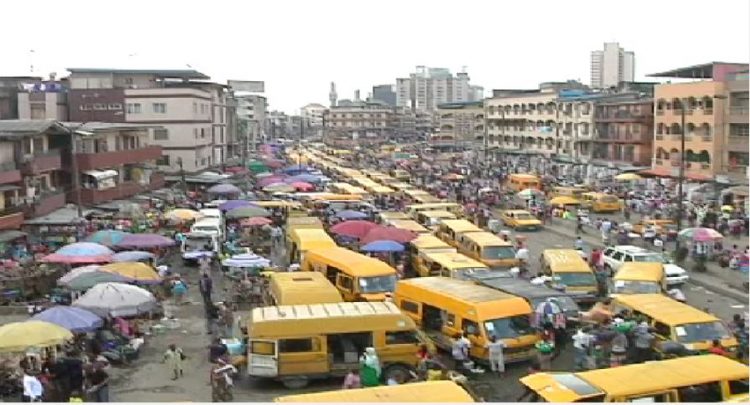
The situation is different in Lagos, a Nigerian state economy upon which economies of 35 other states depend in the world’s most populous and important Black Nation. Such an economy must not be left in the hands of hoodlums and mediocre.
One question that Lagos commuters may need to ask is why, despite successive government interventions in the transportation sector, moving around the state remains so stressful, unpredictable and expensive.
In Spain, in many cases, public transportation operates on a system that allows commuters to plan their day with reasonable confidence. If a bus is scheduled to arrive at a bus station at 9:00 a.m. and leave at 9:05 a.m., a passenger heading to work or an appointment for 9:30 a.m. does not necessarily have to leave home excessively early. The knowledge that the transport system operates around a predictable timetable provides confidence.
It may not always be perfect, but the important point is predictability.
The situation is different in Lagos, a Nigerian state economy upon which economies of 35 other states depend in the world’s most populous and important Black Nation. Such an economy must not be left in the hands of hoodlums and mediocre.
Despite the Lagos State Government’s stated commitment to improving transportation, commuters frequently cannot predict when a bus will arrive at a bus stop or when it will eventually leave. A passenger may spend considerable time waiting before boarding and then face another uncertain period on the road.
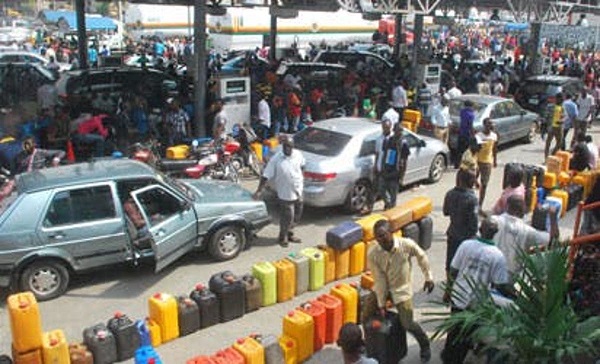
This uncertainty has consequences. It affects punctuality at work, business appointments, schools and other engagements. More importantly, the cost of transportation has become increasingly difficult for many ordinary Lagos residents to bear. Government at the centre reportedly blames the current high cost of transportation not only in Lagos but in major cities including Abuja on US-Iran war.
How come it is only in Nigeria that people feel the brunt of self-imposed hardship in America? How does Nigeria come in relationship with the US indefensibly self-based interest in the Strait of Hormuz that Nigerian government, which should make fuel affordably accessible to its people under whatever circumstances, is giving excuses of US-Iran war for N1,400 per litre when fuel is still sold for SR1.3 in Saudi Arabia – for example – a price not up to 700 Nigerian Naira?
But there is another dimension to the problem that deserves serious attention: who controls and manages public transportation at the grassroots level?
For any transportation system to be effective, properly controlled and affordable, there must be clear regulation and responsible management. Government cannot invest heavily in infrastructure and expect the desired results if significant aspects of the transport chain remain under the influence of individuals or groups whose primary concern may not be the broader public interest.
The same principle applies to markets.
Markets and public transportation are essential parts of urban life, and their management should be organised around order, accountability, safety and affordability. Government should therefore strengthen its regulatory role and ensure that the management of these public spaces and services is entrusted to responsible, competent and non-violent and non-militant individuals and organisations operating under clear government supervision.
This does not necessarily mean government must personally operate every bus or manage every market. Rather, it means government must establish and enforce rules that prevent disorder, intimidation, arbitrary charges and the capture of public services by vested interests.
Lagos does not lack people capable of running an efficient transportation system. What is required is stronger coordination, transparent regulation, reliable schedules, disciplined management and a deliberate effort to put the commuter at the centre of transportation policy.
The success of government intervention should not be measured simply by the number of buses purchased, roads constructed or rail lines inaugurated.
The real question is much simpler: Can the ordinary Lagos resident leave home knowing when the bus will arrive, how much the journey will cost and roughly when he or she will reach the destination?
Until the answer becomes a confident “yes,” the transportation challenge in Lagos remains far from solved.