Nigeria We Want to Have From May 29, 2027
*2027 must be about choosing better leaders
*Nigeria must learn to pursue its national interest without becoming anybody’s satellite
*2027 elections must send a strong message that electoral malpractice will no longer be tolerated
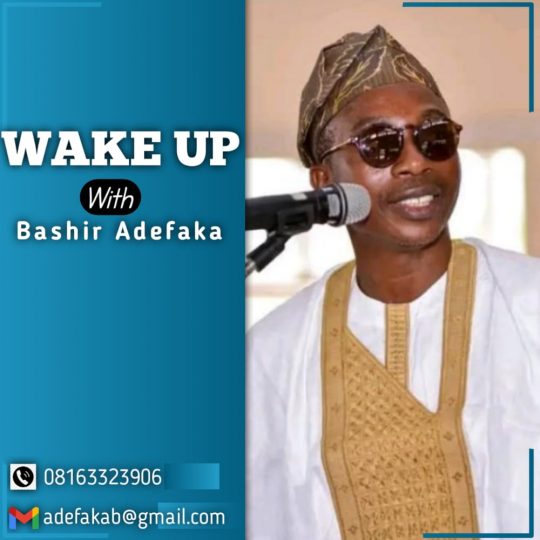
By BASHIR ADEFAKA
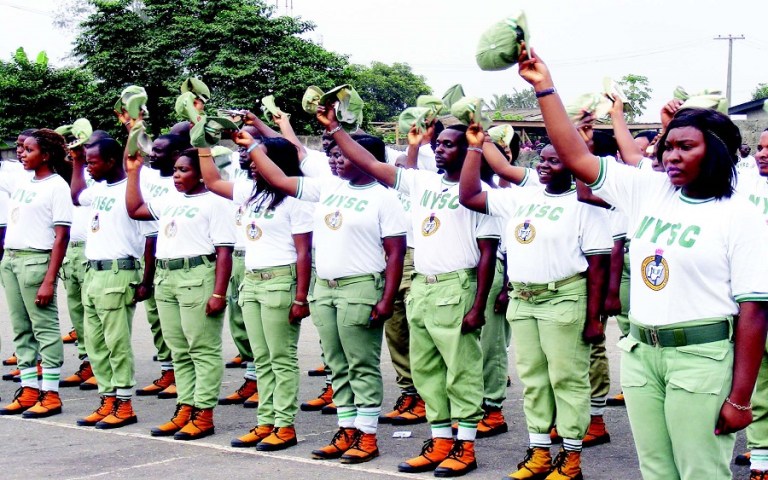

It is disturbing that, while young people in some African countries are increasingly demanding accountability, discipline and national transformation, a significant section of Nigerian youths appears trapped in the politics of social-media battles, ethnic rivalry, misinformation and the pursuit of short-term political benefits.
Nigeria stands at another important crossroads. As the country moves towards the 2027 general elections, Nigerians must begin to look beyond the usual political calculations of ethnicity, religion, personality and party loyalty and ask a fundamental question: What kind of Nigeria do we want to have from May 29, 2027?
The answer to that question should determine the choices Nigerians make at the ballot box.
It is disturbing that, while young people in some African countries are increasingly demanding accountability, discipline and national transformation, a significant section of Nigerian youths appears trapped in the politics of social-media battles, ethnic rivalry, misinformation and the pursuit of short-term political benefits. Anyway, it is not really our fault. It is the design of external forces for us but we must wake up to our senses.
The West benefits from a Nigeria that remains distracted by internal crises, ethnic tensions and political instability, leaving little attention for how its vast natural resources are exploited. While foreign interests continue to seek access to Nigeria’s oil, gas, solid minerals and other resources to support industrial and economic development abroad with special focus on leadership that protects their selfish interests, millions of Nigerians remain trapped in poverty, unemployment, hardship. The consequence is a country whose young people increasingly look beyond its shores in search of better opportunities, with Western countries often appearing to them as the proverbial “greener pasture.” That is what the West has conditioned the social media to achieve in Africa particularly in Nigeria.
Social media itself is not the problem. It can be a powerful instrument for civic mobilisation, accountability and national development. The problem arises when it is used primarily to spread unverified allegations, insult opponents, promote ethnic stereotypes or attack people on the basis of their religion or place of origin.
Nigeria cannot build a prosperous future on such a foundation.
The Nigerian youth should be at the forefront of demanding better governance, quality education, employment opportunities, affordable healthcare, security, industrialisation and functional institutions. Instead of allowing politicians to divide them and then distribute temporary inducements during elections, young Nigerians should demand policies that improve their lives permanently.
Lessons from Burkina Faso
Developments in Burkina Faso have generated considerable discussion across Africa, particularly among young Africans who are frustrated with the pace of development and the failures of political leadership.
The experience of Burkina Faso should, however, be examined carefully and objectively. Military intervention is not, in itself, a substitute for democratic institutions. What Nigeria can learn from the country is the importance of national purpose, political seriousness and the determination to pursue policies that place development at the centre of governance.
Nigeria has enormous human and material resources. The country should not be struggling to provide basic infrastructure and security decades after independence.
Our youths should therefore be asking why Nigeria, with its enormous economic potential, continues to face widespread unemployment, insecurity, poor infrastructure, weak institutions and declining purchasing power.
The answer cannot always be found in blaming one ethnic group or another.
Ethnic and religious divisions will not build Nigeria
Another troubling development is the increasing tendency to interpret virtually every political or social disagreement through an ethnic or religious lens.
Recent controversies surrounding the activities of ethnic activists, traditionalists and religious groups demonstrate how easily legitimate questions of law, identity and cultural expression can become dangerous sources of confrontation.
No ethnic group has a monopoly on patriotism. No religion has a monopoly on citizenship. Yoruba, Hausa, Igbo and other ethnic nationalities are integral components of Nigeria. Muslims, Christians and adherents of traditional African religions are equally citizens whose rights must be protected under the law.
Nigeria must therefore reject the dangerous idea that one religious or cultural identity is more authentically Nigerian than another.
Traditional culture deserves respect, just as religious freedom deserves protection. But cultural or religious identity must never become a justification for obstructing lawful government institutions or resisting court orders.
Where a court authorises an arrest, the appropriate response in a constitutional democracy is to challenge the order through lawful judicial procedures—not to mobilise ethnic sentiment or confront security agencies.
The same principle should apply regardless of who is involved.
The law must apply equally to everyone
Nigeria cannot develop if individuals or groups believe that ethnic, religious or political connections give them immunity from the law.
The state must also exercise its powers responsibly. Security agencies must respect constitutional rights, due process and the dignity of citizens. Arrests must be lawful, and court orders must be obeyed.
But citizens equally have an obligation to respect the institutions of the state. At this juncture, the drama that showed in Ibadan with one occultist nicknamed ‘Tani Olohun’ mobilising his fellow ethnic activists to resist an arrest ordered by a court of jurisdiction for defaming and destroying people’s names and values should be widely confirmed by all.
The future Nigeria we seek cannot be one in which every arrest becomes an ethnic confrontation, every political disagreement becomes a religious war and every government decision is interpreted as an attack on a particular community.
We need institutions that are stronger than individuals.
2027 must be about choosing better leaders
The 2027 general elections provide another opportunity for Nigerians to determine the direction of the country.
This opportunity must not be reduced to the distribution of money, food or other temporary inducements. Nigerians should scrutinise the records, competence, character and programmes of candidates seeking elective office.
Presidential, governorship, National Assembly and state assembly elections should be treated as opportunities to recruit people capable of solving Nigeria’s problems.
Voters should demand clear answers on security, education, healthcare, employment, infrastructure, agriculture, industrialisation, energy and the cost of living.
Politicians should also be made to understand that elections are not war.
There is nothing patriotic about manipulating election results. There is nothing democratic about intimidating voters. There is nothing honourable about deploying thugs to polling stations.
Whoever wins a free and credible election should be allowed to govern, while those who believe an election has been compromised should use the courts and other lawful mechanisms available to them.
Nigeria’s international partnerships must serve Nigerians
Another important question for the next administration is Nigeria’s foreign economic partnerships.
Nigeria should maintain constructive relationships with the United States, Europe, China, Russia, Pakistan, Iran, Saudi Arabia and other countries. But foreign partnerships must be evaluated primarily on the basis of what they contribute to Nigeria’s development.
The country should not enter international relationships merely to satisfy ideological preferences or the interests of foreign powers.
Nigeria needs partnerships that support technology transfer, manufacturing, infrastructure, agriculture, energy, education and job creation.
The experience of the administration of former President Muhammadu Buhari demonstrated the potential value of deeper engagement with countries such as China and Russia, particularly in infrastructure and transportation projects. At the same time, Nigeria’s relationship with Western countries should not be reduced to a narrative of permanent hostility or interference.
The real question should be: What does Nigeria gain from each partnership?
If a partnership helps Nigeria build railways, factories, roads, power infrastructure and agricultural value chains, it deserves serious consideration. If another provides access to technology, investment, education and markets, it should also be embraced.
Nigeria must learn to pursue its national interest without becoming anybody’s satellite.
Subsidies, the naira and the welfare of citizens
Wage and salary increases should be taken away from media affairs as past experiences have shown that minimum wage increases, especially in an economy where market prices and transport fares are controlled by non-state actors like in Lagos, had paved to nothing but further hardship. A successful economic reform should ultimately make citizens more prosperous, not merely make government finances look better on paper. Nigeria needs an economy that produces.
Economic policy must also be judged by its consequences for ordinary Nigerians.
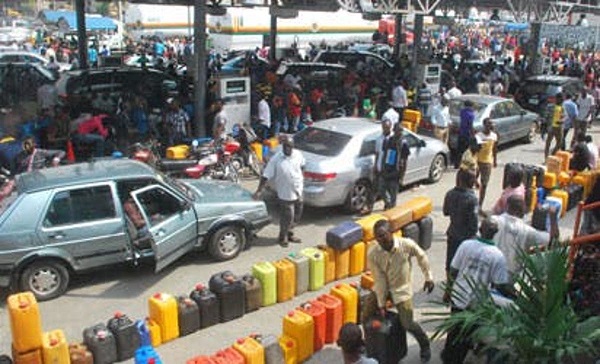
The debate over fuel subsidy removal and exchange-rate reforms remains one of the most consequential economic debates of recent years. While governments may argue that subsidies are financially unsustainable or that reforms are necessary, the burden of adjustment cannot continually be transferred to ordinary citizens without corresponding measures to increase productivity, wages, employment and social protection.
Wage and salary increases should be taken away from media affairs as past experiences have shown that minimum wage increases, especially in an economy where market prices and transport fares are controlled by non-state actors like in Lagos, had paved to nothing but further hardship.
A successful economic reform should ultimately make citizens more prosperous, not merely make government finances look better on paper.
Nigeria needs an economy that produces.
We need factories that manufacture goods, farms that process agricultural products, technology companies that create employment, universities that produce globally competitive graduates and infrastructure that allows businesses to operate efficiently.
No more politics of crumbs
One of the biggest challenges facing Nigerian democracy is the poverty that makes citizens vulnerable to political inducement.
A politician who distributes money during an election may appear generous for a moment, but that money cannot compensate for four years of poor governance.
Young Nigerians must therefore reject the mentality of exchanging their votes for immediate gratification.
The most valuable political reward is not a bag of rice or a small cash payment. It is a government that creates an environment where citizens can earn enough to buy what they need without depending on politicians.
That is the Nigeria we should seek.
Elections must be protected
The 2027 elections must also send a strong message that electoral malpractice will no longer be tolerated.
Rigging, vote buying, intimidation, ballot-box snatching, manipulation of results and political violence must attract serious consequences.
In this regard, the warning attributed to Oyo State Governor Seyi Makinde—that anyone intending to rig elections in the state should expect a determined response—captures the anger many Nigerians feel about electoral manipulation.
However, the response must remain within the law. Democracy cannot be defended by replacing one form of illegality with another.
The proper “fire-for-fire” response to electoral malpractice should be the strength of citizens, election observers, security institutions, electoral authorities and the judiciary acting together to prevent, document and punish violations.
The Nigeria of May 29, 2027
By May 29, 2027, Nigerians should aspire to have a country where institutions work, elections are credible, security agencies protect citizens, courts are respected, businesses can thrive and young people have reasons to believe in their future.
We should want a Nigeria where no citizen is treated as an outsider because of his religion or ethnicity.
We should want a Nigeria where traditional rulers, religious leaders, politicians and activists understand that none is above the law.
We should want a Nigeria where political parties compete on ideas rather than inciting citizens against one another.
We should want a Nigeria that engages the world confidently, accepting partnerships that advance its national interest while rejecting relationships that undermine its sovereignty or development.
Most importantly, we should want a Nigeria where citizens themselves understand that nation-building is not the responsibility of politicians alone.
The Nigerian people have a responsibility.
Our youths have a responsibility.
Our religious and traditional leaders have a responsibility.
Our media have a responsibility.
And political leaders have perhaps the greatest responsibility of all.
The Nigeria of our dreams will not emerge simply because a new president, governor or legislator is sworn in on May 29, 2027. It will emerge when Nigerians collectively demand better leadership, defend democratic institutions, reject ethnic and religious hatred, protect the sanctity of the ballot and insist that public office exists to serve the people.
May 29, 2027, should therefore not merely mark another change of government. It should mark a renewed national commitment to building the Nigeria we want to have.
*Adefaka is Nigeria-based media proprietor and publisher of The DEFENDER Newspaper. Email: omope72@gmail.com