Makkah defence alliance plans Iran talks, rejects claims of anti-Tehran agenda
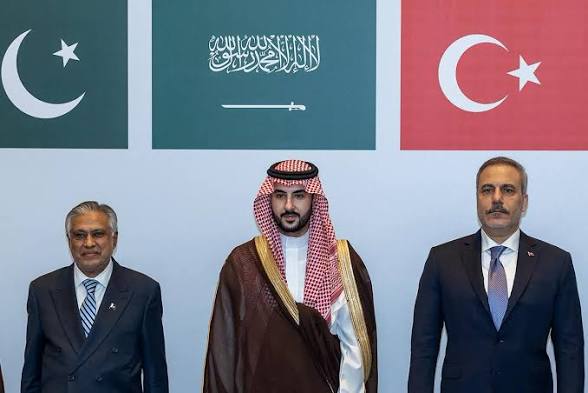
*Saudi Arabia, Türkiye and Pakistan to engage Iranian leaders as Ankara intensifies diplomatic efforts to prevent regional escalation
- “We all agree that a renewed attack on Iran would truly lead to a further spread of war and conflict in the region,” Fidan said, according to Anadolu Agency.
The planned visit of senior officials from Saudi Arabia, Türkiye and Pakistan to Iran has challenged claims that the emerging Makkah Defence Alliance was established to isolate or confront Tehran, with recent diplomatic initiatives pointing instead to dialogue and regional de-escalation.


Senior officials from the three countries are expected to visit Tehran for talks on regional security, Anadolu Agency reported on Monday, October 26, 2026.
A Turkish government source also confirmed the development to Muslim News Nigeria, explaining that the diplomatic initiative reflected Türkiye’s efforts to prevent another attack on Iran through broader regional and international engagement.
The planned visit comes amid allegations that the Makkah Defence Alliance was formed to target Iran and Yemen’s so-called resistance axis against Israel.
However, the latest diplomatic moves suggest that the participating countries are seeking to maintain communication with Tehran and prevent further military escalation across the Middle East.
Türkiye has also intensified engagement with European powers as part of efforts to build international support for a diplomatic resolution to the crisis.
Türkiye Leads Wider Diplomatic Initiative
The planned visit follows a meeting of foreign ministers held in Istanbul on Friday, October 23, involving Türkiye, Egypt, Pakistan and Saudi Arabia, collectively referred to as the R4, alongside the United Kingdom, Germany and France, known as the E3. Italy also participated in the discussions.
The expanded diplomatic engagement brought together regional and European powers to discuss ways of preventing a further deterioration of the security situation involving Iran.
Speaking after the meeting, Turkish Foreign Minister Hakan Fidan warned that another attack on Iran could trigger a wider regional conflict.
“We all agree that a renewed attack on Iran would truly lead to a further spread of war and conflict in the region,” Fidan said, according to Anadolu Agency.
He emphasised that dialogue and diplomacy remained the most appropriate means of addressing the crisis.
Fidan also maintained that military intervention in Iran would not provide a lasting solution, stressing the importance of ending hostilities and reopening the Strait of Hormuz, a strategic waterway through which a significant share of global oil supplies passes.
The Turkish position underscores Ankara’s concern that renewed hostilities could extend beyond Iran and threaten regional stability, international trade and global energy supplies.
Saudi Arabia, Pakistan and Türkiye to Meet Iranian Leaders
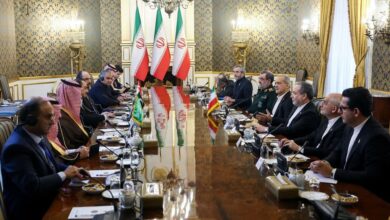
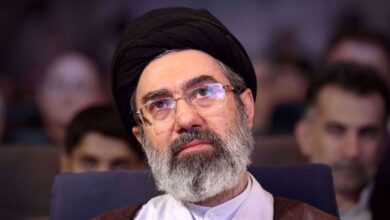
Iranian official Ali Bagheri, deputy secretary of Iran’s Supreme National Security Council, confirmed that senior officials from Saudi Arabia, Pakistan and Türkiye would visit Tehran to discuss regional security and explore the establishment of a regional security framework for West Asia.
The expected delegation includes Saudi Defence Minister Prince Khalid bin Salman and Pakistan’s Chief of Army Staff, General Asim Munir.
Turkish security sources also told Anadolu Agency that Ibrahim Kalin, head of Türkiye’s National Intelligence Organisation, would participate in the engagement.
Saudi Deputy Foreign Minister for Public Diplomacy, Raid Krimly, confirmed the planned visit in a post on X, stating that the delegation would meet Iranian President Masoud Pezeshkian and Mohsen Rezaei, secretary of Iran’s Supreme National Security Council.
According to Krimly, the engagement is intended to ease tensions amid the ongoing US-Iran crisis, encourage dialogue and diplomatic solutions, support mediation efforts led by Qatar and Pakistan, and strengthen regional security and stability.
The proposed meetings are expected to provide an opportunity for the participating countries to discuss their security concerns directly with Iranian leaders while exploring measures to prevent further confrontation.
Alliance Faces Questions Over Its Strategic Intentions
The planned engagement with Tehran comes amid debate over the objectives of the Makkah Defence Alliance and whether the emerging security partnership is intended to counter Iran’s regional influence.
The prospect of senior Saudi, Turkish and Pakistani officials travelling to Iran for security discussions challenges the assertion that the partnership is exclusively directed against Tehran.
Rather than cutting off diplomatic channels, the countries involved appear to be pursuing engagement with Iran alongside wider consultations with European powers.
The diplomatic initiative also highlights the importance of regional actors in efforts to contain tensions between Washington and Tehran, particularly as concerns grow over the potential consequences of renewed military action.
Saudi Arabia’s participation is particularly significant given the importance of its relationship with Iran to the wider security calculations of the Gulf region.
Türkiye, meanwhile, has continued to advocate diplomatic engagement and broader international cooperation to prevent the crisis from escalating into a wider conflict.
Pakistan’s involvement adds another regional player to the effort, with Islamabad also identified as part of mediation initiatives aimed at easing tensions.
Focus Shifts to Dialogue and Regional Stability
The proposed Tehran visit reflects growing efforts to establish a broader diplomatic framework for addressing security challenges in West Asia.
The combination of regional consultations involving Saudi Arabia, Türkiye and Pakistan and wider engagement with European powers suggests an attempt to build consensus around preventing renewed hostilities.
The planned talks could also provide an opportunity to explore confidence-building measures and strengthen communication among countries whose interests are affected by the crisis.
However, the outcome will depend on the willingness of the parties involved to sustain dialogue and translate diplomatic contacts into practical measures capable of reducing tensions.
For now, the planned visit signals that, despite competing regional interests and heightened security concerns, the participating countries consider engagement with Tehran necessary to their broader diplomatic calculations.
The central message of the latest diplomatic moves is that the Makkah Defence Alliance’s engagement with Iran is challenging the narrative of an exclusively anti-Tehran partnership, while underscoring the role of dialogue in efforts to prevent another regional conflict.