“It’s unreasonable to say Sultan of Sokoto is silent over insecurity in Nigeria”, Doka chides hate mongers
By BASHIR ADEFAKA
“The Sultan himself has made his position clear. He has condemned banditry and terrorism, insisting these evils have no place in Islam. He has urged Nigerians to stop profiling criminals along ethnic lines. He has called for calm and insisted that offenders must be prosecuted through lawful judicial processes rather than through revenge or collective punishment.”
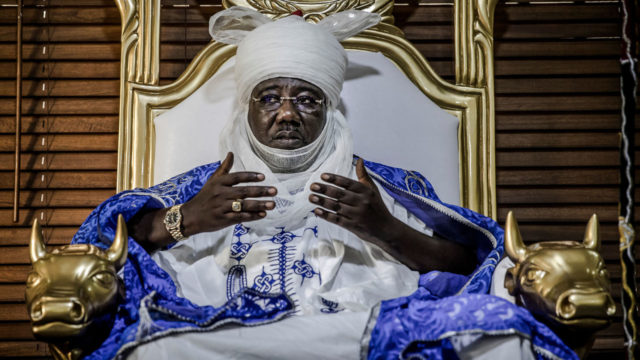
A public affairs commentator, Mohammed Bello Doka, has argued that criticism over insecurity in Northern Nigeria is often wrongly directed at the Sultan of Sokoto rather than elected officials who possess constitutional authority over the country’s security architecture.
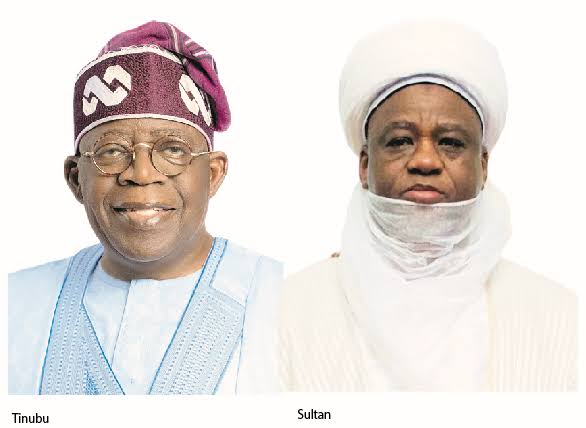
In an opinion article titled, “Why Do Yoruba and Igbo Think the Sultan and Not Tinubu Should Be Held Accountable for Insecurity in the North?”, and published on July 14, 2026, Doka maintained that the Sultan, as a traditional and religious leader, has no constitutional powers to deploy security forces, approve security budgets, or direct military operations.
He said responsibility for tackling insecurity rests primarily with the President as Commander-in-Chief, state governors, and members of the National Assembly, who oversee security funding and policies.
According to the writer, the Sultan’s role is advisory and moral rather than executive. He noted that the monarch has repeatedly condemned terrorism and banditry, urged Nigerians not to profile criminals based on ethnicity, and called for stronger government action against insecurity.
The article referenced previous remarks by the Sultan, including his calls for decisive action against violent groups and his expression of frustration over the continued bloodshed despite repeated appeals by traditional rulers.
In his own words, Doka said, “The Sultan of Sokoto sits on a throne of straw. He holds no army. He commands no police force. He controls no security budget. Yet when the North bleeds, Southern Nigerians point not at the President who commands the military, not at the governors who control state security apparatus, not at the National Assembly members who approve security spending, but at a traditional ruler whose only weapons are words and prayers. This is not accountability. This is convenient scapegoating.
“The people with real constitutional power to fight insecurity are the President, the state governors, and the National Assembly. The President is Commander-in-Chief of the Armed Forces. He controls the military, the police, the intelligence agencies, and a security budget exceeding six trillion naira. The governors control state security apparatus and can request military intervention.
“The National Assembly approves security budgets and conducts oversight. The Sultan has none of these powers. He cannot deploy soldiers. He cannot approve funding. He cannot arrest a single bandit. His role is advisory, cultural, and religious. That is the law. That is the constitution.
“The Sultan himself has made his position clear. He has condemned banditry and terrorism, insisting these evils have no place in Islam. He has urged Nigerians to stop profiling criminals along ethnic lines. He has called for calm and insisted that offenders must be prosecuted through lawful judicial processes rather than through revenge or collective punishment.
“At a security summit in Kaduna in October 2025, he urged strong countermeasures and an end to the carnage. He has even expressed frustration, asking how many times traditional rulers must condemn these killings before political leaders and security agencies take meaningful action. That question reveals his powerlessness. He is begging political leaders to act. He cannot act,” he said according to the article.
Doka also cited criticisms levelled against the Sultan by several Southern groups and individuals, including Yoruba and Igbo organisations, which have accused him of failing to do enough to address insecurity or of remaining silent on attacks attributed to armed groups. He noted that the Sultanate Council has dismissed such allegations as unfounded.
“Yet Southern voices continue to demand the Sultan be held accountable for the bloodshed. The Alliance for Yoruba Democratic Movements, a coalition of 130 groups in the South West, has accused the Sultan of promoting a parochial Fulani ethnic agenda hiding under the guise of promoting Islam,” Doka continued.
He wondered, “Yoruba youths under the aegis of Yoruba Nation Youths have warned the Sultan against pushing for Sharia courts in the South-West, describing the move as a strategy by the Hausa-Fulani to enslave and conquer the Yoruba. From the Igbo side, Ohanaeze Ndigbo Worldwide has condemned the Sultan for his perceived silence on the killings and demanded he speak out against the atrocities.
“An open letter published in TheCable described the Sultan’s prolonged silence in the face of escalating Fulani banditry as no longer neutral, warning that silence projects an image closer to complicity than innocence. A former US mayor, Mike Arnold, challenged the Sultan to provide evidence he is not involved in what he described as jihad genocide and mass killings in northern Nigeria. The Sultanate Council dismissed these accusations as baseless, refusing to dignify them with a reply.”
The commentator further argued that greater public scrutiny should be directed at elected political leaders, particularly the President and Northern governors, whom he said possess the constitutional authority and resources to confront insecurity.
He also pointed to statements of support for President Bola Tinubu by several Northern governors, arguing that political accountability should focus on office holders with executive powers rather than traditional institutions.
“Here is the contradiction Southern commentators refuse to confront. Ninety percent of Northern governors and National Assembly members belong to the APC. They are President Tinubu’s political allies. They contributed over sixty percent of his winning votes in 2023. They have publicly declared that the North will back Tinubu in 2027.
“Governor Uba Sani of Kaduna has declared that Tinubu has done more for the North than any leader in history. Governor Babagana Zulum of Borno has said the people of Borno will vote for Tinubu for a second term. Governor Inuwa Yahaya, chairman of the Northern States Governors Forum, has declared the North will back Tinubu because it contributed over sixty percent of his winning votes. Governor Nasir Idris of Kebbi has called Tinubu his leader and mentor.
“Governor Abdullahi Sule of Nasarawa has boasted that a party controlling thirty-one states cannot fear a party controlling none. Governor Dikko Radda of Katsina has described Tinubu’s critics as noisemakers. Governor Ahmed Usman Ododo of Kogi has described Tinubu’s re-election as a personal project. These are not neutral observers. They are the very people Southerners dine with, celebrate, and expect to re-elect in 2027.
“So let us ask the question Southerners are afraid to ask. If Tinubu is the national leader of the APC and ninety percent of Northern governors and National Assembly members are APC, why can he not hold them accountable? Why does he expect Northerners to re-elect him and his allies while simultaneously telling us to hold those same allies accountable? That is not leadership. That is theater. That is political manipulation.
“If Tinubu truly wanted Northern governors and lawmakers held accountable, he would withdraw party support from non-performing governors. He would use his influence to deny them re-election tickets. He would publicly name and shame them. He would withhold federal resources until they act. He does none of this. Instead, he dines with them, campaigns with them, and depends on them for 2027. They are not the problem to him. They are the solution to his re-election.
Doka concluded that addressing insecurity requires holding constitutionally empowered officials responsible for security outcomes instead of, in his view, placing blame on traditional rulers who lack executive authority.
“The Sultan is an easy target because he is a traditional ruler without political power. He has no party machinery to protect him. He has no security budget to defend him. He has no electoral mandate to shield him. The real failure lies with elected officials who have all the power and use none of it.
“If Southerners are serious about ending insecurity in the North, they should stop scapegoating a powerless Sultan and start holding Tinubu and his Northern APC governors accountable. But they will not, because that would mean confronting the very political allies they are courting for 2027. That is the uncomfortable truth no one wants to speak,” Doka said.
The article, which represents the views of the author, contributes to the ongoing national debate on responsibility and accountability in addressing insecurity across Nigeria.