Iran Invited to Join Mecca Defence Pact
Obisesan also criticised what he described as Western powers’ pursuit of other countries’ natural resources and strategic interests, saying international security arrangements should be based on mutual respect for sovereignty and territorial integrity.
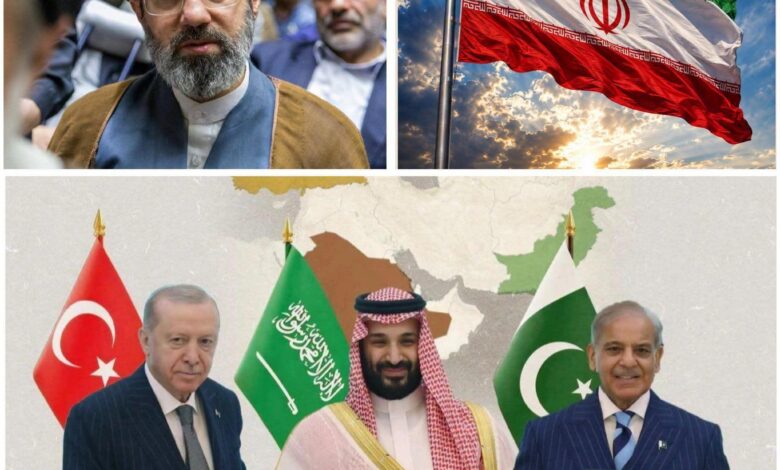
Iran has reportedly received an invitation to join the Mecca Joint Defence Agreement, a proposed regional security arrangement involving Saudi Arabia, Turkey and Pakistan.


Mehdi Rahimi, head of Iran’s parliamentary news agency, Khaneh Mellat, disclosed the development in an interview with Al-Mayadeen, saying Tehran was considering the invitation.
According to Rahimi, Iran’s possible participation could be tied to assurances that Saudi Arabia would not allow its territory, airspace or military facilities to be used by the United States for future military operations against Iran.
The reported invitation is seen as a potential development in efforts to ease tensions between Iran and Saudi Arabia and strengthen regional defence cooperation.
However, the claim has not been publicly confirmed by Iran’s Foreign Ministry or its senior leadership. Saudi Arabia, Pakistan and Turkey have also yet to officially confirm that Iran has been invited to join the agreement.
If confirmed, Iran’s participation could mark a significant shift in regional security dynamics, particularly amid continuing tensions involving Israel and the broader Middle East.
The proposed arrangement would also bring together countries with differing political and security interests, making the terms and objectives of any expanded defence pact a key issue.
Commenting on the reported development, the writer, Akintoye Obisesan, said he would welcome the pact if it was pursued in good faith and genuinely aimed at promoting regional security.
He further drew a comparison with Russia’s previous interest in closer relations with NATO, arguing that greater inclusion and dialogue could potentially have helped prevent the escalation that eventually led to the Ukraine conflict.
Obisesan also criticised what he described as Western powers’ pursuit of other countries’ natural resources and strategic interests, saying international security arrangements should be based on mutual respect for sovereignty and territorial integrity.