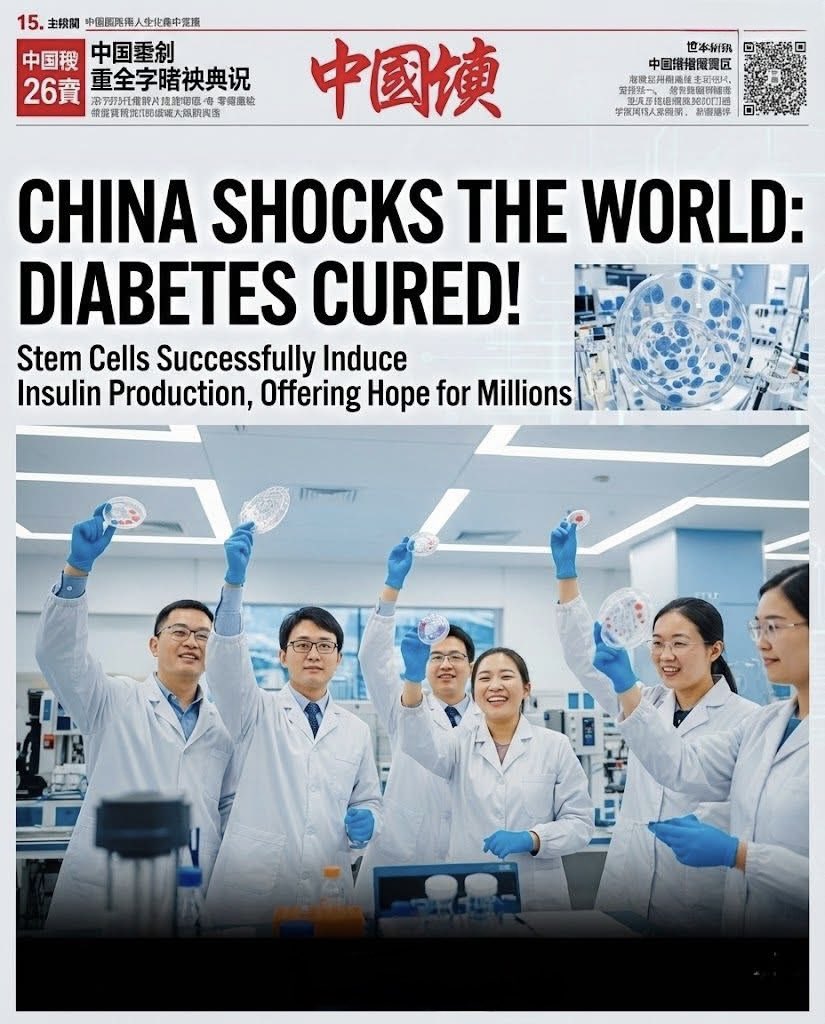
“China shocks the world”, cures Diabetes with Stem Cell Therapy
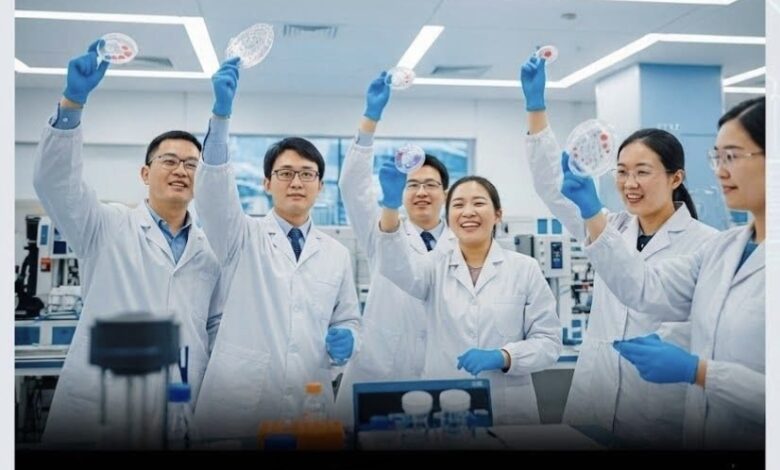
For more than 100 years, diabetes treatment has relied on insulin injections, glucose monitoring, and lifelong disease management. Now, researchers in China and the United States report early but potentially groundbreaking progress toward restoring the body’s natural ability to produce insulin.
Scientists at , alongside research teams in China, have developed stem cell–based therapies designed to generate insulin-producing pancreatic islet cells. These laboratory-grown cells are transplanted into patients with Type 1 diabetes, a condition in which the immune system destroys the body’s own insulin-producing cells.
In early-stage clinical trials, some patients who received the experimental treatment began producing their own insulin again. Several participants were able to significantly reduce — and in some cases eliminate — their need for external insulin injections, according to preliminary study results.
While the findings are promising, experts caution that the research remains in its early phases. Trial sizes have been small, and long-term durability, safety, and immune response challenges are still being evaluated. Researchers must also determine whether the restored insulin production can be sustained for years without significant side effects.
If future studies confirm the therapy’s effectiveness and safety, the approach could mark a shift in diabetes care — moving beyond symptom management toward regenerative treatment aimed at rebuilding the pancreas’s insulin-producing function.
For now, scientists describe the development not as a cure, but as an important step toward transforming how Type 1 diabetes may one day be treated.