ANOTHER DIMENSION TO THE NIGERIAN INSECURITY: The secessionist elements and their Western “Collabo”
By BASHIR ADEFAKA
Meanwhile, secessionist rhetoric and ethno-religious polarization—especially narratives framed as anti-Islam, anti-North or anti-Fulani—have deepened divisions. Social media has amplified misinformation, sometimes inflamed by actors with agendas that extend beyond Nigeria’s borders. The weaponization of information is now a global phenomenon, and Nigeria is not immune.
Let me begin by explaining what I mean by “collabo.” It is not an attempt to invent a new dictionary entry. Rather, it is a dramatic expression to describe what I consider a troubling collaboration between certain unpatriotic Nigerians and foreign interests that do not believe this country—the most important Black nation on earth—deserves to exist as a united, prosperous and diverse entity.
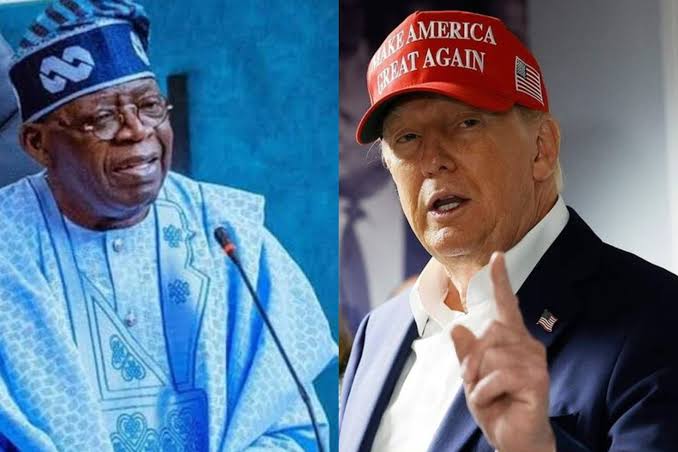
There is a dangerous dimension to Nigeria’s insecurity that is too often ignored. It is the role of secessionist elements who, in pursuit of their agenda, amplify falsehoods, circulate doctored videos and manipulate narratives to portray Nigeria as irredeemably broken. Some among them (Igbo) appear convinced that foreign political figures such as Donald Trump or Benjamin Netanyahu could somehow intervene to dismantle Nigeria and midwife a Biafran or sectarian state in their favour. The same way some Yoruba elements did as then exiled Sunday Igboho was moving from 10 Downing Street of London to the high lobbyist offices in Germany. Such thinking is not merely naïve; it is reckless.
CLICK HERE TO WATCH SUNDAY IGBOHO IN LONDON
Nigeria has survived colonial exploitation, economic manipulation and decades of external pressure. Yet today, some of its own citizens seem prepared to collaborate with forces that historically have not prioritized African stability, but rather their own strategic and economic interests. This, to me, is a troubling layer in the country’s broader security crisis.
Another aspect of this challenge lies in the influence of wealthy Western interests—whether individuals, institutions or governments—whose geopolitical calculations often shape political outcomes across Africa and the Middle East. History shows that nations rich in natural resources frequently find themselves entangled in global power struggles. From oil to gold, diamonds to gas, resource politics has shaped the fate of many countries.
Across the decades, leaders who resisted Western dominance or sought alternative alliances have faced isolation, sanctions or regime change. Figures such as Saddam Hussein of Iraq, Muammar Gaddafi of Libya, Kwame Nkrumah of Ghana, and more recently Imran Khan of Pakistan, are often cited by critics of Western foreign policy as examples of this pattern.
In Nigeria, former President Muhammadu Buhari was viewed by his supporters as a leader attempting to diversify the economy, invest in infrastructure, and reduce dependency on external economic prescriptions. These external forces seeking dominance would not be satisfied until they had suggested to Buhari to remove in his own country the same fuel subsidy they given in their own country and wanted him to devalue the Naira. Refusal of Buhari to follow their advice was the beginning of “Christian genocide” by US President Donald Donald during his first tenure.
Whether one agrees with these interpretations or not, it is undeniable that global power politics affects domestic realities. Nigeria’s challenges cannot be examined in isolation from international dynamics.
Meanwhile, secessionist rhetoric and ethno-religious polarization—especially narratives framed as anti-Islam, anti-North or anti-Fulani—have deepened divisions. Social media has amplified misinformation, sometimes inflamed by actors with agendas that extend beyond Nigeria’s borders. The weaponization of information is now a global phenomenon, and Nigeria is not immune.
If Nigeria is to break free from recurring instability, it must prioritize sovereign decision-making rooted in national interest rather than foreign approval. The country should diversify its diplomatic and economic partnerships, engaging not only Western powers but also nations such as Russia, China, Brazil, Pakistan, Ethiopia and others. A multipolar foreign policy could reduce overdependence on any single bloc.
Economic revival must also be central. Nigeria once thrived on agricultural exports—cocoa, palm oil, timber—and possessed strong regional industrial foundations. Reviving agriculture-based manufacturing, investing in infrastructure and strengthening domestic production are practical steps toward self-reliance.
At the same time, leadership must balance freedom of expression with national security. Free speech is vital, but speech deliberately designed to incite violence, insult religious identities or undermine national cohesion presents a serious challenge. Responsible governance requires establishing clear legal boundaries that protect both liberty and unity.
Ultimately, Nigeria’s destiny lies in the hands of Nigerians. Patriotism cannot be outsourced. National development cannot be built on perpetual grievance or foreign dependency. Citizens must resist the temptation to trade long-term national interest for short-term financial gain or external validation.
Government exists to safeguard peace, unity and development. Its legitimacy should come from protecting the collective good, preserving cultural dignity and ensuring that Nigeria remains sovereign in both decision and direction.
Nigeria’s unrest has many causes—economic, political and social. But the dimension of secessionist agitation intertwined with foreign influence deserves sober reflection. If the country is to move forward, it must do so with clarity of purpose, unity of vision and an unshakeable commitment to its sovereignty.
*Bashir Adefaka, a Prince of two Ondo State kingdoms in South West Nigeria, is a media proprietor and publisher of The DEFENDER Newspaper. He can be reached via his email: omope72@gmail.com