THE PALONGO DANCE OF SOCIAL MEDIA PALAVA
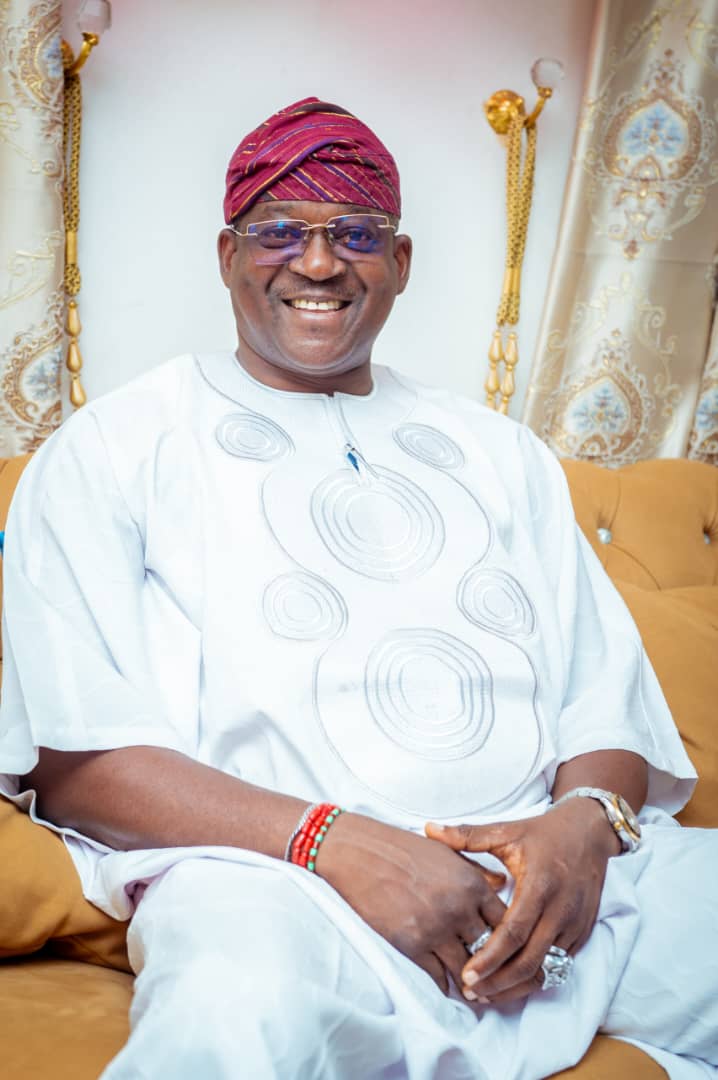
By OLUMUYIWA ADEJOBI

Growing up, I remember my grandmother frequently using the word Palongo. At the time, the word meant absolutely nothing to me until curiosity eventually got the better of me and I decided to ask her what it meant.
Why misinformation, disinformation and artificial intelligence must not become instruments of national destruction.
Growing up, I remember my grandmother frequently using the word Palongo. At the time, the word meant absolutely nothing to me until curiosity eventually got the better of me and I decided to ask her what it meant.
I beckoned on her to explain the meaning of Palongo. Apparently, it is a Yoruba expression she used to describe a dance characterized by irregular rhythm, inconsistent movement and rather uncoordinated dancing steps. In essence, it connotes an unpalatable and disorderly dance.
Now, many may wonder why I have chosen to apply the word Palongo to the present-day social media environment. The connection is not far-fetched.
We are living in an era dominated by digital technology, where virtually every aspect of human existence has been influenced by technological innovation. The advancement of technology has transformed our societies, improved professional practices, strengthened communication systems and created opportunities that were previously unimaginable. However, alongside these remarkable achievements have come equally disturbing challenges.
Sometimes, one is compelled to ask: Has technology become more of a blessing or a burden to humanity?
Undoubtedly, technology has contributed immensely to global development. Nevertheless, its misuse has introduced complications that threaten the very systems it was designed to improve.
My focus, on this occasion, is on the challenges confronting our society through digital media, particularly social media, and the growing application of Artificial Intelligence (AI).
In contemporary society, some of the most significant threats confronting nations, institutions and individuals are increasingly connected to information management, particularly misinformation, disinformation and fake news.
The emergence of numerous digital applications, software and communication platforms has undoubtedly benefited several professions. However, their misuse has created serious concerns for information integrity, public safety, institutional credibility and national security.
In governance, communication is indispensable. But it is not merely communication that matters; it is effective, responsible, strategic and credible communication.
No government, institution or organization can function optimally without an effective communication framework. Unfortunately, the contemporary communication ecosystem is increasingly exposed to manipulation, deliberate distortion, fabricated narratives, deepfakes and coordinated attempts to undermine public confidence.
Across several countries, these developments have become matters of serious concern to communication professionals, policymakers, security institutions and the international community.
Artificial Intelligence is remarkably creative and innovative. It has opened new frontiers in content development, research, information processing and professional practice. However, the same technology can be manipulated to produce fabricated images, videos, audio recordings and narratives capable of deceiving unsuspecting members of the public.This is where the danger lies.
With AI, individuals can generate content that appears authentic, convincing and credible, even when the underlying information is entirely fabricated. A person can be made to appear to have said what he never said, done what he never did or participated in an event that never happened.
The implications are enormous.
From my experience in Nigeria, particularly as a communicator and Public Relations practitioner who has, on several occasions, been involved in managing the image of the Nigeria Police Force, Africa’s most populous police institution, I consider the dangers of information manipulation increasingly evident and disturbing.
What we are witnessing in some quarters is no longer ordinary social media recklessness. It is becoming a serious threat to public order, institutional stability, national cohesion and human security.
The deliberate use of fabricated content to provoke hostility, incite violence, create panic, undermine security operations and generate public distrust can have consequences comparable to other forms of security threats.
In certain circumstances, the consequences can be devastating: confusion, misunderstanding, destruction of property, loss of innocent lives, bloodshed and widespread sorrow.
Misinformation, disinformation and fake news are increasingly being deployed as instruments of destruction, division and hatred, undermining the collective ideals upon which our founding fathers envisioned Nigeria.
In the Nigerian context, my experience suggests that a growing number of young people, alongside some older citizens, are increasingly participating in manipulative communication, sometimes driven by personal interests, political sentiments, commercial incentives or the desire for online popularity.
More particularly, the monetization of social media platforms has introduced another dimension to this challenge.
While social media monetization has created legitimate economic opportunities for content creators, influencers and digital entrepreneurs, it has also created incentives for some individuals to prioritize sensationalism, controversy and outrage over truth, decency and responsibility.
For some, the number of views, engagements, followers and financial rewards appears to matter more than the consequences of what they publish.
Consequently, some social media influencers and content creators engage in irresponsible commentary, unverified allegations, sensational headlines and provocative publications without considering the potential damage to individuals, institutions and the country.
Despite the existence of laws, regulatory frameworks and institutional mechanisms designed to check abuses, some individuals continue to exploit digital platforms to manufacture controversies, circulate fabricated information and disseminate deepfake materials.
This conduct must not be encouraged or normalized.
Our collective sovereignty, national identity, unity and future are far more important than the temporary financial rewards or online popularity that some individuals seek to achieve through irresponsible digital engagements.
We must begin to appreciate that freedom of expression comes with responsibility. The right to communicate does not confer an unrestricted license to fabricate information, destroy reputations, incite violence or deliberately mislead the public.
We must therefore become more conscious of what we see, read, believe, share, repost and copy on social media.
In this digital age, verification is no longer optional; it is a civic responsibility.
We must be particularly cautious of fake news, misinformation, disinformation and, most especially, deepfakes. The rate at which some individuals engage in these practices, often with little regard for morality, legality, professionalism or the consequences of their actions, is alarming.
We cannot continue to weaponize communication against ourselves and expect our society to remain peaceful.
Recently, the Inspector-General of Police, IGP Olatunji Rilwan Disu, psc(+), NPM, called on members of the public to be vigilant and exercise caution in relation to fake news and other forms of irresponsible information dissemination.
This is a timely intervention that deserves public support.
The challenge, however, requires sustained attention, strategic communication, public enlightenment, institutional collaboration and appropriate regulatory responses. The objective should be to protect citizens, preserve the integrity of information and ensure that digital platforms are not exploited to threaten public safety and national security.
The Federal Government, through its Ministries, Departments and Agencies, has also made efforts to address the challenges of misinformation and the irresponsible use of social media.
I must acknowledge the contributions of the former Minister of Information and National Orientation, Alhaji Lai Mohammed, who took significant steps in drawing national attention to the dangers of fake news, misinformation and disinformation.
Similarly, the present Minister of Information and National Orientation, Alhaji Mohammed Idris, a Fellow of the Nigerian Institute of Public Relations, has continued to advocate responsible information management and the need to address the menace of fake news in our society.
These efforts deserve recognition. However, the challenge is far from over. It requires a whole-of-society approach involving government institutions, security agencies, media organisations, technology companies, professional bodies, traditional institutions, religious leaders, civil society organisations and, most importantly, ordinary citizens.
Regulation must also be balanced with the protection of constitutionally guaranteed freedoms. We must distinguish between legitimate criticism, dissent and public accountability on the one hand, and deliberate fabrication, impersonation, incitement and malicious manipulation on the other.
We need to talk to one another. We need to listen, understand, verify and appreciate the realities of our collective existence.
The maturity required to protect and sustain a country cannot be built on suspicion, hatred, fabricated narratives and deliberate misrepresentation.
History has repeatedly shown that crises and wars are often preceded or aggravated by misunderstandings, mistrust, inflammatory narratives and the escalation of conflicts. In many instances, misinformation has played a significant role in creating the conditions for violence.
There is a popular quotation attributed to former United Nations Secretary-General, Boutros Boutros-Ghali, which captures the cost of conflict and the value of peace:
“The cheapest war is more expensive than the most expensive peace.”
This is a sobering reminder that the consequences of allowing preventable conflicts to escalate are often far greater than the resources required to maintain peace.
We must therefore take bold, deliberate and strategic steps to rescue our dear country from the chains, shackles and manacles of digital manipulation, misinformation and the activities of those who appear determined to pull down the very society from which they derive their identity and opportunities.
I speak from experience. I have personally been a victim of misinformation and social media manipulation. I have felt its consequences and experienced its emotional and reputational implications. Until it happens to you, you may never fully appreciate the damage that false narratives and deliberate misrepresentation can cause.
A fabricated story may take only a few seconds to create, but correcting the damage it causes may take years. A misleading video may attract millions of views, while the truth struggles to reach a fraction of that audience.
This is why responsible communication must become a collective priority.
LET US NOT ALL DANCE PALONGO!
We must all rise to confront this menace before it becomes an even greater threat to our national existence.
We must promote digital literacy, responsible content creation, fact-checking, ethical journalism and constructive public engagement. We must also encourage our young people to understand that their digital footprints have real-world consequences.
Our social media platforms should be instruments of enlightenment, innovation, accountability, economic advancement and national development, not breeding grounds for hatred, hostility, confusion and destruction.
Above all, we must remember our cultural values, our collective heritage and the responsibility we owe to generations yet unborn.
As my grandmother would say, we must not all dance Palongo!
There is a Yoruba expression that captures the moral lesson beautifully:
“Ìjó Palongo kò dára fún ọmọlúàbí.”
In other words, the Palongo dance is not befitting of a person of good character and noble upbringing.
Indeed, we are a people with rich cultural values, intelligence, creativity, resilience and enormous productive capacity. We have no reason to surrender our collective destiny to the irregular rhythm of misinformation, digital recklessness and social media manipulation.
We must choose the rhythm of truth, responsibility, civility, patriotism and national development.
Nigeria is bigger than our individual interests, political affiliations, personal grievances and social media engagements. We must not allow the pursuit of online popularity to destroy the country we all call home.
Let us be responsible. Let us be discerning. Let us be patriotic.
And, above all, let us refuse to dance Palongo!
Ire oo!
Omooba Olumuyiwa Adejobi, fnipr, Fellow of the Nigerian Institute of Public Relations, Oba Adejobi’s House, Orile-Owu, Osun State, Nigeria,
Princemoye@gmail.com
08037168147