Atiku/Amaechi’s Campaign Outings So Far and Tinubu’s Frustration: Undeniable Reality
By SHERIFDEEN ABBAS

Their campaign outings are particularly significant because they are taking place against the background of widespread public concerns over the cost of living, insecurity, unemployment and the general economic circumstances confronting Nigerian households.
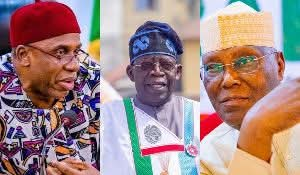
The unfolding political atmosphere ahead of Nigeria’s January 16, 2027 presidential election is increasingly attracting attention, particularly following the campaign outings of former Vice-President Atiku Abubakar and his running mate, former Rivers State Governor Rotimi Amaechi, under the platform of the African Democratic Congress (ADC).
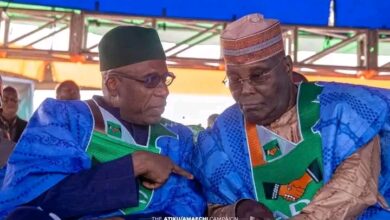
From Sokoto to Kebbi and, most recently, Bauchi, Atiku and Amaechi have taken their campaign message directly to the people, combining political rallies with community engagements, visits to traditional rulers and interactions with ordinary Nigerians. These activities have introduced a new dimension to the emerging contest for the presidency.
Their campaign outings are particularly significant because they are taking place against the background of widespread public concerns over the cost of living, insecurity, unemployment and the general economic circumstances confronting Nigerian households.
Atiku’s November 4 campaign flag-off in Sokoto attracted considerable public attention, with reports of enthusiastic receptions along his motorcade route. His subsequent engagements in Bauchi, including visits to communities such as Soro, Kari, Darazo and Misau, further demonstrated the campaign’s intention to extend beyond conventional stadium rallies into grassroots political engagement.
Amaechi, meanwhile, has been an outspoken presence on the campaign trail. At the Bauchi rally on November 14, he presented the ADC’s geographical calculations, arguing that the party had substantial support across the North-East and North-West while promising to compete vigorously in other regions.
His confidence and combative political communication have also become noticeable features of the opposition campaign.
Against this background, developments within the ruling All Progressives Congress (APC) deserve attention. Reports that President Bola Tinubu was considering expanding his personal campaign appearances beyond the initially planned 12 states to cover more parts of the country have generated discussions about the changing political calculations ahead of the election.
A November 10 report by ThisDay linked the possible adjustment to the growing visibility of opposition campaigns, particularly Atiku’s engagements in northern Nigeria.
It would, however, be premature to interpret every adjustment in campaign strategy as proof of presidential frustration. Nevertheless, the intensity of political exchanges between the ruling party and opposition figures provides an indication that the contest is becoming increasingly competitive in public perception.
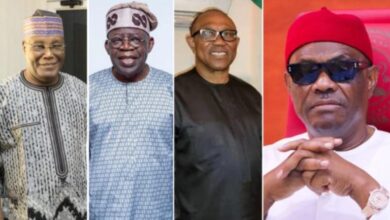
Tinubu and his political associates have also repeatedly criticised opposition candidates at campaign events. At the November 7 Rivers rally, for instance, the President criticised Atiku’s previous role in government, while political exchanges involving Amaechi and FCT Minister Nyesom Wike added another layer to the contest.
The important question is whether political campaigns will concentrate on personalities or address the pressing concerns of Nigerians.
Nigerians deserve more than political entertainment, accusations and competing claims about geographical voting strengths. They deserve clear explanations of how each candidate intends to tackle insecurity, reduce living costs, create employment opportunities, strengthen institutions and improve public services.
The emerging contest between Atiku, Amaechi and Tinubu is therefore about more than crowded campaign venues or the frequency of presidential appearances. It is also about public accountability, political communication and the ability of competing political platforms to respond convincingly to citizens’ expectations.
One undeniable reality is that the 2027 presidential contest is already generating serious political engagement. Whether the momentum witnessed at opposition campaign outings translates into electoral support remains a matter for voters to determine.
Ultimately, the Nigerian electorate, not the size of campaign crowds or the confidence of political spokespersons, will have the final say.