SIDF hosts capacity-building lecture, opens new Baytu Sakeenah Orphanage Home to mobilise support for vulnerable children
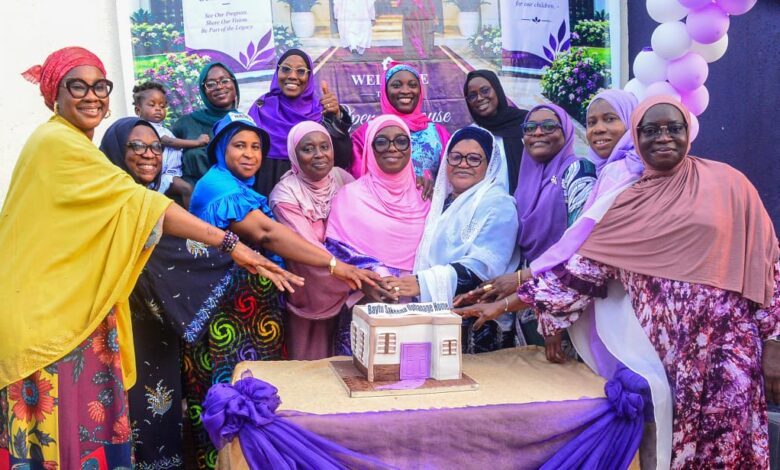
*Foundation says vulnerability should not determine a child’s future
*Seeks partnerships and donations to complete and equip new orphanage facility in Lagos
By BASHIR ADEFAKA


The message from the foundation is clear: every child deserves an opportunity to succeed, and no child’s vulnerability should become a barrier to a brighter future.
The Sisters in Deen Foundation (SIDF), a non-profit organisation committed to the welfare, education, empowerment and social inclusion of orphans and vulnerable children, on Saturday, October 31, 2026, brought stakeholders, development advocates and other well-meaning individuals together for a two-in-one programme featuring a capacity-building lecture and an open-house tour of its new Baytu Sakeenah Orphanage Home in Lagos. To SlDF, the capacity building is not just a passing message to the vulnerable but to let them know that ” Your story is not over. Don’t allow your background to become a barrier to your ambition.
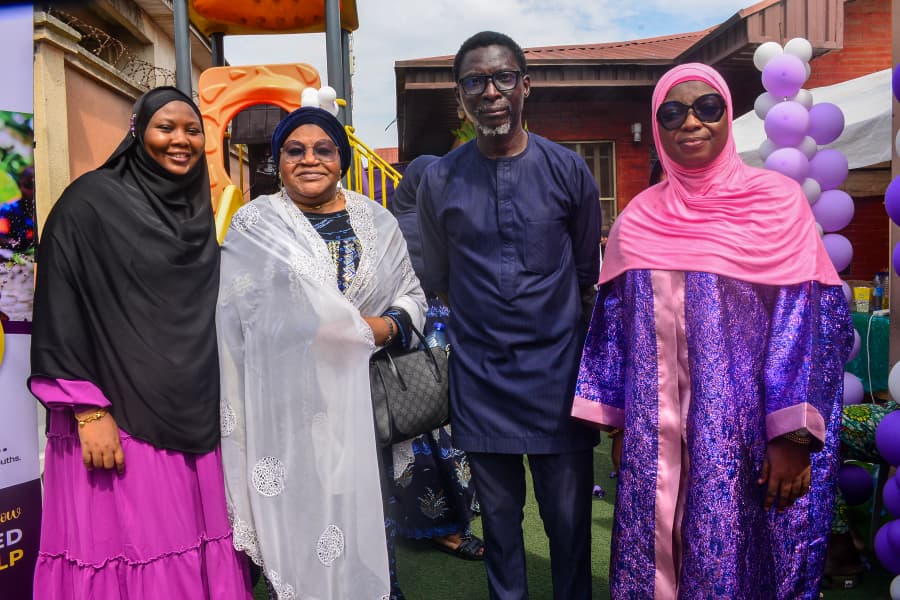
Compassionate, empathetic, magnanimous, benevolent are best described these kindhearted Nigerians who have chosen to be selfless by providing save haven for the vulnerable and orphans in the society.
Over the last eight years, Sisters in The Deen Foundation Orphanage SIDF)- Baytu Sakeenah has been a beacon of hope, a gentle soul and a pillar of grace for the orphans through interventions and awareness to the public that you can be your brother’s keeper.
On October 3ist, 2026, the Foundation led by its President, Dr. Nurat Akinlabi-Babalola and her members such as VIce President, Hajia Binta Adisa; Public Relations Officer, Hajia Fatima Saliu Adenekan; Chairman, Board of Trustees, Hajia Rafat Sanusi, Member of Trustees, Hajia Olayinka Kareem; Welfare Secretary, Hajia Olusosu Basirat Omolara; Director SIDF NEXTGEN, , Pharm. Munirat Amolegbe and Secretary of the Foundation, Hajia Fatima Abubakar Monguno organised its yearly programme and celebration of a newly acquired facility..
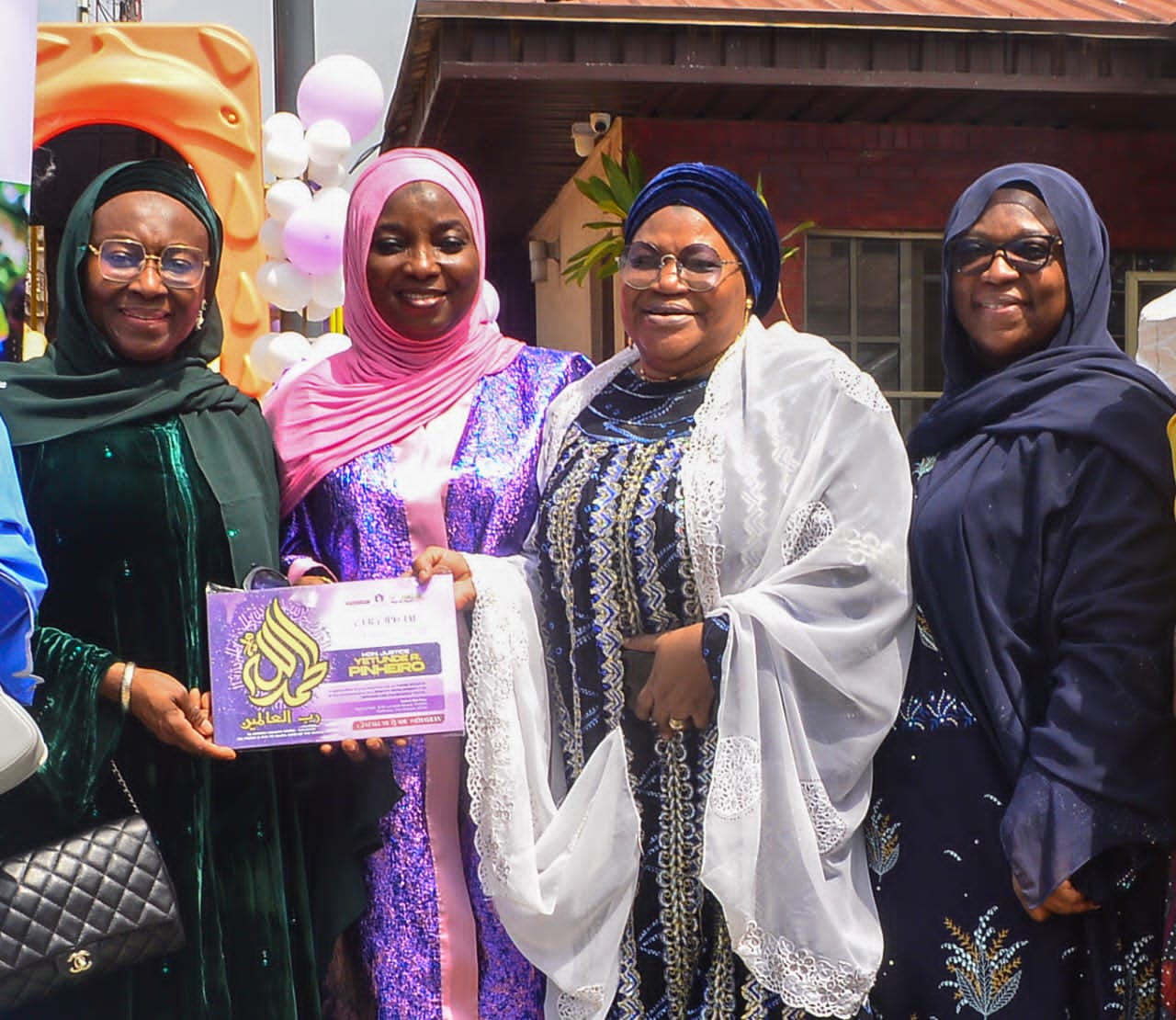
The programme, held at the SIDF’s Baytu Sakeenah Orphanage Home in Ogba, Lagos, was designed to strengthen the developmental prospects of vulnerable children while showcasing progress of the foundation’s new residential facility and mobilising support towards its completion and full operation.
The two-in-one event comprised a capacity-building development lecture followed by a guided tour of the new building.
With the theme, “Vulnerability: A Stepping Stone to Success,” the programme reflected the foundation’s conviction that a child’s background or circumstances should never become a permanent limitation on his or her dreams, opportunities and future achievements.
The event also provided an opportunity for stakeholders and prospective donors to appreciate the progress made on the new Baytu Sakeenah Orphanage Home, understand the outstanding requirements and explore practical ways of supporting the project.
In its message to stakeholders ahead of the event, the foundation described the occasion as an important milestone, not merely because of the progress achieved in constructing the new facility, but also because of the lives it is expected to transform.
According to SIDF, the goodwill, encouragement and support of stakeholders have contributed to bringing the vision of the new home closer to reality.
It said the open house was organised to enable those who have supported the project, as well as prospective partners and donors, to see the facility firsthand and become part of the next phase of its development.
That next phase involves equipping and completing the building to make it a fully functional, safe and nurturing residential home where orphaned and vulnerable children can enjoy protection, dignity, love, education and opportunities for a better future.
Explaining the philosophy behind its capacity-building development programme, the foundation emphasised that caring for vulnerable children must go beyond providing food, clothing and accommodation.
It noted that children require knowledge, essential life skills, emotional resilience, self-confidence and the right support systems to discover their abilities, pursue their dreams and become responsible members of society.
“Behind every child is a story. Behind every story is potential waiting to be unlocked,” the foundation stated in its programme concept, which shaped the three topics to which the three erudite scholars invited as guest speakers at Saturday’s two-in-one event all did justice.
It further explained that its commitment through Baytu Sakeenah was to ensure that children receive the necessary support to develop their potential and contribute meaningfully to society.
The foundation’s message was anchored on the belief that where a child begins in life should not determine where that child eventually ends.
This philosophy informed the choice of the theme, “Vulnerability: A Stepping Stone to Success,” which seeks to change the narrative surrounding children who find themselves in difficult social and economic circumstances.
Rather than viewing vulnerability as a permanent disadvantage, SIDF seeks to create an environment in which children can overcome limitations, acquire useful competencies and develop the confidence to build meaningful futures.
The capacity-building initiative is therefore intended to nurture potential, encourage personal development and prepare children and young people for the challenges and opportunities of adulthood.
In her welcome address to the gathering, President of Sisters in Deen Foundation, Dr. Nurat Akinlabi Babalola, urged the leaders of tomorrow never to allow their current backgrounds to become barriers to reaching greater heights in life.
“Today, we have come together around a theme that speaks directly to our mission, our values and, indeed, the future of the children and the young people whose lives we are committed to transforming: ‘Vulnerability: A Stepping Stone to Success’.
“This is more than a theme. It is a testament of belief, it is a challenge to society and it is a message of hope to every child and young person who has ever felt disadvantaged by their circumstances. At Sisters in Deen Foundation, we refuse to accept that a difficult beginning must translate into a difficult ending. We refuse to believe that being an orphan, growing up in a disadvantaged environment, experiencing poverty or facing social exclusion should determine the limits of a person’s dreams and possibilities. A child’s background may explain where the journey begins, but it must never determine where that journey ends.
“An orphan is not a failed destiny. A vulnerable child is not a lost cause. Every child carries potential, talent, intelligence and the ability to become something remarkable. What makes the difference is the environment we create, the opportunity we provide, the support we extend and the investment we are willing to make in their future. That is the conviction that drives Sisters in Deen Foundation,” said the president.
Dr. Nurat Akinlabi-Babalola added that beyond charity, the foundation is committed to building capable and confident future leaders.
“Our responsibility to vulnerable children must go beyond providing food, clothing and shelter. While these are essential, true transformation requires much more. It requires education, character development, emotional support, spiritual nourishment, life skills, mentorship, exposure and opportunities for economic independence.
“We must not raise children who are merely surviving but striving and thriving; children who can think critically, make informed decisions, discover their abilities, develop confidence and contribute meaningfully to society. This is the philosophy behind our work at Baytu Sakeenah Orphanage Home, a strong transformation centre for orphans and vulnerable children. That is what drives us,” she said.
She added that this was also the reason capacity building was essential to the mission of the foundation, passing a message to the children: “Your story is not over. Don’t allow your background to become a barrier to your ambition.”
Delivering her speech, one of the guest speakers, Hon. Justice Yetunde Rukayat Pinheiro of the Lagos State High Court encouraged people to always connect with the children.
Speaking further, she also encouraged children from Baytu Sakeenah Orphanage Home and those invited from other orphanage homes not to despair because they were orphans, saying, “Even the Holy Prophet Muhammad, peace be upon him, was himself an orphan.”
She also cited the example of former Nigerian President Goodluck Jonathan, who once said that he went to school without shoes. She assured the children that if Jonathan, who once attended school without shoes, could become a successful person and president of Nigeria, they too could succeed. Indeed, you have a bright future.
The jurist, however, advised them not to keep what bothered them to themselves, saying that “there are answers to all problems and worries in speaking out.”
Yetunde Pinheiro continued by citing Qur’an Chapter 13, Verse 11, where Allah says He will not change the condition of a people until they change what is within themselves.
She urged them to always take steps, adding that “you will be amazed how Allah will improve your situation, make things easy for you and make your life better.” She added that talking to people around them was one of the steps towards a better condition.
“One step at a time. Don’t get overwhelmed trying to solve all problems at once. No. Life is not like that,” she advised.
She cited her own personal experience as a junior judge, saying she had to take things easy and the right steps to get to where she is today.
“Life is about something you do quietly and one day it becomes great and many people start to benefit from you. Be consistent in everything you do and leave the rest for Allah to perfect for you,” she said.
The core message of Justice Pinheiro boiled down to responsibility: if everyone took up his or her responsibility, society would become a better place.
On rights, she said, “Even when you recognise your rights, the way you present them matters. That is why I said you should be calm and look for a trusted person to explain your problems. Being calm and patient is very important in claiming your rights.”
She added that one did not necessarily have to go to court to address an infringement of one’s rights.
Her presentation session was further enlivened by questions and answers, during which she addressed a question on how to control anger. She advised that one should change position.
“Stand up if you are sitting and sit down if you are standing. Drink water at that time, but you should be intentional about controlling your anger. You must also pray for Allah to help you overcome it,” she said.
The second speaker, Hajia Mutiat Olagoke, chose to make her presentation interactive for better understanding.
“Because the lecture I am required to speak on is long, I have summarised it into a shorter form and titled it ‘Your Story Matters’,” she said.
The third speaker, Dr. Abdulfatai Olajobi, speaking to journalists earlier, said, “First of all, because these children are children of an orphanage, they may be thinking that because of their background, they cannot make it in life. But their circumstances should not be a reason why they cannot succeed. People have come from such humble backgrounds and still made it in life. So, what we want to tell them is: ‘How can they think about themselves in a way that will enable them to achieve greatness in their lives, regardless of the backgrounds they are coming from?'”
Others who spoke to journalists at the event were SIDF Board of Trustees Chairman, Hajia Rafiat Sanusi; Secretary, Hajia Fatimah Monguno; and Programme Manager, Hajia Islamiyyah Saka.
In her submission, Chairman of the SIDF Board of Trustees, Hajia Rafiat Sanusi, gave journalists a rundown of the event, which she described as two-in-one.
“The first one we are having today is capacity building for our different orphans because we invited orphans from different orphanage homes to join our children here, where we gave lectures to them and enriched them with knowledge about life, their rights, how to live, how to adapt to the system and other things. That is why we are here today.
“The other leg, which is the opening of our newly acquired orphanage home, was made possible through the contributions of our stakeholders, the general public and members of the foundation, who donated both in cash and in kind, among other things. We are opening the orphanage home to the public so that those who donated to us will know what we used the money donated to us for and that we made judicious use of it. These are what we are here for today.”
Asked about the organisation, she said, “Sisters in Deen Foundation are the custodians of Baytu Sakeenah Orphanage Home. We started by making donations to other homes at a time when we didn’t have our own home. We were going to the Bab-Es-Salam Orphanage Home at GRA, Ikeja. We migrated from donating carbohydrates to donating protein and other things on a monthly basis. We then put our heads together and formed a home of our own instead of only going to other homes.
“A lot of things happened behind the scenes but, when we wanted to start, one of us gave this house to us to start with. The promise was that we would start with this building and, when we got our own building, we would quit and move to the new building.
“We have a permanent site at Epe but, for now, that place cannot be used because it is too remote. Coupled with the current situation in Nigeria, it is not advisable for us to take our children there.
“So we started soliciting, contributing and seeking people’s help. By so doing, we were able to get a new place. When we got it, we had to renovate it, provide the amenities and make it habitable for our children. Alhamdulillahi, today we have a place we can call our own home. That is what we are also doing today: opening that home for our children,” said Hajia Sanusi, the SIDF BoT chairman.
The foundation’s Secretary, Fatimah Monguno, revealed that the new orphanage home acquired by the organisation cost N200 million, after which it was renovated and “today it is being opened for use.”
Monguno, who corroborated the BoT chairman’s account of the foundation’s beginnings through visits and donations to other orphanage homes at a time when it had none of its own, was asked whether Sisters in Deen Foundation would now stop donating to other foundations, having acquired its own home. She replied, “We won’t stop donating to others.”
When asked how she was documenting the annual events of Sisters in Deen Foundation, another edition of which was held on Saturday, October 31, 2026, Programme Manager Islamiyyah Saka turned the question back to the journalists, saying, “That is why we reached out to the media to help document it with a view to creating useful records for current and future information about the foundation, its programmes and activities.”
Highlights of the programme included an acted drama that demonstrated how people could know and exercise their rights without having to overstep the boundaries of the law.
New Baytu Sakeenah Home: A vision taking shape
A major highlight of Saturday’s programme was the open-house tour of the new Baytu Sakeenah Home.
The facility tour was designed to give stakeholders and potential donors an opportunity to inspect the building and assess the progress made towards establishing a suitable residential environment for orphaned and vulnerable children.
According to the foundation’s concept note, the open house became necessary as construction work progressed and the organisation sought to engage individuals and institutions capable of supporting the remaining stages of the project.
The objectives included showcasing the construction progress, identifying outstanding work and resources required, encouraging discussions with potential donors and mobilising financial contributions and partnerships.
The foundation explained that the facility would require additional support and resources before it could become fully operational.
It therefore called on individuals, corporate organisations, development partners, professionals and other philanthropic institutions to identify areas in which they could contribute.
Such contributions could come through financial donations, building and furnishing materials, equipment, professional services, technical expertise and strategic partnerships.
The foundation expressed the hope that the open house would generate renewed interest in the project, strengthen stakeholder relationships and attract the commitments necessary to complete and equip the facility.
For SIDF, the new home represents more than a physical structure. It is intended to become a place where children who have experienced vulnerability can find stability, care, protection and opportunities to rebuild their confidence and pursue their ambitions.
SIDF’s broad commitment to child welfare
The Sisters in Deen Foundation is a non-profit organisation committed to improving the welfare, development and social inclusion of orphans, vulnerable children and disadvantaged families.
Its flagship initiative, Baytu Sakeenah Orphanage, is designed to provide a safe, supportive and nurturing environment in which children’s welfare, education, personal development and general well-being receive priority attention.
The foundation’s activities cover several areas of intervention.
These include residential care and child welfare, through the provision of shelter, nutrition, protection and a family-like environment for children in need.
In education, SIDF supports children’s learning through academic assistance, educational resources and partnerships with other foundations and sponsors to improve access to quality education.
Its health intervention includes medical outreaches, health screenings, referrals and healthcare support aimed at promoting the well-being of vulnerable children and members of the wider community.
The organisation also recognises the importance of psychosocial support and emotional development, providing opportunities for mentorship, confidence-building, resilience and personal growth.
Another important aspect of its work is capacity building and skills development, through programmes, workshops and seminars designed to equip children and young people with essential life skills, digital competencies, social responsibility and the ability to become self-reliant.
Through youth empowerment and mentorship, the foundation seeks to help young people discover their abilities, explore career opportunities and prepare for productive and independent lives.
Its advocacy and community outreach programmes also seek to raise awareness about the rights, needs and social inclusion of vulnerable children.
Beyond orphanage services, SIDF extends assistance to disadvantaged households through food relief initiatives, including monthly food support for vulnerable families and special distributions during festive occasions, particularly Eid celebrations.
The foundation also places considerable emphasis on partnerships, volunteer engagement and community mobilisation.
Its SIDF NextGen Volunteers and SIDF Ambassadors initiatives are designed to attract individuals willing to contribute their time, professional expertise, resources and networks towards advancing the organisation’s mission.
A call for partnership and collective responsibility
Central to Saturday’s engagement was a renewed appeal for individuals and institutions to become active partners in transforming the lives of vulnerable children.
The foundation maintained that supporting children should not be seen as the responsibility of charitable organisations alone but as a collective commitment requiring the participation of individuals, families, professionals, corporate organisations and the wider community.
It encouraged stakeholders to support the organisation through financial contributions, material resources, professional services and skills that could improve the quality of care available to the children.
The foundation’s vision is to create a society where every child, regardless of personal circumstances, has the opportunity to thrive in a safe, supportive and faith-driven environment.
It also envisages Baytu Sakeenah becoming a beacon of hope and transformation for generations to come.
Its mission is to provide orphans and vulnerable children with shelter, education, healthcare and moral guidance, while nurturing them into confident, compassionate and capable individuals who can contribute positively to society.
Reaffirming its philosophy, SIDF stressed that vulnerability should never define anyone’s future.
Through its programmes and partnerships, the organisation hopes to create safe spaces, open doors of opportunity and establish sustainable pathways through which vulnerable children and families can live with dignity, discover their potential and thrive.
The October 31 event thus represented both a celebration of progress and a call to action.
While the capacity-building lecture focused attention on the importance of nurturing children’s abilities and preparing them for success, the open-house tour provided a practical opportunity for stakeholders to see the infrastructure being developed to support that vision.
For the Sisters in Deen Foundation, the ultimate measure of success will not simply be the completion of a new building, but the number of vulnerable children whose lives will be positively transformed through the opportunities, protection, education and support that Baytu Sakeenah is expected to provide.
The message from the foundation is clear: every child deserves an opportunity to succeed, and no child’s vulnerability should become a barrier to a brighter future.