The Time of Monsters: Macron Cannot Save Tinubu
By Shamwil Mukhtar

“The old world is dying, and the new world struggles to be born: now is the time of monsters” – Antonio Gramsci
The Strongmen, the Puppets and the Ruins
From Ukraine to Yemen, and from the streets of Europe to the political battleground in Nigeria, the same structural crisis is becoming visible: established power is losing its ability to dictate outcomes while remaining unwilling to relinquish its claims to supremacy.
It is becoming increasingly clear to those following the war in Ukraine that Russia has defeated NATO strategically, exposing the limitations of the alliance’s military-industrial capacity and assumptions about Western superiority. Brussels and Washington will dispute this conclusion, but the battlefield has revealed vulnerabilities that Western governments can no longer ignore. The consequence may be further escalation, driven less by confidence than by fear. Having staked their credibility on Ukraine, NATO governments face the prospect that de-escalation could be interpreted as an admission of defeat.
Russia, meanwhile, is becoming increasingly confident in its ability to confront NATO directly. Moscow has watched Western weapons, industrial capacity and strategic assumptions tested in Ukraine. It has also witnessed the limitations of American power in the confrontation with Iran. The United States remains a formidable military power; the same confidence cannot be extended indiscriminately to Europe. Economic stagnation, industrial decline, energy insecurity and social fragmentation have left European governments facing a crisis extending far beyond defence.
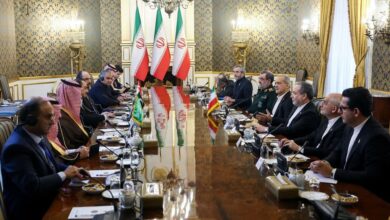
The Houthis’ confrontation with Saudi Arabia provides another illustration of this changing balance. Despite Saudi Arabia’s immense financial resources and access to sophisticated Western weaponry, the Yemeni movement demonstrated an ability to impose substantial military and economic costs through missiles, drones and asymmetric warfare. Saudi Arabia’s intervention failed to achieve its central objectives, while the conflict eventually moved towards a fragile truce. The lesson is not that the Houthis possess greater conventional power, but that conventional superiority no longer guarantees political victory. From Yemen to Iran, actors operating outside the traditional centres of power are exposing the limits of military doctrines built around technological dominance and overwhelming resources. The old system is fracturing because its instruments of power are increasingly unable to deliver the outcomes they promise.
France illustrates this contradiction. President Emmanuel Macron’s domestic standing has fallen to historically low levels amid persistent political and economic discontent. Yet France’s president continues to project international ambition while domestic frustrations intensify. The problem is not international engagement itself, but the growing perception that Europe’s political establishment is more comfortable among global elites than among the populations bearing the consequences of its policies.
This is the defining weakness of neoliberal global leadership: the detachment of political power from the material realities of ordinary people. Across Western-style democracies, citizens confront declining purchasing power, economic uncertainty and deteriorating confidence in government, while political elites continue to display extraordinary privilege. The spectacle is familiar in the United States, where the Trump family’s corruption has become part of the political conversation, and in Nigeria, where the “city boys” have turned branded Lamborghinis into campaign symbols amid widespread economic hardship.
These are not merely questions of political optics. They expose an economic order increasingly organised around financial accumulation, elite privilege and the preservation of power rather than productive capacity and broad-based prosperity. The underlying systems are fracturing because their promises have become increasingly difficult to reconcile with people’s lived experiences.
In the United States, the effort to preserve global primacy is increasingly accompanied by a civilisational narrative that divides the world between a Judeo-Christian bloc and everyone else. This framing recasts geopolitical dominance as cultural defence, providing ideological justification for the continuation of Western imperial ambitions. It also creates a dangerous environment in which criticism of allied governments can be portrayed as hostility towards an entire civilisation.
Nigeria is being drawn into this narrative through international claims of Christian genocide and the response of a government desperately determined to accommodate powerful external partners. Nigeria’s insecurity is complex, involving insurgency, banditry, communal violence and failures of governance. Reducing it to a single religious explanation risks distorting the country’s security challenges and subordinating national interests to an externally defined geopolitical agenda.
The implications are especially troubling when this narrative intersects with freedom of expression. The reported arrest by Nigeria’s Department of State Services of a Kaduna-based social-media influencer following criticism of Israeli Prime Minister Benjamin Netanyahu raises serious questions about the independence of Nigeria’s security institutions. If criticism of a foreign leader prompted the detention, the episode represents a disturbing extension of geopolitical alignments into domestic repression.
This concern is amplified by the International Criminal Court’s arrest warrant for Netanyahu concerning alleged war crimes and crimes against humanity in Gaza. The wider question is whether international law can command credibility when accountability appears to depend on the political influence of those accused. A global order that invokes universal principles while protecting powerful interests risks destroying the legitimacy on which its authority rests.
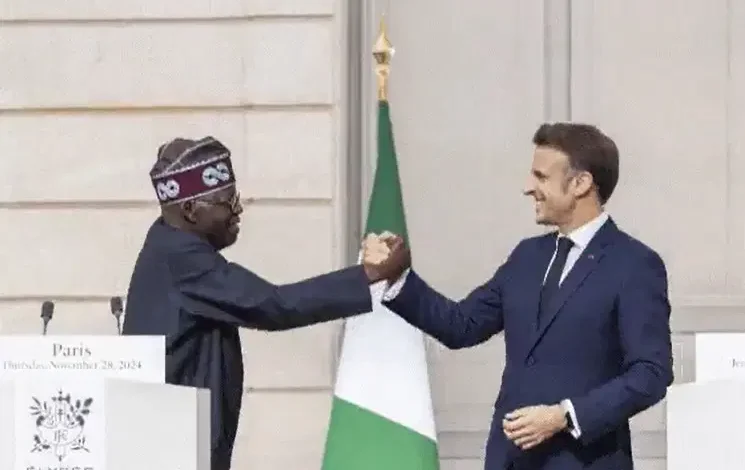
Yet these leaders cannot indefinitely protect one another from the consequences of domestic political failure. Macron cannot save Bola from Nigeria’s political realities, just as international partnerships cannot permanently compensate for declining public confidence. The influence of global institutions and elite networks is considerable, but it cannot abolish the political consequences of economic hardship, insecurity and perceived injustice.
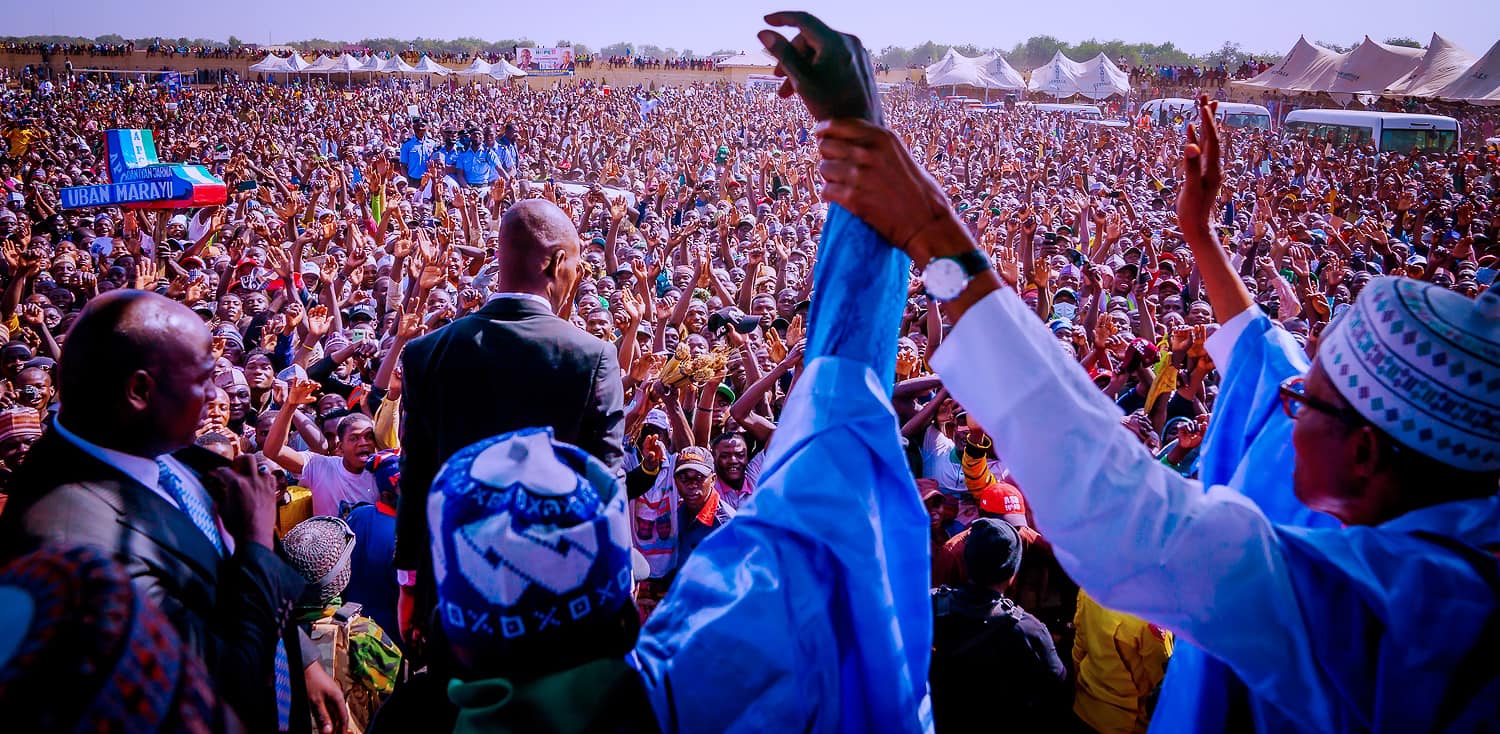
Nigeria’s coming electoral contest will present a critical test. Public anger and fear are accumulating, and the defence of votes could become a defining expression of popular resistance to a political establishment widely perceived by its critics as detached from ordinary citizens. Attempts to subvert the electorate’s will would confront a population whose collective determination may prove difficult to contain. The outcome, however, will depend on electoral institutions, political organisation and citizens’ willingness to defend their rights.
What emerges is a world in which military power, economic influence and international alliances are no longer sufficient to guarantee political legitimacy. NATO’s credibility is tied to a conflict it cannot easily abandon without reputational consequences, yet escalation risks a wider confrontation. Saudi Arabia’s experience in Yemen demonstrates that wealth and advanced weaponry cannot always overcome asymmetric resistance. Europe’s economic and social difficulties narrow its strategic options, while the United States confronts limits to its ability to impose outcomes through military superiority alone.
The time of monsters is therefore not simply a description of aggressive leaders. It is a description of a global order in which political elites increasingly rely on coercion, ideological narratives and institutional protection as the foundations of popular consent weaken. From Ukraine to Yemen, and from the streets of Europe to the political battleground in Nigeria, the same structural crisis is becoming visible: established power is losing its ability to dictate outcomes while remaining unwilling to relinquish its claims to supremacy.
What comes next remains uncertain. But the direction of the crisis is unmistakable: a fracturing international system, increasingly detached leadership and populations growing less willing to accept the consequences of decisions made without their meaningful consent. Macron cannot save Bola. Nor can the global structures sustaining their political influence save them indefinitely from the people whose confidence they have lost.
History is entering another period in which established powers may discover that once their legitimacy collapses, the institutions sustaining them may not survive for long.
Source: Daily Trust October 26, 2026