Atiku inaugurates Campaign Council, slams Tinubu over economic reforms failure, 30-day petrol discount
By KEMI KASUMU

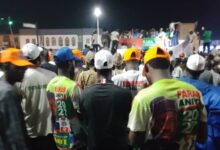
ADC presidential candidate urges Nigerians to demand accountability, advocates targeted support for locally refined petroleum products, and calls for electoral reforms ahead of the 2027 general election.
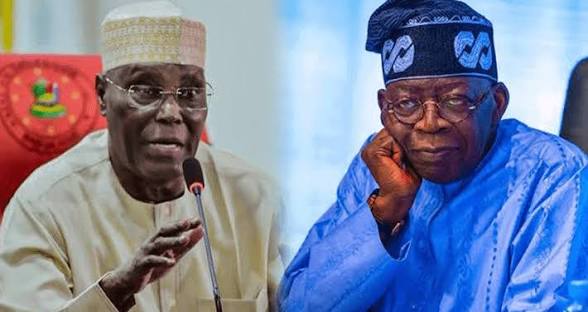
Former Vice President Atiku Abubakar has criticised President Bola Tinubu’s economic policies, describing the administration’s proposed 30-day petrol discount as an inadequate response to the rising cost of living in Nigeria.
Atiku, the presidential candidate of the African Democratic Congress (ADC) for the 2027 presidential election, made the remarks on Friday while delivering an address at the inauguration of the party’s Presidential Campaign Council at the Shehu Musa Yar’Adua Centre in Abuja.
The former vice president accused the Tinubu administration of imposing severe economic hardship on Nigerians through rising food prices, increasing transportation costs, unreliable electricity supply, and persistent insecurity affecting farmers and businesses.
According to him, Nigerians have endured more than three years of economic difficulties without receiving sufficient relief from the government.
“Families cannot plan their meals around a temporary discount. Transporters cannot set stable fares on it. Businesses cannot invest or plan for the future on it,” Atiku said, arguing that the country requires sustainable economic interventions rather than short-term measures.
Atiku Questions Tinubu’s Petrol Discount
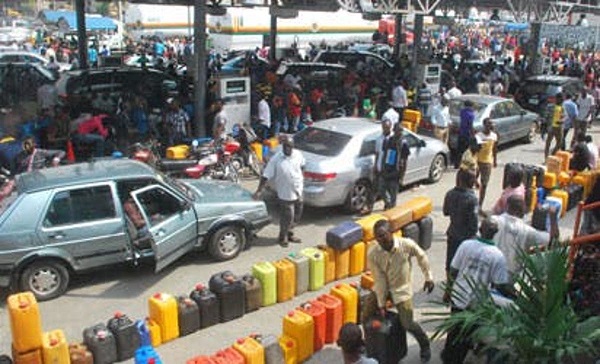
Atiku questioned the timing and effectiveness of the federal government’s announcement of a 30-day petrol discount at Nigerian National Petroleum Company (NNPC) stations, with priority reportedly given to public transport operators.
He argued that the initiative raised questions about the administration’s earlier position on economic relief measures and whether the proposed discount would produce lasting benefits for ordinary Nigerians.
The ADC presidential candidate recalled that he had previously advocated targeted support to reduce the burden of fuel costs and alleged that the government had dismissed his proposal before introducing what he described as a limited version of the same idea.
Atiku called on the president to explain what would happen after the 30-day period expires, insisting that temporary price reductions would not resolve the structural problems affecting the economy.
He described the initiative as an inadequate intervention that could offer short-term relief without addressing the underlying causes of rising living costs.
“Thirty days cannot erase three and a half years of hardship,” he said.
ADC Candidate Proposes Targeted Support for Domestic Refining
Outlining his alternative approach, Atiku advocated a targeted petroleum support programme designed to benefit products refined in Nigeria and sold within the country.
He proposed that such a programme should have clearly defined limits, be incorporated into the national budget, and undergo independent audits to ensure transparency and accountability.
According to him, restricting the support to petroleum products refined domestically would help encourage local production while reducing the financial burden on households and businesses.
He also called for public disclosure of the programme’s costs and the savings it delivers to consumers.
Atiku maintained that a properly designed intervention could provide more predictable relief than a temporary petrol discount while creating incentives for increased domestic refining.
The former vice president also urged the government to adopt broader measures to address food affordability, electricity supply, employment, business growth, and insecurity.
He stressed that economic recovery must translate into tangible improvements in the daily lives of Nigerians.
Atiku Accuses Tinubu of Shifting Responsibility
The ADC presidential candidate further accused the Tinubu administration of failing to take sufficient responsibility for the country’s economic difficulties.
He argued that the president, having assumed office, should be held accountable for the cost of petroleum products, declining purchasing power, rising business expenses, and the closure of businesses struggling with energy costs.
Atiku also criticised the government’s explanations for the hardship, insisting that Nigerians were more concerned about practical solutions than political arguments over responsibility.
He recalled that during his State of the Nation address on September 18, 2026, he had offered to share his proposed economic relief plan with the president.
According to Atiku, the offer was intended to advance the national interest, regardless of political differences.
He expressed disappointment that the government had not embraced what he considered a more sustainable approach to economic relief.
Atiku Inaugurates ADC Presidential Campaign Council
Turning to the primary purpose of the gathering, Atiku formally inaugurated the ADC Presidential Campaign Council and urged its members to approach their responsibilities with commitment, discipline, and a clear understanding of the challenges facing the country.
He described the council members as patriots and participants in Nigeria’s democratic journey, expressing appreciation for their willingness to serve the party’s campaign.
Atiku charged the council to take the party’s message to markets, motor parks, farms, campuses, and communities across the country.
He urged members to explain the party’s proposed policies clearly, demonstrate how the programmes would be funded, and engage directly with Nigerians to earn their confidence.
The former vice president also called on the campaign team to begin preparations for governance by developing practical policies capable of delivering measurable improvements in living standards.
He said the 2027 presidential election should be presented to Nigerians as an opportunity to determine the future of their families and the country’s economic direction.
Atiku urged eligible voters to participate actively in the electoral process, describing the ballot as an important instrument for demanding accountability and determining the direction of national leadership.
Atiku Calls for Electoral Transparency and Accountability
Beyond economic issues, the ADC presidential candidate called for comprehensive electoral reforms to strengthen public confidence in Nigeria’s democratic process.
He argued that credible elections require transparent procedures that allow political parties, accredited agents, civil society organisations, and observers to verify results independently.
Atiku maintained that election-monitoring activities and independent verification should complement the work of the Independent National Electoral Commission (INEC), rather than replace the commission’s statutory responsibilities.
He also called for greater transparency in the use of election technology, arguing that electoral systems should be open to scrutiny and independent audits.
Among the reforms he advocated were the immediate public release of polling-unit results, improved access to election information, and live broadcasts of state and national collation proceedings.
He further proposed independent audits of electoral technology before and after elections, alongside measures to strengthen the investigation and prosecution of electoral offences.
The ADC candidate called for severe penalties for vote suppression, result manipulation, and electoral fraud.
According to him, transparent electoral procedures are essential to ensuring that declared results accurately reflect the choices made by voters.
He emphasised that the credibility of an election depends not only on the voting process but also on public confidence in how votes are recorded, transmitted, verified, and announced.
ADC Vows to Campaign Across Nigeria
Atiku also warned against attempts to restrict opposition parties from campaigning in certain parts of the country.
He maintained that opposition candidates have constitutional rights to freedom of movement, expression, and political participation throughout Nigeria.
Referring to an alleged attempt to prevent an opposition candidate from campaigning in Benue State, he said such incidents should not be repeated.
Atiku insisted that the ADC would campaign across all states and communities, regardless of political differences or local opposition.
He pledged that the party would challenge any attempt to obstruct its candidates through lawful means, including the courts and the electoral process.
The former vice president argued that a credible democracy requires an environment in which all political parties can present their programmes to voters without intimidation or unlawful restrictions.
He also urged the federal and state governments to respect the rights of opposition parties and ensure that political competition remains peaceful and lawful.
Atiku Says Nigerians Must Decide the Country’s Future
Concluding his address, Atiku reiterated his criticism of the Tinubu administration’s economic record and called for a change in leadership ahead of the 2027 presidential election.
He argued that the proposed 30-day petrol discount would not erase the economic difficulties Nigerians had experienced since the current administration assumed office.
Atiku called for a government that would prioritise affordable living costs, economic recovery, job creation, security, and improved opportunities for young Nigerians.
He urged members of the ADC Presidential Campaign Council to intensify mobilisation efforts and communicate the party’s proposed solutions to voters across the country.
The former vice president maintained that economic policies must be assessed by their practical effects on households, workers, farmers, traders, and businesses rather than by government announcements alone.
He concluded by calling on Nigerians to participate in the democratic process and support efforts aimed at improving living standards and strengthening accountability in public office.
The address marks a significant step in the ADC’s preparations for the 2027 presidential election, with economic hardship, electoral transparency, and the protection of opposition political rights emerging as central themes of Atiku’s campaign message.