BRICS SUMMIT: Modi warns against weaponising technology, critical minerals
*Demands inclusive growth for BRICS member countries
During his meeting with Shettima, Modi and the Nigerian Vice President reviewed bilateral relations, with discussions covering trade and investment, defence and security, energy, agriculture, healthcare and digital technology.
Indian Prime Minister Narendra Modi has warned against the weaponisation of technology and critical minerals, saying growing geopolitical tensions are increasingly affecting ordinary people across the world.
Weaponising technology has been defined as deliberately restricting or controlling access to important technologies—such as advanced computer chips, AI, telecommunications equipment or other strategic technologies—to pressure or weaken another country.
Likewise, The DEFENDER reports the deeper meaning of ‘weaponising critical minerals’ also as using control over minerals such as lithium, cobalt, nickel and rare earth elements to put pressure on countries that depend on them.
The Indian prime minister, who warned against the act on Sunday September 13, 2026 at the concluding session of the 18th BRICS Summit in New Delhi, called on member countries to strengthen cooperation, resilience and inclusive growth, particularly across the Global South.
Modi said the weaponisation of technology and critical minerals could undermine shared economic progress and prosperity. He also highlighted BRICS initiatives aimed at strengthening supply chains and improving resilience against disruptions caused by pandemics, climate disasters and other global crises.
Modi said India’s BRICS chairmanship had focused on four key pillars — resilience, innovation, cooperation and sustainability — while stressing the need for practical outcomes as the grouping enters its third decade.
The summit adopted the New Delhi Declaration, a 140-paragraph document addressing a wide range of global and economic issues. BRICS leaders also expressed concern over the growing risks of nuclear conflict and condemned deliberate attacks on civilian infrastructure and nuclear facilities operating under International Atomic Energy Agency safeguards.
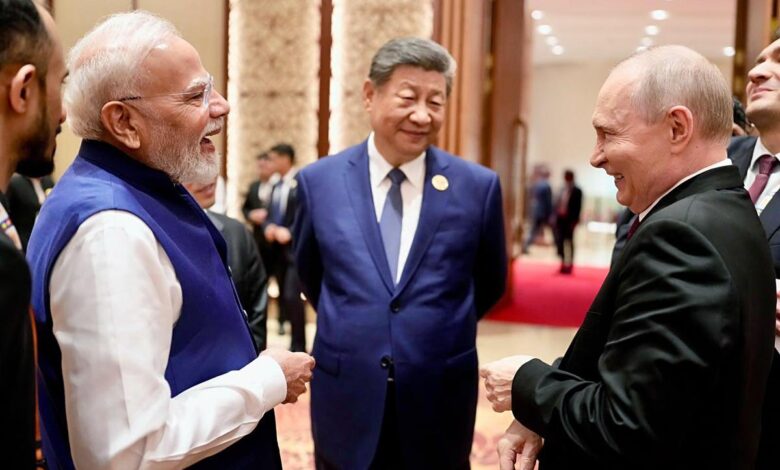
Meanwhile, Chinese President Xi Jinping proposed the creation of an open-source artificial intelligence zone for BRICS countries and called for greater cooperation in AI, smart manufacturing, industrial development and supply-chain stability.
Russian President Vladimir Putin, for his part, proposed a new insurance mechanism and a collaborative grain market for BRICS nations, while reiterating calls for greater economic cooperation among members and countries of the Global South.
On the diplomatic front, Modi held a series of bilateral meetings on the sidelines of the summit, including talks with Nigerian Vice President Kashim Shettima, Russian President Vladimir Putin, Chinese President Xi Jinping, South African President Cyril Ramaphosa and Kazakhstan’s President Kassym-Jomart Tokayev.
During his meeting with Shettima, Modi and the Nigerian Vice President reviewed bilateral relations, with discussions covering trade and investment, defence and security, energy, agriculture, healthcare and digital technology.
Both leaders reaffirmed their commitment to strengthening the India-Nigeria strategic partnership and cooperation in multilateral forums, with emphasis on promoting a more representative, inclusive and multipolar international order.
The summit, attended by several world leaders, took place against the backdrop of heightened geopolitical tensions, including the Russia-Ukraine war, instability in West Asia and changing global trade policies.