Why Osun voters looked beyond party loyalty
By BABAFEMI OJUDU

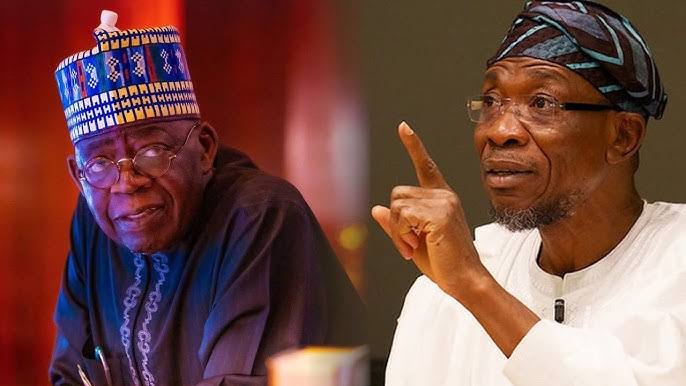
At the national level, an Aregbesola victory in Osun would have sent a powerful signal—not only across the Yoruba states but throughout Nigeria—about President Bola Ahmed Tinubu’s political standing.
Some people have asked me why Rauf Aregbesola’s candidate failed to make a strong showing in last Saturday’s election.
Aregbesola was not on the ballot, but the campaign effectively put him on it. His candidate consequently came under attack from several directions. The Accord Party successfully foregrounded Aregbesola’s record of paying senior civil servants half salaries while largely ignoring his achievements in human capital and infrastructural development. The “Baba Hafusa” tag—a mocking corruption of “half salary”—was effectively deployed to diminish his record and rubbish his legacy.
At the national level, an Aregbesola victory in Osun would have sent a powerful signal—not only across the Yoruba states but throughout Nigeria—about President Bola Ahmed Tinubu’s political standing. Consequently, considerable effort was made to ensure that Aregbesola and his candidate did not perform well. In that contest, Aregbesola was regarded as the first political enemy to be contained.
It is, however, uncertain whether the Accord Party’s victory in Osun will not ultimately send the very same message that an Aregbesola victory was intended to prevent. Interesting political developments lie ahead.
Even within the new party he joined, Aregbesola faced resistance. The ADC in Osun State had two broad factions: the progressive faction led by Aregbesola and another with roots in the PDP. The latter actively worked against Aregbesola and his Omoluabi group during the election. I have a strong feeling that this faction has a firm grip of Atiku Abubakar and his wife Titi and they have been able to drastically reduce their believe in him with lies and subterfuge. I learnt from the grapevine that Aregbesola’s group received little or no meaningful support from Atiku who is the national of party and its Presidential flag bearer. How Atiku and this group play their cards going forward will largely determine the Omoluabis’ next political move.
The sophistication of Osun voters must, however, be acknowledged as a significant factor in the outcome. A considerable number of ADC members independently concluded that defeating the APC—which they regarded as the greater threat—was more important than voting for their own party, which had little chance of defeating either of the two leading contenders.
They simply did not want the APC to win. Many appeared determined to bring the political career of former Governor Gboyega Oyetola and his acolytes to an end. This explains why many ADC supporters joined in celebrating the APC’s defeat after Ademola Adeleke emerged victorious.
They therefore suspended their immediate partisan interests and voted for the Accord Party, believing that a vote for the ADC might indirectly improve the APC’s chances. It was strategic voting: they chose the candidate they believed was best positioned to achieve their overriding objective.
Something similar occurred during the 2011 presidential election, when Osun voters, without prompting, turned out and voted overwhelmingly for Nuhu Ribadu. They did so despite instructions from the leadership of the ACN at the time that we should not vote for Ribadu, even though he was the presidential candidate of our own party. Osun was the only state where voters openly defied those instructions and voted for him en masse. For perceptive analysts this itself signals the beginning of the frosty relationship that will later blow into a full crisis between Aregbesola and Tinubu.
Since 1999, Osun voters have demonstrated this independent-mindedness on more than four occasions. They know how to set aside party loyalties when they believe a larger political objective is at stake. They are capable of distinguishing between the immediate appeal of party affiliation and the strategic consequences of an electoral outcome.
Osun is arguably one of Nigeria’s most cosmopolitan states. Apart from Osogbo, the state capital, it boasts major and historically significant towns such as Ilesa, Ede, Iwo, Ejigbo, Ile-Ife, Ikire, Ikirun, Ila-Orangun and Oke-Ila, as well as the communities of Odo-Otin. Each possesses a distinct identity and considerable political weight; several could comfortably have served as the state capital. Few states in Nigeria possess such a constellation of important urban centres.
This diversity has helped to produce an electorate that is politically conscious, difficult to herd and capable of making independent calculations. Osun is therefore not a state to be taken for granted—or one in which political games can be played carelessly.
So, give it up for the Osun electorate. They understand the strategic value of their votes—and they know precisely when, where and how to deploy them.
*Babafemi Ojudu, journalism veteran and former Senator Ekiti Central Senatorial District, was Special Adviser Political Matters to President Muhammadu Buhari during the immediate past administration.