YOU CAN’T BUILD SOMETHING ON NOTHING: The Questions Nigerians Must Ask Before 2027 – PART 1
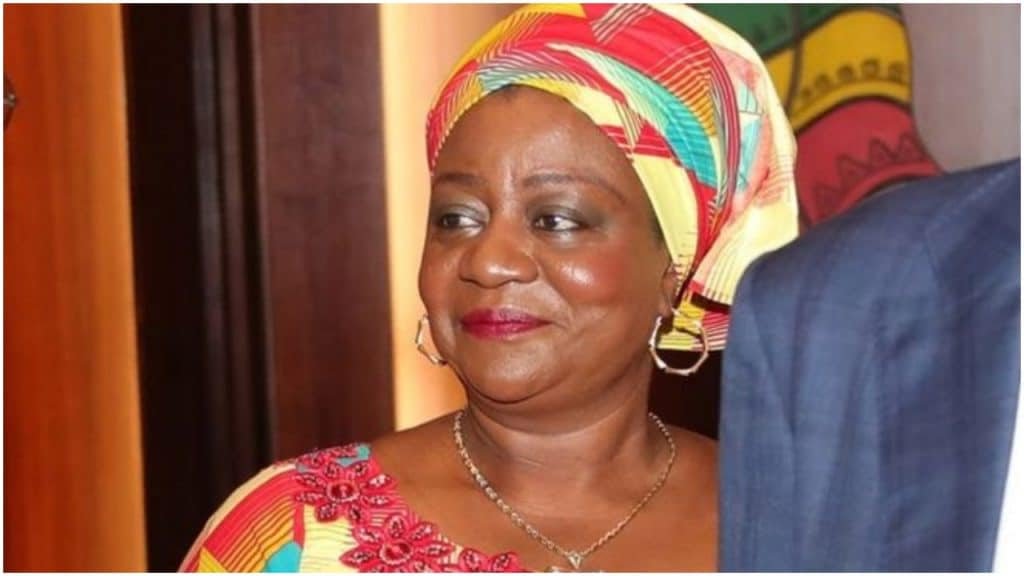
By LAURETTA ONOCHIE
This is not a matter that should be settled by insults, partisan loyalty or political intimidation. It should be settled by records. Because there is one rule of education that even a child understands: You cannot build something on nothing.
There are controversies that disappear with time. There are others that refuse to die because the questions at their centre have never been satisfactorily put to rest.
As Nigeria marches towards the 2027 presidential election, the controversy surrounding President Bola Ahmed Tinubu’s educational history belongs firmly in the second category.
This is not a matter that should be settled by insults, partisan loyalty or political intimidation. It should be settled by records. Because there is one rule of education that even a child understands:
You cannot build something on nothing.
THE LESSON FROM UNILAG
More than half a century ago, the University of Lagos was confronted with an admissions scandal associated with one of its senior administrative officers, Mr. Owosho, then a Deputy Registrar.
Accounts of the 1974 affair describe an investigation into students who had gained admission using fraudulent examination results and qualifications. The scandal involved verification with the West African Examinations Council, WAEC.
The consequences were severe. Owosho was dismissed. Affected students were expelled.
Why?
Because a university education cannot legitimately stand upon an invalid entry qualification. It would have been absurd for a student caught with fraudulent admission credentials to argue:
“Forget how I entered the university. I am already here.”
No.
The foundation mattered.
The University of Lagos understood something profoundly simple:
A degree cannot cure a defective foundation merely by coming afterwards.
You cannot build the first floor when there is no ground floor.
You cannot hang a roof in the air.
And you cannot build something on nothing.
Which brings us to President Bola Ahmed Tinubu.
BEFORE CHICAGO, WHERE WAS THE SCHOOLBOY?
Chicago State University has stated that Bola A. Tinubu attended the institution and exited in 1979. This should be acknowledged.
But acknowledging it does not answer every question about the educational journey that preceded Chicago State University.
In the particulars Tinubu submitted to INEC ahead of the 2023 presidential election, the portions concerning primary and secondary education were left blank.
Let us be precise: a blank space is not proof that a person never attended school.
But surely it permits a question.
And what a simple question it is!
Which primary school did Bola Ahmed Tinubu attend?
Then another:
Which secondary school did he attend?
And another:
What qualification enabled him to enter tertiary education in the United States?
These should be among the easiest questions in the biography of a public figure to answer.
For millions of Nigerians, the answers are mundane.
Ask an ordinary Nigerian where she went to primary school and she will probably tell you the name, the town and perhaps the colour of the uniform.
Ask about secondary school and memories tumble out—teachers, classmates, principals, punishments, football matches, examinations.
But when questions surrounding the early educational history of the President of the Federal Republic of Nigeria generate controversy, Nigerians are expected to stop asking questions.
Why?
THE ROAD TO CHICAGO
Then we arrive in America.
Records released in connection with the litigation initiated by Atiku Abubakar confirmed that a Bola A. Tinubu attended Chicago State University and exited.
But the documents also generated questions.
A Southwest College transcript associated with the student who subsequently transferred to Chicago State University contained an “F” in the gender field, meaning FEMALE.
That document exists.
But another fact exists alongside it.
Chicago State University’s Registrar, Caleb Westberg, testified that the Bola A. Tinubu who attended CSU was male, and the university has identified its former student as the Nigerian political figure who became President.
How did Tinubu enter an institution as a female but exited the next, as a male? Nigerians are perfectly entitled to ask:
Why did an underlying academic document contain a female gender notation?
Questions are not convictions.
Discrepancies are not automatically proof of fraud. But discrepancies demand explanations—especially when the person concerned occupies the highest office in Africa’s most populous nation.
THEN THERE IS THE DIPLOMA
The controversy became even more extraordinary when Chicago State University was compelled through proceedings in the United States to release records relating to Tinubu.
CSU’s registrar confirmed Tinubu’s attendance.
But when questioned about the particular diploma submitted to Nigeria’s Independent National Electoral Commission, the registrar said the university COULD NOT authenticate that specific document from its own possession.
Again, precision matters. By itself, this proves that Tinubu forged a certificate.
Indeed, subsequent fact-checking concluded that the available evidence proved and establish that Tinubu forged his CSU diploma.
So, surely Nigerians are entitled to ask why the educational history of their President should require this much explanation in the first place.
For most people, education follows a comprehensible chain or trajectory:
Primary School → Secondary School → Qualifying Examination → Tertiary Institution → Degree.
So let us return to the beginning.
Where is the foundation?
THIS SHOULD NOT BE COMPLICATED
Forget politics for one minute.
Imagine a young Nigerian applying for employment tomorrow.
The employer asks:
“Which secondary school did you attend?”
The applicant leaves the space blank.
“What examination qualified you for university?”
No straightforward answer.
“Can we see the educational progression that led to your university admission?”
More controversy.
Would a serious employer simply wave the applicant through?
Yet we are not discussing employment as a messenger, driver, bank clerk, lecturer or civil servant. We are discussing the Presidency of the Federal Republic of Nigeria.
The office with command of the Armed Forces.
The office that appoints ministers.
The office that nominates senior officials.
The office whose occupant signs legislation.
The office whose decisions affect more than 200 million human beings.
Surely the standard of scrutiny for that office cannot be lower than the standard applied to an ordinary Nigerian seeking employment.
WHAT DO WE TELL OUR CHILDREN?
This is where the issue becomes bigger than one man.
What moral lesson are we teaching Nigerian children?
We tell them:
Do not cheat in examinations.
Do not falsify certificates.
Keep your records.
Meet the admission requirements.
Submit your credentials for verification.
Tell the truth on official forms.
Then those same children watch their country’s political establishment treat questions about the educational records of the most powerful citizen in Nigeria as if asking them were an act of treason.That contradiction damages society.
A nation cannot preach integrity downward while treating accountability upward as optional.
Standards must rise with responsibility.
The President should be subjected to more scrutiny than the ordinary citizen, not less.
PRODUCE. EXPLAIN. SETTLE.
There is a remarkably simple way to kill controversies about credentials.
Produce verifiable records.
Where there are discrepancies, explain them.
Where allegations are false, demolish them with evidence.
Where mistakes were made in documents, identify who made them and establish the correct information.
Where legitimate privacy restrictions apply, use lawful mechanisms to establish the necessary facts.
That is what transparency looks like.
It should not require armies of political spokespersons.
It should not require abuse.
It should not require threats.
It should not require citizens to suspend their curiosity.
And it certainly should not require Nigerians to pretend that questions cease to exist merely because those questions are politically inconvenient.
2027 IS COMING
The next presidential election must not merely be a contest of billboards, jingles, rallies and political machinery. It must also be an examination. Every serious presidential candidate should be examined.
Where did you come from?
What have you done?
What qualifications do you claim?
Are those claims verifiable?
What did you promise previously?
What did you deliver?
What is your record in public office?
Can Nigerians trust what you tell them?
Those questions must apply to everybody.
Government candidate.
Opposition candidate.
Incumbent.
Challengers.
Nobody should receive immunity from scrutiny,
because democracy is not just an arrangement under which politicians investigate citizens.
Democracy gives citizens the power to investigate politicians.
THE OWOSHO PRINCIPLE
And so we return to 1974.
Whatever differences exist between that University of Lagos episode and today’s controversy, the principle it illustrates remains powerful.
The integrity of a structure depends upon the integrity of its foundation.
When admission credentials were discovered to be fraudulent, the university did not say that subsequent years of study magically erased the problem.
The foundation mattered.
Fifty-two years later, it still matters.
Nigeria must therefore reject two extremes.
We should reject unsupported accusations presented as established fact.
But we must equally reject the dangerous proposition that Nigerians have no right to interrogate inconsistencies in the records of their leaders. We do.
It is our country.
It is our Presidency.
And it is our vote.
Before 2027, every candidate asking Nigerians for the keys to Aso Rock should come before the electorate prepared for scrutiny.
No sacred cows.
No forbidden questions.
No selective standards.
No political immunity from accountability.
If the foundation is solid, show it.
If the records are authentic, establish them.
If discrepancies are clerical errors, explain them.
If allegations are false, defeat them with facts.
But Nigerians should never again be told that asking questions about the foundation does not matter. It matters.
Because a skyscraper may glitter magnificently in the sunlight.
It may have marble floors, golden doors and flags flying proudly from its roof.
But before admiring the penthouse, a sensible person asks what is holding the building up.
Nigeria must learn to do the same with those who seek to lead her.
You cannot build a secondary education on no primary foundation.
You cannot build tertiary admission on no qualifying foundation.
You cannot build public confidence on unanswered questions.
I therefore, call on the Attorney-General of the Federation and the National Assembly, to begin the process of prosecution and or impeachment.
You cannot build national integrity on selective accountability.
And above all:
YOU CAN’T BUILD SOMETHING ON NOTHING.
— Lauretta Onochie
@Laurestar