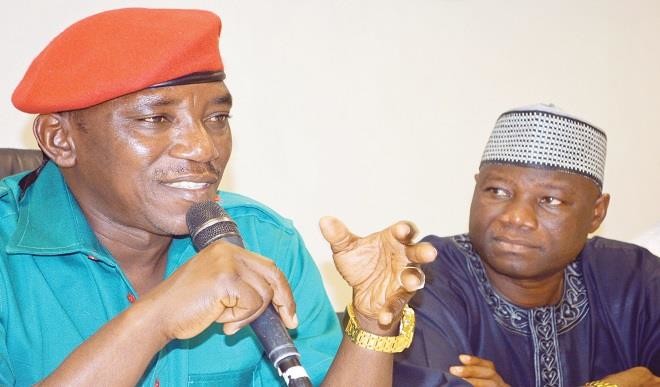
Simple question supporters of Tinubunomics fail to answer, By Solomon Dalung
Nigerians are not merely asking whether these reforms were necessary. They are asking a deeper question: Who has really paid the price?
There is one question the defenders of Tinubunomics have consistently failed to answer.
We are repeatedly told that painful reforms require patience. We are told that fuel subsidy removal and the floating of the naira were necessary sacrifices to save the economy. Fair enough. Every serious nation has, at one point or another, asked its citizens to make difficult sacrifices in pursuit of long-term stability.
But every successful reform in history has been built on one principle: shared sacrifice.
So I ask a simple question: what exactly has the political class sacrificed?
The Nigerian people have a long list.
They now buy fuel at several times what they used to pay. Food prices have soared. Transport costs have skyrocketed. Electricity tariffs have increased for many consumers. Businesses are struggling with higher operating costs, while the value of salaries and pensions has been eroded by inflation.
Every Nigerian family can point to something they have lost.
Can the political class do the same?
If these reforms are truly about national survival, where is the evidence that those who designed them have also tightened their belts?
Which constitutional privileges have they surrendered?
Which unnecessary luxuries have they abolished?
Which bloated political offices have they eliminated?
Which convoys have they reduced?
Which allowances have they voluntarily forfeited?
Which fleets of luxury vehicles have they cancelled?
Which extravagant foreign trips have they stopped?
Which symbols of excess have they abandoned to tell Nigerians: “We are in this together.”
Instead, what many citizens continue to see is an expanding political bureaucracy, expensive government lifestyles, lavish official ceremonies, and billions appropriated for the comfort of public office holders, while ordinary Nigerians are repeatedly told to endure more pain because prosperity is just around the corner.
That is not merely an economic contradiction; it is a moral one.
Governments do not earn public trust simply by publishing impressive macroeconomic statistics. They earn it when citizens can visibly see that their leaders are carrying the heavier burden.
Leadership is not asking people to suffer.
Leadership is suffering first.
If subsidy removal was inevitable, then the first subsidy that should have disappeared was the subsidy on political extravagance.
If austerity was necessary, then austerity should have started at the top.
The tragedy of this administration is not only that Nigerians have been asked to sacrifice. It is that many believe the sacrifices have been demanded almost exclusively from the governed, while the governing class has largely insulated itself from the consequences of the very policies it champions.
No reform can command lasting legitimacy when the pain is socialised but the comfort remains exclusive.
Nigerians are not merely asking whether these reforms were necessary.
They are asking a deeper question:
Who has really paid the price?
*Solomon Selcap Dalung Esq is a Nigerian lawyer, academic and politician from Plateau State who served as Nigeria’s Minister of Youth and Sports under President Muhammadu Buhari from 2015 to 2019.