US, others’ oil ships stranded as Iran shuts Strait of Hormuz again, following ceasefire agreement violation by Israel
*Tehran introduces per-barrel oil transit fee amid tensions
*As Iran rebuilds bridge bombed by USA within 3 days following USA much celebrated airstrikes
They asked the American side to be fair enough to balance in seeing to what gave Israel the right violate the same agreement it was part of represented by U.S. government it lured into the unprovoked war in the first place and that why are they not mentioning that but only blaming the Iranian government?
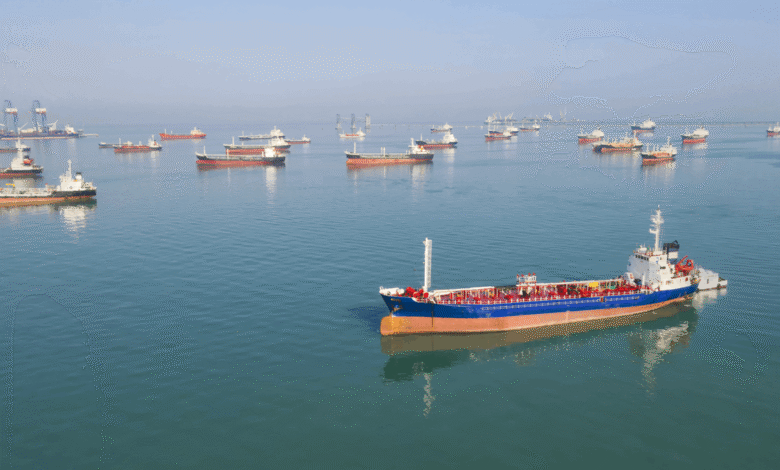
Global shipping remains severely disrupted in the Strait of Hormuz, with United States of America’and other international vessels effectively stranded as Iran continues to restrict passage despite a recently announced ceasefire.


The strategic waterway — which handles roughly 20% of global oil and gas shipments — has seen traffic collapse, with only a handful of ships passing through daily compared to dozens or even over 100 before the conflict.
The partial shutdown follows escalating tensions between Iran and the United States after weeks of conflict. Although a fragile ceasefire was declared earlier this week, maritime activity has not returned to normal, raising concerns that Iran may not be fully adhering to agreed terms, citing violation of the ceasefire agreement by Israel.
U.S. officials have accused Tehran of undermining the agreement, pointing to continued restrictions on shipping and proposals such as imposing multimillion-dollar transit fees on vessels. But international affairs analysts are also calling the attention of the U.S. officials to what they described as the plain truth of why Tehran will not open the Strait of Hormuz.
They asked the American side to be fair enough to balance in seeing to what gave Israel the right violate the same agreement it was part of represented by U.S. government it lured into the unprovoked war in the first place and that why are they not mentioning that but only blaming the Iranian government?
Iran, however, maintains significant control over the narrow passage and has used it as leverage during the conflict, with analysts warning that the closure gives Tehran a powerful economic and strategic advantage.
The disruption has already caused major global ripple effects, including rising energy prices, supply chain delays, and dozens of ships waiting on either side of the strait due to safety concerns and uncertainty over access.
Efforts are ongoing among the United States and allied nations including South Korea to restore full access to the waterway, but officials warn that even if reopened soon, normal shipping operations could take weeks to recover.
As US is eagle to go into renegotiation with Iran, Tehran for the same of its respect for neighbouring Pakistan has accepted but on condition that the Lebanon that was part of the agreement but violated by Israel, and American President Donald Trump backed that is part of the talk.
ALSO READ: No talks with US without Lebanon ceasefire, unfrozen assets – Iran’s Speaker
Per-barrel oil transit fee
Iran has reportedly introduced a new tariff on oil shipments, proposing a fee of $1 per barrel for tankers passing through the strategically vital Strait of Hormuz.
CLICK HERE TO WATCH RELATED VIDEO REPORT ANALYSIS: ALSO CLICK HERE AND HERE
According to regional reports, the charge would apply to vessels seeking passage through the waterway during the ongoing ceasefire period, with payments potentially required in alternative currencies such as yuan or cryptocurrency. Yuan means Chinese currency and cryptocurrency will mean one barrel equivalent in dollar stock bce one barrel is $1 dollar.
The move comes as Iran maintains tight control over traffic in the strait, a critical global energy corridor through which a significant share of the world’s oil supply is transported. Authorities have indicated that ships may need prior approval which will come after each vessel’s sailor must have texted the controller in charge what he has on board in his ship and the Iranian authorities have system to confirm the declaration before payment is made straight to the country’s account backed by court of home country of the ship. Only after that clearance will be granted before the is allowed to transit.
The proposal has sparked concern among international stakeholders, with critics arguing that imposing tolls on a natural maritime passage could violate international law and further strain already fragile global energy markets. But the questions the critics are being asked is, were they concerned that American government of Donald Trump itself does not longer believe in the international law that they are accusing Iran for?
The development follows heightened geopolitical tensions and disruptions to shipping in the region, raising fears of increased costs for global oil trade and potential knock-on effects for fuel prices worldwide.
Many including some large number in America and Israel are some people constitute themselves to being critics of Iran over a problem it did not cause but caused by their US and Israeli governments.
Damaged bridge rebuilt in 3 days
In the meantime, the Islamic Republic of Iran has reportedly completed rapid reconstruction work on a bridge damaged during recent U.S.-Israeli airstrikes, restoring functionality within just three days, according to local accounts.
The bridge was among several key infrastructure targets hit during the ongoing conflict, including major transport routes linking cities such as Tehran and Karaj. Strikes earlier this month caused significant damage to multiple bridges, rail lines, and highways across the country, reports The Wall Street Journal.
Despite the scale of destruction, Iranian authorities appear to have prioritized urgent repairs to maintain transport and supply routes, with reports indicating that work crews operated continuously to bring the structure back into service in record time. Recall that in response to Trump’s claim of damaging their vital economic bridge, Iranian authorities replied him that the bridge was one of most significant that could be reconstructed in no much time.
While independent verification of the full extent and durability of the reconstruction remains limited, the rapid rebuilding highlights Iran’s efforts to sustain critical infrastructure amid continued hostilities and economic pressure.
The development comes as the broader conflict continues to disrupt regional stability, with repeated strikes targeting transportation networks and other strategic assets.