Nigeria monitoring Iran war, may adjust policies to protect economy — Edun
By KEMI KASUMU

And third being the disruptions to major shipping and energy supply routes could increase international freight and logistics costs, further raising domestic prices, underscoring once again the inevitability of the Nigerian government look more inward for refined petroleum products especially as the country has a formidable indigenous oil refinery doing well in the Dangote Refinery.
The Federal Government of Nigeria says it is closely monitoring developments surrounding the ongoing conflict involving the United States of America, Israel and Iran, and may adjust economic policies to protect Nigeria from potential shocks.
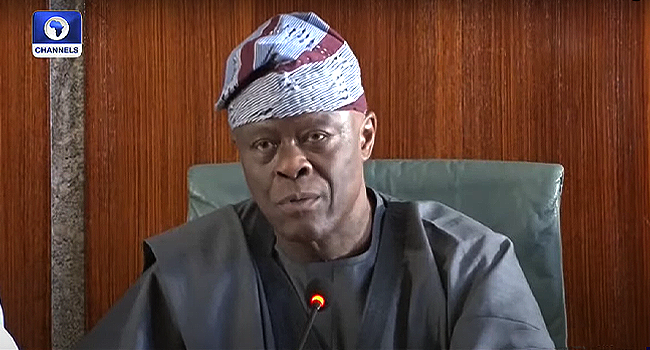
The Minister of Finance and Coordinating Minister of the Economy, Mr. Wake Edun, reportedly disclosed this in a statement issued in Abuja.
According to the statement, signed by the Assistant Director of Information and Public Relations, Uloma Amadi, the government is reviewing policy options to mitigate the impact of the crisis on Nigeria’s economy amid rising fuel prices.
“The Federal Government of Nigeria is closely monitoring escalating geopolitical tensions in the Middle East involving the United States, Israel and Iran, and remains committed to safeguarding Nigeria’s economic stability,” the statement said.
It noted that the Economic Management Team (EMT) is coordinating closely across fiscal, monetary and energy policy institutions to address potential risks arising from the conflict.
Edun said policy adjustments would be carefully calibrated to ensure that recent gains in macroeconomic stability, revenue mobilisation and economic growth are not undermined by external developments.
He added that the government would continue to review developments and adjust measures where necessary to minimise disruptions, sustain investor confidence and protect the welfare of Nigerians.
The EMT, chaired by Edun, met to assess the possible impact of the conflict on the Nigerian economy. The minister also presided over a Naira-for-Crude policy coordination meeting to review developments in the global energy market and their implications for the country.
According to the government’s assessment, the situation remains fluid, with global uncertainty driven by concerns over potential disruptions to key energy supply routes, particularly the Strait of Hormuz, which has already contributed to volatility in crude oil prices and financial markets.
The government identified three major channels through which the crisis could affect Nigeria’s economy.
First in its identified areas is volatility in global energy markets could push up domestic prices of fuel, diesel, cooking gas and fertiliser.
Second being the heightened geopolitical risks could trigger a shift by investors toward safe-haven assets, potentially affecting capital flows into emerging markets such as Nigeria and putting pressure on financial markets.
And third being the disruptions to major shipping and energy supply routes could increase international freight and logistics costs, further raising domestic prices, underscoring once again the inevitability of the Nigerian government look more inward for refined petroleum products especially as the country has a formidable indigenous oil refinery doing well in the Dangote Refinery.
The minister also warned that prolonged instability could increase the cost of goods and services, intensifying inflationary pressures and the cost of living for Nigerians.
During the EMT meeting, ministers provided sector-specific updates on the evolving situation, noting that the overall impact on Nigeria would depend largely on the duration and intensity of the conflict and its effect on global oil supply and prices.
The government said it is closely tracking key economic indicators, including global crude oil price movements, exchange rate trends, capital flows, financial market conditions, and the implications for Nigeria’s fiscal outlook and external reserves.
Despite the uncertainties, the government reiterated its commitment to sustaining economic stability and protecting recent macroeconomic gains.