2027: Those Who Seek to Suppress Opposition Must Remember That Allah Can Bring Down Any Power
By ABANIKANDA OLUMORO (UK)

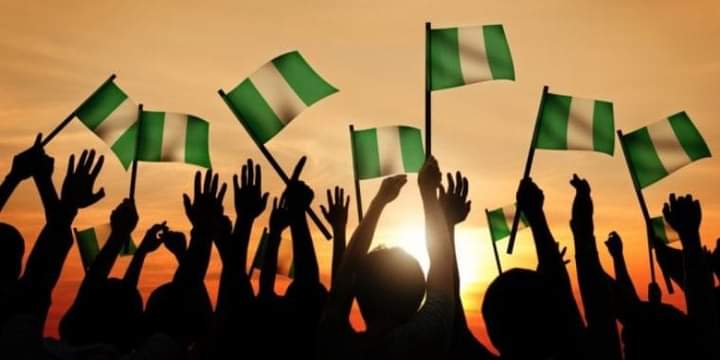
As Nigeria approaches the 2027 general elections, those who believe that political power gives them the licence to manipulate the democratic process, weaken opposition parties, intimidate political opponents or prevent alternative voices from participating in the competition for leadership should pause and reflect. They should remember that Allah, the Almighty, has brought down empires, kingdoms, governments and individuals who once considered themselves too powerful to be challenged.
There is a lesson in history that every individual entrusted with political power must never forget: no power is permanent, no political authority is above accountability, and no human being, regardless of the influence he commands today, possesses the ability to determine the future of a nation against the will of its Creator.
As Nigeria approaches the 2027 general elections, those who believe that political power gives them the licence to manipulate the democratic process, weaken opposition parties, intimidate political opponents or prevent alternative voices from participating in the competition for leadership should pause and reflect. They should remember that Allah, the Almighty, has brought down empires, kingdoms, governments and individuals who once considered themselves too powerful to be challenged.
The history of humanity is filled with examples of people who mistook temporary authority for permanent supremacy. They commanded armies, controlled territories, accumulated enormous wealth and surrounded themselves with loyalists who told them what they wanted to hear. Yet, when their appointed time came, their power collapsed, sometimes in ways they could never have imagined.
The Holy Qur’an reminds humanity repeatedly that Allah gives power to whom He wills and takes it away from whom He wills. Political authority, therefore, should be understood as a responsibility and a trust, not an entitlement that must be defended at all costs.
This is particularly important for Nigeria at this critical moment in its democratic journey.
The 2027 general elections should be a process through which Nigerians freely determine who deserves their mandate to govern. It should not become a political battlefield in which the ruling establishment seeks to eliminate competition, frustrate opposition parties or deploy the instruments of state power to make electoral victory impossible for those outside government.
Democracy loses its meaning when the opposition is allowed to exist only in name but denied the practical opportunity to organise, mobilise, campaign and present candidates to the electorate.
A democracy without a viable opposition is democracy under threat. The presence of opposition parties is not a favour that the ruling party grants to its competitors. It is an essential component of democratic governance and a constitutional right that must be protected.
Indeed, opposition parties are not enemies of Nigeria. They are part of the country’s political architecture. Their responsibility is to offer alternative policies, challenge government decisions, expose shortcomings and provide Nigerians with different choices at the ballot box.
Those who cannot tolerate these functions have fundamentally misunderstood democracy.
The danger of turning 2027 into a do-or-die affair
One of the greatest dangers confronting Nigeria’s political future is the temptation by individuals and political interests to approach the 2027 elections as a do-or-die affair.
Any politician or political group that believes no opposition must be allowed to participate meaningfully in the electoral process, simply because it wants to retain power, is demonstrating a dangerous disregard for the country’s stability.
Power is not worth the destruction of a nation. An election victory obtained through the suppression of democratic competition cannot provide the moral legitimacy that comes from a genuinely free and fair contest.
The ambition to remain in government must never become stronger than the obligation to preserve Nigeria.
No individual should imagine that the presidency, a governorship or any other political office is a personal inheritance. These positions are constitutional responsibilities entrusted to individuals for a limited period. The electorate must remain free to renew or withdraw that trust.
The judiciary, electoral institutions, security agencies and other public institutions must also understand that their constitutional responsibilities are bigger than the political interests of any administration.
Where opposition parties have internal disagreements, the law should provide the appropriate mechanisms for resolving them. Where political parties violate electoral regulations, the relevant institutions should act within the limits of their lawful powers. But the machinery of justice must never become an instrument for achieving political objectives that cannot be justified by law.
The same standard must apply to everybody, whether in government or opposition.
Nigeria cannot afford a situation in which political opponents begin to regard the courts, electoral institutions or security agencies as extensions of the ruling party’s political machinery. Such perceptions, whether justified or otherwise, undermine public confidence in the democratic process.
Nobody has a monopoly of God’s authority
There is also a spiritual dimension to this matter that should not be ignored.
Those who wield political power must remember that Allah is not subject to human political calculations. He does not require the permission of any president, governor, political party or powerful individual to change the direction of history.
The stories of Pharaoh, Nimrod and other tyrannical figures remind believers that arrogance and oppression do not guarantee lasting authority. Pharaoh considered himself supreme, yet his power ended in humiliation. His story remains a warning to generations that follow.
The lesson is not that every political disagreement should be interpreted as divine punishment, or that anybody who loses an election must necessarily have been rejected by God. Rather, it is that no human authority should become so intoxicated with power that it forgets the limits of human existence and the supremacy of the Almighty.
Those who think they can manipulate every institution, silence every critic, frustrate every opposition movement and determine every political outcome should remember that the Almighty can overturn circumstances beyond human imagination.
Allah’s power is not limited by the resources available to political establishments. Neither is His justice dependent on the approval of those who occupy positions of authority.
Who has the moral right to pray for Nigeria’s peace?
It is equally important to address the growing contradiction between political conduct and public appeals for national peace.
Nobody should expect Nigerians to accept endless appeals for peace from individuals who, through their actions or political ambitions, are prepared to undermine the very conditions necessary for peaceful democratic competition.
How can anyone genuinely pray for peace while supporting an environment in which political opponents are intimidated, democratic participation is frustrated and citizens are made to feel that their preferred candidates have no meaningful opportunity to compete?
Peace is not merely the absence of gunshots, demonstrations or public protests. Genuine peace also requires justice, fairness, freedom, mutual respect and confidence in the institutions responsible for managing public affairs.
A country may appear calm on the surface while deep frustrations are accumulating underneath. That is not sustainable peace.
Those who want Nigeria to remain peaceful must demonstrate their commitment through conduct. They must respect the Constitution, tolerate opposition, protect the rights of citizens and allow the electoral process to function without unnecessary interference.
Nobody should seek to monopolise the language of patriotism or prayer for peace while contributing to circumstances that threaten national cohesion.
Ultimately, however, the peace of Nigeria is not in the hands of politicians alone. It is in the hands of Allah, the Creator and Sustainer of all things. Whether one considers Nigeria’s historical emergence through the 1914 amalgamation or the subsequent events that shaped its existence as a sovereign country, no human being can claim ownership of the destiny of the nation.
God, who created humanity and governs the affairs of creation, can establish peace in Nigeria through means that no political establishment can predict or control.
This should inspire humility rather than political arrogance.
Nigeria must be bigger than the ambition of any individual
The 2027 elections must not become a contest between those who control government institutions and those who are struggling to retain a place in the democratic process. They must be an opportunity for Nigerians to decide, through credible elections, the direction in which they want their country to move.
The ruling party must understand that its legitimacy is strengthened, not weakened, by allowing opposition parties to compete freely. A government confident in its performance should have no reason to fear the electorate’s choices.
Similarly, opposition parties must understand that their responsibility goes beyond criticising the government. They must organise responsibly, present credible alternatives, respect the law and conduct their political activities peacefully.
The Independent National Electoral Commission must remain impartial, while the judiciary must protect the rule of law without fear or favour. Security agencies must protect all political actors and citizens equally.
Above all, political leaders must abandon the mentality that losing an election amounts to the end of their existence or that retaining power justifies every available political manoeuvre.
No election is worth the blood of innocent Nigerians. No political ambition is worth the disintegration of the country. No individual is so indispensable that Nigeria cannot survive beyond his political relevance.
Those who are preparing to turn the 2027 elections into a do-or-die affair should remember the lessons of history and the warnings of the Almighty. The powers of this world are temporary. Governments rise and fall. Political alliances change. Those who are celebrated today may become forgotten tomorrow.
Allah alone possesses everlasting authority.
Nigeria belongs to its people, and its future must not be held hostage by the ambitions of a few individuals.
Let those who have ears hear: Nobody can successfully arrogate to himself the power to determine Nigeria’s political destiny against the will of the Almighty. Those who seek to suppress the democratic choices of Nigerians should remember that Allah has brought down greater powers than theirs, and He remains capable of doing so again.
The 2027 elections must be about leadership recruitment, not political conquest; democratic competition, not the elimination of opponents; and national development, not the preservation of personal ambition.
May Allah guide Nigeria’s political leaders, protect the nation from those who would sacrifice its peace on the altar of political ambition, strengthen its democratic institutions and grant Nigerians a peaceful, credible and genuinely participatory electoral process in 2027. Amin.