2027: Nigerian columnist, Jega, likens INEC to Iran’s ‘Strait of Hormuz’
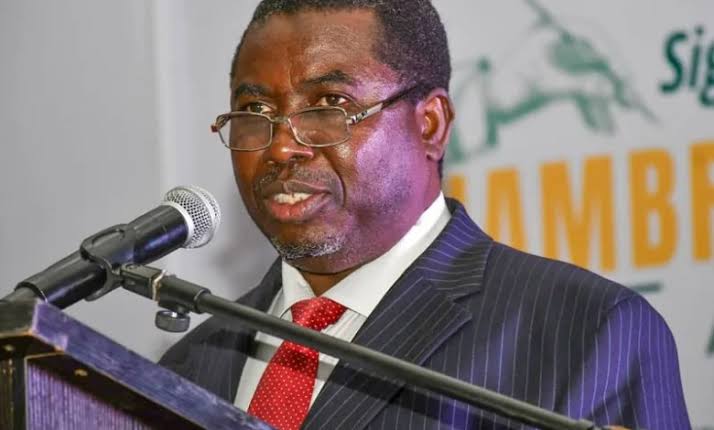
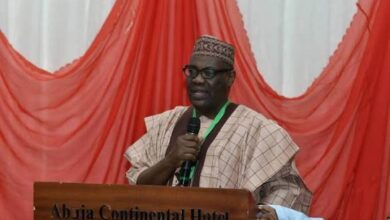
A Nigerian journalist and syndicated columnist, Mahmud Jega, has likened the Independent National Electoral Commission (INEC) to the ‘Strait of Hormuz’, describing the electoral umpire as the most critical “chokepoint” through which all political parties must pass on their way to the 2027 general election.
Jega made the analogy in his weekly ‘View From The Gallery’ column published on Monday, April 6, 2026, in 21st Century Chronicle and ThisDay, where he employed satire to paint Nigeria’s political terrain as a metaphorical Persian Gulf and the country’s 19 registered political parties as stranded oil tankers unable to reach their destination.
The DEFENDER reports that the now contentious Strait of Hormuz is a waterway between the Persian Gulf and the Gulf of Oman being controlled by Iran through a combination of geographical, military, and strategic factors, allowing it to hold the world’s most vital oil artery hostage during the ongoing 2026 conflict between Israel/United States and Iran, thereby threatening energy security in many countries.
In the piece titled ‘INEC as Strait of Hormuz’, the columnist argued that just as ships loaded with crude oil and gas were unable to leave the Persian Gulf without passing through the strategically vital Strait of Hormuz because the war and particularly Iran’s stance, political parties in Nigeria cannot participate meaningfully in elections without first navigating INEC.
“Imagine the political space in Nigeria to be the Persian Gulf,” Jega wrote, adding that the 19 political parties were akin to “2,000 ships, with 20,000 sailors on board,” all trying to move towards electoral victory but currently stuck in what he called “our political Persian Gulf.”
He said the “cargo” these parties carry consists of ambitious aspirants and their supporters, all seeking elective and appointive offices in 2027 elections.
“The ‘cargo’ our political parties are carrying, which is equivalent to crude oil, liquefied natural gas, diesel and aviation fuel, is made up of ambitious political aspirants,” he wrote.
“Like the cargo of super oil tankers, this Nigerian political cargo is highly combustible.”
Jega then turned his focus squarely on INEC, which he described as Nigeria’s equivalent of the world’s most strategic maritime bottleneck.
“To get to their destination of contesting elections, our political parties must pass through INEC,” he wrote.
“While the Strait of Hormuz is described as the world’s most critical maritime chokepoint, some wags are describing INEC as Nigerian politics’ most critical chokepoint through which all political parties must pass on their way to the 2027 elections.”
In the piece, Jega employed heavy satire to interrogate what he described as widespread public suspicion over the role of state institutions in the country’s emerging 2027 political alignments.
He referenced allegations by “mischievous Nigerians” and “cynics” who, according to him, believed that the ruling All Progressives Congress (APC) had allegedly deployed institutions of state in a manner similar to how Iran’s Revolutionary Guards control and threaten passage through the Strait of Hormuz.
“Some people are saying that the ruling All Progressives Congress [APC] has copied from a secret manual of Iran’s Islamic Revolutionary Guards Corp [IRGC] and has lined up military assets all along the long coastline leading up to the 2027 elections,” he wrote.
Using the same metaphor, Jega likened the courts to “drones,” anti-corruption agencies to “missiles,” and the Department of State Services (DSS) to “fast attack boats,” suggesting that critics believed these institutions were being weaponised against opposition figures and parties.
On the judiciary, he pointed to a series of court decisions that have shaped or unsettled opposition politics in recent months, including rulings involving the Peoples Democratic Party (PDP), the Labour Party (LP), the Rivers State House of Assembly crisis, Osun local government leadership tussles, and the leadership dispute in the African Democratic Congress.
“The allegation by some mischievous Nigerians is that the courts are APC’s drones,” he wrote.
“Since last year, High, Appeal and Supreme Courts have handed down rulings that have created havoc in all the major opposition parties.”
Jega also referenced the controversy around the ADC, particularly the legal challenge involving the party’s leadership and the David Mark-led faction.
“And lately, whether Nafi’u Bala Gombe should single handedly replace the David Mark exco at the head of the increasingly potent ADC, despite papers flying around showing that he resigned last year along with all other ADC exco members in order to allow the politically more potent new comers to take over the leadership,” he stated.
On anti-corruption agencies, Jega again used irony to question claims of selective enforcement, though he repeatedly framed such assertions as allegations he did not personally endorse.
“According to these mischievous Nigerians, the anti-corruption agencies EFCC, ICPC and Court of Conduct Bureau are APC’s equivalent of Iran’s Shahed missiles,” he wrote.
He noted that opposition figures such as former Kaduna State Governor Nasir el-Rufai and former Attorney General of the Federation Abubakar Malami had come under pressure, while other high-profile cases appeared to have gone quiet after political realignments.
“I personally do not subscribe to the view of cynics,” he wrote, before listing examples critics have raised, including the alleged slowing down of investigations involving former Delta State Governor Ifeanyi Okowa and former Kogi State Governor Yahaya Bello.
“I do not support these insinuations; I am sure that EFCC and the courts have good reasons to keep the files under wraps,” he added sarcastically.
Jega was equally cutting in his remarks on the DSS, mocking allegations that the security agency was being used as a political tool.
“The secret state police said it found weapons in former Attorney General Malami’s house and also said it found evidence that he is a terrorist sponsor,” he wrote. “I am sure when the matter finally reaches the courts, DSS would be able to show transfers of money from Malami’s personal accounts directly into Boko Haram, ISWAP and bandits’ treasury, which will silence the cynics.”
But it was on INEC that Jega reserved some of his sharpest commentary.
“Of all the false allegations that cynics are making, the one I find most unbelievable is the allegation that INEC is the electoral Strait of Hormuz in the run up to 2027,” he wrote.
He cited the commission’s handling of internal disputes within the PDP and Labour Party, as well as its recent action on the ADC leadership issue, as examples critics have seized upon.
“The fact that it hurriedly ignored the PDP Turaki faction’s appeal to the Supreme Court, urgently observed the Wike faction’s Abuja ‘convention’ and with great speed pasted the people elected at that convention on its website, does not support the allegation that INEC is an APC Strait of Hormuz,” he wrote.
He also recalled the Labour Party crisis, referencing the party’s Awka meeting and the emergence of former Finance Minister Nenadi Usman as caretaker chairperson, despite lingering disputes over Julius Abure’s status.
“Sometime last year, Elu Pi held a major meeting in Awka and installed former Finance Minister Nenadi Usman as its caretaker chairperson, and a court ruled that Julius Abure’s tenure as chairman had expired, but Elu Pi still got held up like an oil tanker at a Qatari port,” he wrote.
Jega further criticised what he described as public suspicion over INEC’s recent decision to remove the David Mark-led ADC leadership from its website, an action the commission reportedly tied to a court order preserving the status quo.
“Late last week, there was what critics thought was a bombshell when INEC announced that it was removing the David Mark-led ADC leadership from its website,” he wrote.
He dismissed claims that the move was politically timed, even as he acknowledged that some major opposition figures were reportedly gravitating towards the party.
“I do not agree with cynics that the timing of INEC’s action was suspicious because big political figures such as Rabi’u Musa Kwankwaso, Nasiru Gawuna and possibly Bala Mohammed are flocking to the party,” he wrote.
Jega also touched on complaints surrounding party registration and voter participation, including allegations that INEC had refused to register the All Democratic Alliance despite meeting conditions, while retaining what he mockingly described as “werewolf parties” on its register.
“Even the skeptics’ allegation that INEC acted as an Iranian-style floating mine and refused to register ADA despite its fulfilling all conditions for registration, but that it has several werewolf parties such as Boot and Youth on its register, I do not believe it,” he wrote.
He ended the column by taking aim at reported plans to revalidate voter cards, comparing the move to erecting a police checkpoint in the middle of the electoral route.
“Some people allege that INEC’s plan to revalidate all voter’s cards is like erecting a Nigeria Police checkpoint within the Strait of Hormuz. I don’t agree,” he wrote.
He then pointed to low voter turnout in the 2023 elections as part of his closing jab.
“Only 26.72% of Nigerian voters voted in 2023. Even if you refuse to revalidate your voter’s card and you join the sit at homes, results will still be declared,” he stated.
SOURCE: LEADERSHIP