2027: Atiku Vows to Bring Niger, Mali, Burkina Faso Back Into ECOWAS
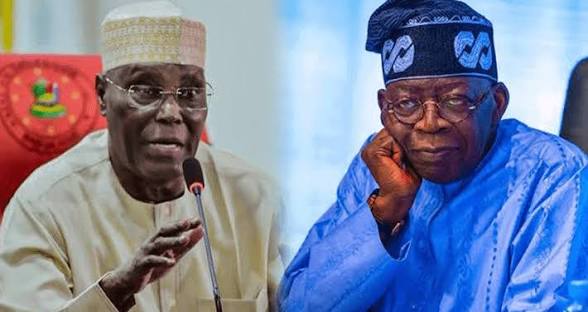
*Says big mistake ECOWAS made was to isolate three countries over excuse of military coups
By KEMI KASUMU and OUR REPORTER
“I don’t see why Nigeria should say it will not engage with Niger because there was a coup. Niger and Nigeria are one people. Just because the military took over power does not mean Niger should be expelled from ECOWAS.”
Former Vice President and African Democratic Congress (ADC) presidential candidate for the 2027 election in Nigeria, Alhaji Atiku Abubakar, has pledged to work towards bringing the Republics of Niger, Mali and Burkina Faso back into the Economic Community of West African States (ECOWAS) if elected president of world’s most populous black nation.
Atiku also said his administration would consider deploying the Economic Community of West African States Monitoring Group (ECOMOG) as part of efforts to strengthen regional security and combat terrorism across West Africa.
He made the remarks in an interview with the BBC Hausa Service, during which he outlined some of his proposed policies and criticised aspects of President Bola Ahmed Tinubu’s administration.
According to Atiku, ECOWAS adopted the wrong approach by isolating Niger, Mali and Burkina Faso following the military coups that brought juntas to power in the three countries.
It will be recalled that the three important Francophone countries were isolated under Nigerian President Bola Ahmed Tinubu-led ECOWAS chairmanship.
Alhaji Atiku Abubakar argued that the three countries should not have been isolated because of the military takeovers, stressing that dialogue, engagement and stronger regional cooperation would provide a better path towards resolving the crisis.
“I will get the ECOWAS leaders to sit down and deliberate, and we will use ECOMOG troops to ensure peace,” Atiku said.
The former vice president also attributed the deterioration in relations between ECOWAS and the three Sahel countries partly to the position adopted by President Tinubu, who was chairman of the regional bloc when Niger’s military seized power in 2023.
Atiku said Nigeria had no reason to completely disengage from Niger because of the coup, stressing the historical and cultural ties between the two countries.
“I don’t see why Nigeria should say it will not engage with Niger because there was a coup. Niger and Nigeria are one people.
“Just because the military took over power does not mean Niger should be expelled from ECOWAS.
“I will ensure that there is understanding and that Niger, Burkina Faso and Mali return to ECOWAS,” he said.
Niger, Mali and Burkina Faso withdrew from ECOWAS after the regional bloc threatened military intervention in Niger following the 2023 coup and demanded the restoration of constitutional rule.
The three countries subsequently established the Alliance of Sahel States (AES), strengthening their political, economic and security cooperation outside ECOWAS.
Atiku Promises to Tackle Insecurity Within One Year
Speaking on Nigeria’s security challenges, Atiku pledged to tackle insecurity within one year if elected president.
He said his administration would increase the number of security personnel, provide them with adequate equipment and create employment opportunities for young Nigerians as part of a broader strategy to address insecurity.
“What I will do is increase the number of security personnel and provide equipment, while giving young people jobs.
“We believe that within one year, God willing, we will address these problems,” he said.
Nigeria continues to face security challenges, including insurgency, banditry, kidnapping and other forms of violent crime, particularly in parts of the North-East and North-West.
Atiku said stronger cooperation among West African countries would also be essential to addressing the security challenges confronting Nigeria and its neighbours.
Atiku Criticises Petrol Subsidy Removal
The ADC presidential candidate also criticised the removal of the petrol subsidy by the Tinubu administration, arguing that the policy had contributed significantly to the economic hardship faced by Nigerians.
Although he acknowledged that subsidy reform might be necessary, Atiku said it should be implemented gradually and only after adequate measures had been put in place to protect vulnerable Nigerians.
“People are suffering; there is poverty and unemployment. The removal of the fuel subsidy is the major cause of this.
“I have never seen Nigerians suffer as much as they are suffering at this time,” he said.
However, Atiku clarified that his position on fuel subsidy would ultimately depend on the state of the economy when he assumes office.
“Even if you are going to remove the fuel subsidy, you cannot do it at once. You must first improve the lives of the poor before you start removing it gradually,” he said.
President Tinubu announced the removal of the petrol subsidy on May 29, 2023, shortly after his inauguration.
The policy triggered a significant increase in petrol prices, with transportation and other living costs also rising. The Federal Government has defended the decision, arguing that funds previously spent on subsidy payments could instead be redirected towards infrastructure, social intervention programmes and other development initiatives.
Atiku’s 2027 Presidential Bid
Atiku, 79, is seeking the Nigerian presidency again under the ADC platform. He previously contested the presidency in 2007, 2019 and 2023, while he was unsuccessful in securing his party’s presidential ticket in 2011 and 2015.
He emerged as the Peoples Democratic Party (PDP) presidential candidate in 2019 and 2023, but lost the elections to Muhammadu Buhari and Bola Ahmed Tinubu respectively.
Atiku served as vice-president under former President Olusegun Obasanjo from 1999 to 2007. He was initially elected governor of Adamawa State in 1999 but later became Obasanjo’s running mate.
He was also among the prominent political figures involved in the formation of the PDP ahead of Nigeria’s return to democratic rule in 1999.
With the 2027 presidential election approaching, Atiku is expected to face President Tinubu, who is seeking a second term, in what is shaping up to be another major contest for Nigeria’s presidency.